
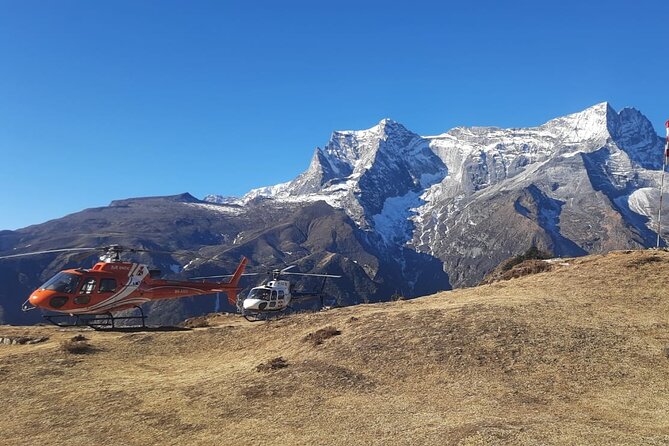
Reviewed · EVEREST BASE CAMP TREKS FROM KATHMANDU
Everest Base Camp Trek and Kathmandu Tour: 15 Days
The biggest draw is the route itself: a short, dramatic flight to Lukla, then days on foot through rhododendron woods, Sherpa villages, glacier country, and the high point of Kala Patthar at 5,644 meters. You finish with Kathmandu’s temples and courtyards, so this is more than a mountain hike.
I like the useful built-in rest day at Namche and the fact that flights, permits, guide service, porter support, hotels, and most meals are included. I also like the small maximum group of 15, which should make airport transfers and trail arrangements easier. The main caution is the schedule: 15 days is a tight program for this altitude, and the flight to or from Lukla can be affected by weather.
Key details before you book
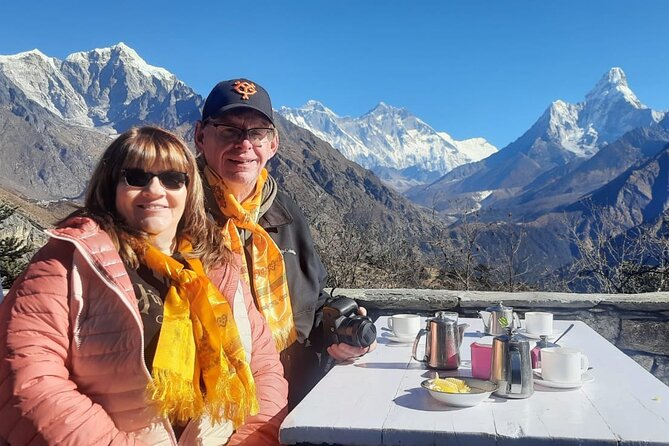
- Lukla flight included: Flights depart from Kathmandu or Ramechhap, depending on operating conditions.
- Kala Patthar reaches 5,644 meters: This is the high point of the trek and the place for major Everest views.
- Namche is your acclimatization stop: You spend a full day there before climbing higher.
- Porter support is shared: One porter is provided for every two people, so pack with a weight limit in mind.
- Kathmandu sightseeing is included: Swayambhunath, Patan Durbar Square, Pashupatinath, and Boudhanath are covered.
- The price is $1,799 per person: Permits, flights, lodging in Kathmandu, guiding, porter help, and many meals are part of the package.
Why this 15-day combination works
This program joins two very different sides of Nepal. In Kathmandu, you move between Buddhist stupas, Hindu temples, palace squares, and the daily life of the Kathmandu Valley. In the Khumbu, the pace changes to walking, carrying only what you need, and sleeping in mountain lodges as the air gets thinner.
The itinerary is aimed at people who want the classic Everest Base Camp route without arranging each piece separately. The operator handles the airport pickup, domestic flights, national park permit, guide, porter, hotels in Kathmandu, and meals during the trek. That saves you from piecing together a complicated trip.
The tradeoff is that the schedule leaves little spare time. You have a rest day at Namche, but the trek continues steadily upward after that. You need a moderate level of fitness, and you must bring your own trekking equipment. Travel insurance is not included, which matters on a high-altitude trip.
More Everest Base Camp treks:
- Everest Base Camp Trek – 14 Days
★ 5.0 · 1,499 reviews - Everest Base Camp Trekking
★ 5.0 · 485 reviews - Everest Base Camp Trekking – 13 Day
★ 5.0 · 365 reviews
Two Kathmandu days before the mountains
After your arrival at Tribhuwan International Airport, a representative takes you to the hotel. Day one is deliberately light, with check-in and rest after your flight. That is sensible, since the next day is filled with major cultural sites.
The city tour begins at Swayambhunath, often called the Monkey Temple. You then visit Patan Durbar Square, where temples and monuments show why Patan is known for fine arts. The tour continues to Pashupatinath, one of the most important Hindu temples dedicated to Shiva, beside the Bagmati River.
The final stop is Boudhanath Stupa, one of Nepal’s major Buddhist sites. These four places give you a useful introduction to the valley’s religious mix, but the pace is brisk, with about an hour at each stop. Entrance fees for the Kathmandu sites are not included. The stated cost is $20 per person, so keep that cash in your budget.
This day can feel full if you are still adjusting to the time change. I would treat it as an introduction rather than a slow, detailed study of each monument. The benefit is clear, though: you see the city’s main cultural sights before heading into the mountains.
The Lukla flight and the first trail to Manjo
Day three begins with the flight to Lukla from Kathmandu or Ramechhap. The description calls it a roller-coaster mountain flight with a dramatic landing. That tells you what to expect: the flight is short, but it is an important part of the adventure and can be affected by mountain weather.
From Lukla, you begin walking toward Manjo, also written as Manju in the itinerary. The first day on foot introduces the rhythm of the trek without immediately pushing you to the highest elevations.
The flight arrangement is one of the practical strengths of the $1,799 price. You do not need to buy a separate domestic ticket or organize transport to the trailhead. Still, you should leave room in your broader Nepal schedule if you have an onward international flight, since weather can disrupt mountain flights.
Manjo to Namche through forest and suspension bridges
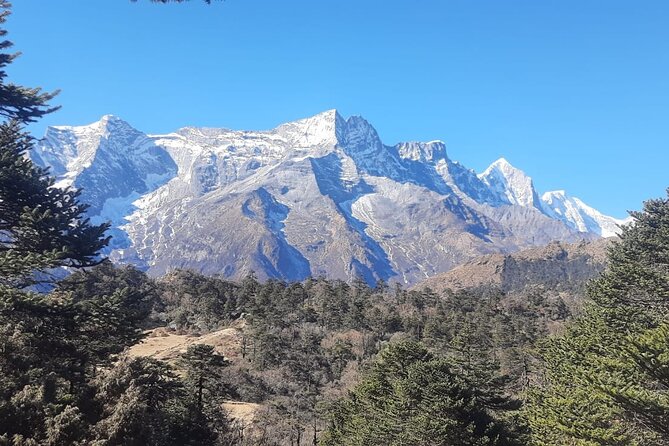
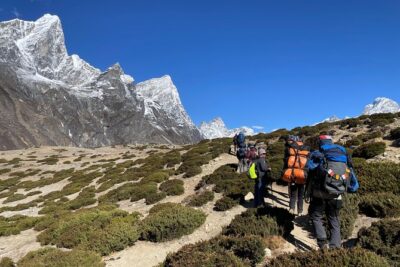
The route from Manjo to Namche passes through woods of rhododendron, magnolia, and fir. You cross bridges and follow the Dudh Koshi valley toward Namche Bazaar, the best-known settlement on this part of the route.
The walking time is listed at about four hours, though the actual effort depends on trail conditions, stops, and your pace. The distance is not the whole story. You are gaining altitude, and the repeated climbs and descents can feel harder than the hours suggest.
Namche sits in a large bowl-shaped area and serves as the main trading and lodging center for the Khumbu route. It is a good place to slow down, eat, and let your body adjust. The surrounding mountain views begin to feel much larger here, and the village gives the route a strong sense of place rather than feeling like a simple point-to-point hike.
More day hikes and treks in Kathmandu:
- Nagarkot Sunrise View and Day Hiking from Kathmandu
★ 5.0 · 471 reviews - Annapurna Circuit Trek with Tilicho Lake
★ 5.0 · 368 reviews - Everest Base Camp Trek -14 Days
★ 5.0 · 321 reviews - Annapurna base camp trek 5 Days
★ 5.0 · 252 reviews
The Namche acclimatization day
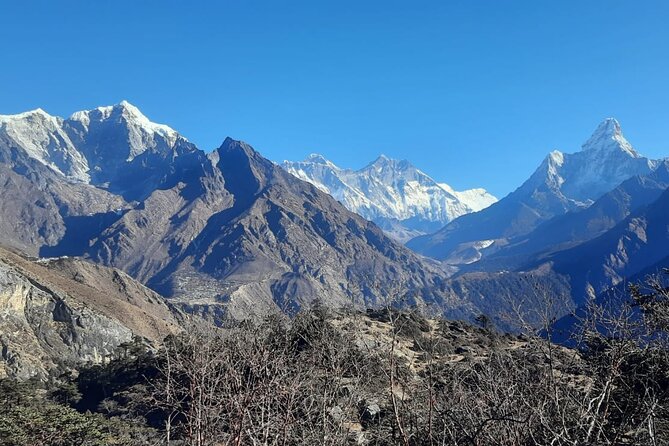
The full rest day at Namche is one of the most important parts of the itinerary. You are not simply wasting a day. You are giving your body time to respond to the higher elevation before sleeping even higher.
The program notes an experience at the Everest View Point and Hotel Everest View as part of the wider appeal of the trek. The exact activity schedule for the rest day is not fully detailed, so ask the operator how this visit is handled on your departure. The point is to gain some height during the day while returning to Namche to sleep.
That distinction matters. The program is designed to help you adjust, but no itinerary can guarantee that you will avoid altitude illness. Listen to your guide and report symptoms early. Do not treat the included guide as a substitute for travel insurance or medical planning.
Tengboche Monastery and views of Ama Dablam
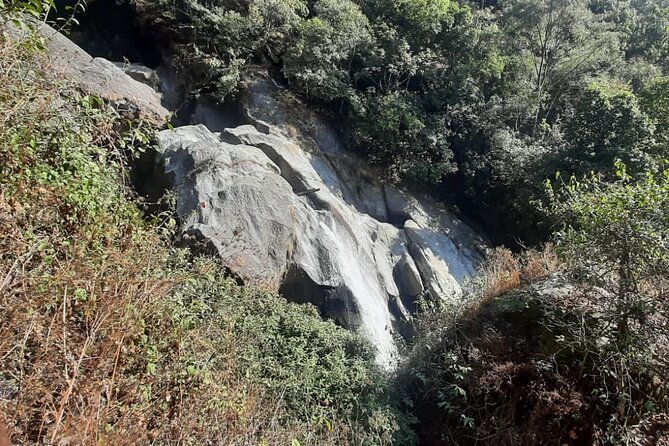
From Namche, the trail continues toward Tengboche. The first section near Phunki is described as an easy walk, followed by a climb toward the village. Tengboche is known for its monastery, described here as the largest in the Everest region.
This is a particularly good cultural pause in the middle of a demanding trek. You are not only walking toward a famous mountain. You are passing through a region where Buddhist practice remains part of everyday life.
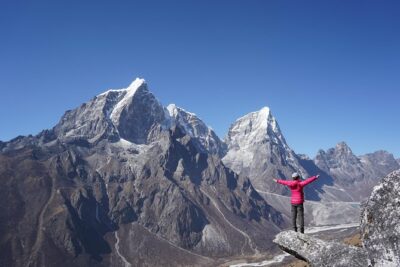
The day is listed at about six hours, so the monastery visit comes after a substantial walk. You also get views of Everest, Lhotse, and Ama Dablam along the route. The trail passes through birch and rhododendron woodland, then opens into bigger mountain views as you climb.
Dingboche and the first serious altitude test
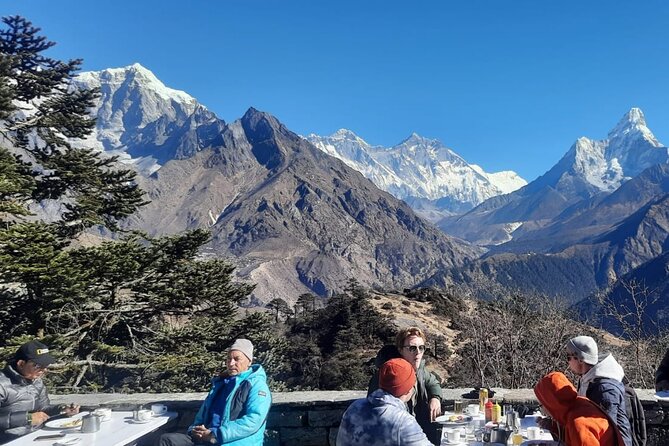
The route descends through birch forest and rhododendron before continuing to Dingboche. You may appreciate the early downhill section, but the overall day still takes about five hours, and you are now moving into much higher country.
Dingboche is where the trek begins to feel more serious. The itinerary notes that the route becomes more challenging from this point because of the altitude. That is an important warning. A moderate fitness level helps with the walking, but altitude affects people differently, regardless of age or previous hiking experience.
Views of Everest, Lhotse, and Ama Dablam remain a major reward. The scenery changes as the trees thin out, and the route feels more open and exposed. Pack layers you can reach easily, since conditions can change as you gain height.
Lobuche, memorials, and the approach to Everest Base Camp
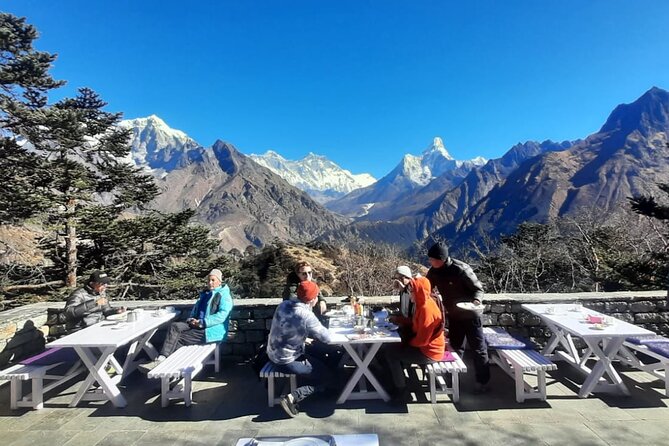
The walk to Lobuche includes a hard climb to the top of a steep hill after passing Dungla. Here you can see memorial stupas dedicated to climbers and mountaineers who died in the Everest region.
This is a quiet, sobering part of the journey. It adds human weight to what can otherwise seem like a simple goal of reaching Base Camp. You are walking through a place shaped by both ordinary mountain life and serious expedition history.
The day is listed at about five hours, but the altitude makes the effort greater. You are close to the main objective, yet this is not the time to rush. Your guide’s judgment and your own willingness to walk slowly matter more than keeping a fast pace.
Gorak Shep and the glacier route to Base Camp
From Lobuche, the trek continues toward Gorak Shep and Everest Base Camp. The route includes ascents and descents over rough, glacier-influenced ground. The surface can be uneven, and the itinerary specifically warns of meandering over difficult terrain.
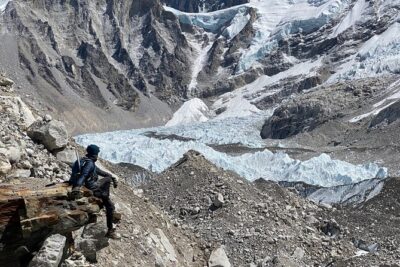
The Base Camp portion is the emotional center of the trip. You reach the area near the Khumbu Glacier and Khumbu Icefall, two of the features that make this route so famous. The views are close and dramatic, though Base Camp itself is a working mountaineering area, not a polished viewpoint.
The listed walking time is about five hours. At this altitude, that is a demanding day, especially after several days of climbing. Take your time, follow your guide’s instructions, and keep food and water within easy reach.
Kala Patthar at 5,644 meters
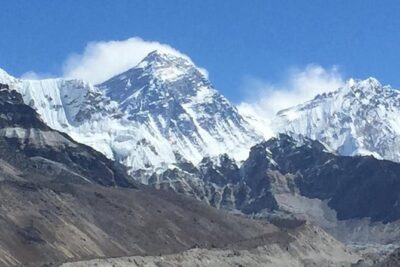
Kala Patthar is the high point of the program, listed at 5,644 meters. The trail is fairly steep, but the stated plan is to walk at a comfortable pace. From the upper section, you can see Lingtren, Khumbutse, and Changtse, with the Everest massif forming the main attraction.
The schedule describes a Kala Patthar ascent around day ten and also mentions a morning hike from Pheriche on day eleven to see sunrise. Because the day-by-day headings and descriptions place these Kala Patthar activities in slightly different positions, confirm the exact sequence before booking. The important point is that the itinerary includes the summit and a sunrise opportunity.
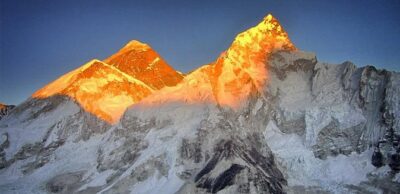
Sunrise from Kala Patthar is the classic payoff. The peaks can turn golden as the sun comes up behind the Everest massif. It is also the hardest physical part of the trip for many people, since you are reaching the highest point after a long approach.
The descent through Pheriche and Namche
After the high point, you descend toward Pheriche, then continue back toward Namche. The return is not simply easy walking. The itinerary notes many ups and downs and a loss of nearly 2,000 feet on one section.
You cross the Dudh Koshi River and pass back through rhododendron country. The air should feel warmer as you lose altitude, and your body may welcome the extra oxygen. Even so, tired legs can make downhill walking hard, especially on rocky ground.
The return to Namche gives you a chance to recognize the trail from a new angle. Villages, bridges, and mountain views can look different when you are heading down and no longer measuring every step against the next altitude gain.
Lukla, Kathmandu, and the final evening
The last mountain day takes you through rocky paths and across several suspension bridges before you reach more surfaced sections near Lukla. The program lists about four hours of walking. This is the end of the trek, but not necessarily the end of the logistical challenge.
The return flight to Kathmandu is scheduled early on day fourteen. Once back in the capital, you are escorted to the hotel, with time left to explore if the flight arrives as planned. A farewell dinner is also included.
Day fifteen is reserved for airport transfer or continuation into another program. The stated advice is to leave for the airport at least three hours before your scheduled flight. That is sensible, especially after a trip where weather and flight timing can change.
What the $1,799 price really covers
At $1,799 per person, the package has solid value if you need a guided, organized trek. It includes:
- Airport arrival and departure transfers
- Three nights of Kathmandu hotel accommodation with breakfast
- Kathmandu cultural sightseeing
- Everest National Park permit
- Return flight between Kathmandu or Ramechhap and Lukla
- A government-licensed trekking guide
- One porter for every two people
- Eleven dinners
- Thirteen breakfasts
- Eleven lunches
The guide and porter arrangement is especially useful. One porter for two people means you should coordinate your shared baggage and avoid overpacking. Trekking equipment is not supplied, so boots, warm clothing, and other personal gear remain your responsibility.
Drinks are limited. Alcohol and beverages other than one cup of tea per day are excluded. Nepal visa fees, travel insurance, and the $20 Kathmandu site entrance charge are also outside the listed price.
Past organized departures have included a mountain guide named Rajan, praised for his work on the trail, and a city guide named Prakash, noted for explaining Kathmandu’s history and culture. Guide assignments can change, so treat those names as examples rather than a guarantee.
Who should book this trek?
I would recommend this trip to someone who wants the classic Everest route but does not want to arrange permits, flights, airport transfers, guides, porters, meals, and hotels independently. The maximum group size of 15 is reasonable for a major Himalayan trek, and the cultural touring gives you more than a mountain-only trip.
It suits an active person with moderate fitness who is willing to walk for several hours on rough trails and prepare properly for altitude. It is less suitable if you need a relaxed schedule, dislike basic mountain travel, or cannot tolerate the possibility of flight delays.
The experience has received a 4.7 rating from three published ratings, with particular praise for reliable organization, attentive arrangements, and capable guide and porter support. Those strengths matter most on a route where timing, altitude, and weather can quickly complicate a trip.
Should you book the Everest Base Camp trek?
Book it if you want a well-organized first Everest Base Camp experience with Kathmandu’s major cultural sites included and most major costs bundled into one price. The strongest reasons are the included Lukla flights, permit, guide, porter, acclimatization day, and Kala Patthar summit.
Before paying, ask for the exact flight airport, the final Kala Patthar schedule, current baggage limits for the porter, and the equipment list you are expected to bring. Also buy suitable travel insurance and allow extra time around the Lukla flights.
If you understand the altitude, bring proper gear, and accept a tight schedule, this package offers a practical way to reach Base Camp and see the best-known viewpoints in the Khumbu.
FAQ
Is the Lukla flight included in the price?
Yes. The package includes a return flight from Kathmandu or Ramechhap to Lukla. The departure airport can depend on operating conditions.
Are Kathmandu’s UNESCO site entrance fees included?
No. Entrance fees are excluded. The stated additional cost is $20 per person for the Kathmandu UNESCO World Heritage Sites tour.
How much luggage does the porter carry?
One porter is provided for every two people. The tour information does not state a specific weight limit, so ask the operator for the current baggage allowance before packing.
Are trekking clothes and equipment supplied?
No. You are required to bring your own trekking equipment. The package does not include trekking gear.
Is travel insurance included?
No. Travel insurance is not included in the tour price.
What happens if bad weather cancels the experience?
If poor weather causes the experience to be canceled, you are offered a different date or a full refund. The experience itself is otherwise non-refundable and cannot be changed for another reason.
Just added around Kathmandu
- Traditional Momo Making Class★ 5.0 · 10 reviews
- Wildlife Adventure in Chitwan Nepal★ 4.0 · 4 reviews
- Walking tour of real Kathmandu through back streets.★ 5.0 · 3 reviews
- Kathmandu 2 Nights 3 Days Chitwan Jungle Safari Tour★ 5.0 · 9 reviews
- Kathmandu Street Food Walking Tour – Eat Like a Local★ 5.0 · 3 reviews
- Private Manaslu Circuit Trek at Himalayas★ 5.0 · 3 reviews
- Walking tour of Kathmandu with awesome local guides★ 5.0 · 4 reviews
- Visit Swayambhunath and Bauddhanath Stupa with Guide★ 5.0 · 5 reviews
Everest Base Camp Treks from Kathmandu, compared.
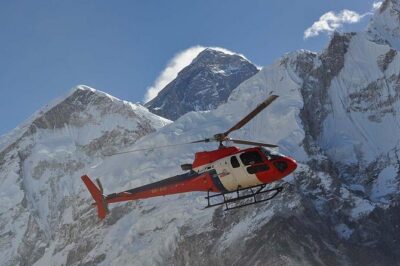
Everest Base Camp Trek with Helicopter Return from Gorakshep to Lukla
Read our review →Browse the lists this tour appears in