
Reviewed · EVEREST BASE CAMP TREKS FROM KATHMANDU
Everest Base Camp Trek
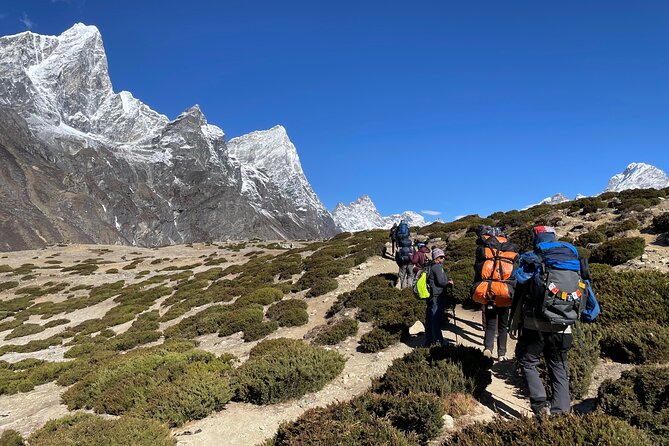
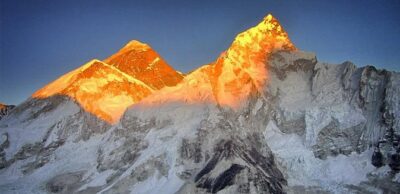
The great appeal here is simple: you walk into the heart of the Everest region instead of merely looking at the mountain from a viewpoint. The route brings you through prayer-flagged bridges, Sherpa villages, pine and rhododendron forests, monasteries, and the high rocky ground around Base Camp. Kala Patthar at sunrise is the big prize, with Everest and its neighbors glowing above you.
I like the careful use of acclimatization days in Namche Bazaar and Dingboche. I also like that the $1,800 price includes the Lukla flights, permits, meals, lodges, a guide, porter support, sleeping bag, duffel bag, and walking pole. The main drawback is the altitude and the fixed, non-refundable booking policy. This is a serious mountain trek, not a casual holiday with a few scenic walks.
Key things to know before you book
- The highest point is Kala Patthar at 5,545 meters, higher than Everest Base Camp itself.
- Two acclimatization days give you time to adjust at Namche Bazaar and Dingboche.
- The price includes the major trek costs, including flights from Kathmandu to Lukla and back, meals, permits, lodges, and porter support.
- The group is capped at 12 people, a useful size for a guided mountain route.
- Winter can be extremely cold, but December may bring clear mountain views and a quieter feel.
- Guide support matters here, and the names Krishna and Babu are associated with especially warm praise for organization and care.
Why the Lukla to Everest Base Camp route works
This is the classic approach to Everest Base Camp, beginning with a flight from Kathmandu to Lukla. From there, you walk steadily upward through the Khumbu region, spending nights in villages rather than rushing from low country to the high point.
The route takes 15 days, but not all of that time is spent walking. You have arrival and departure days in Kathmandu, an extra day held open for weather delays, and two acclimatization days. That pacing is important. The body needs time to adjust as the air gets thinner, and a rushed schedule would make the trek far less pleasant.
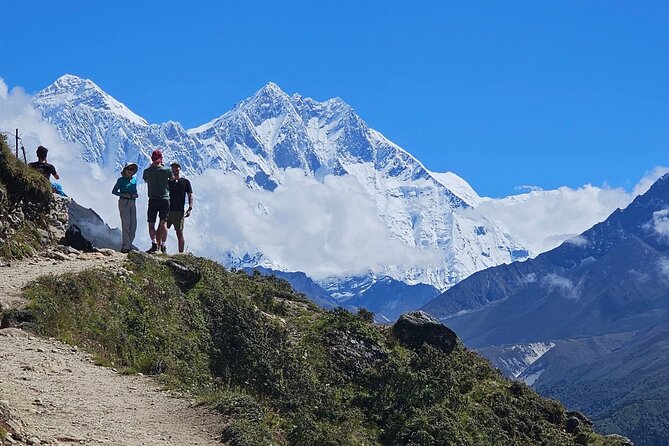
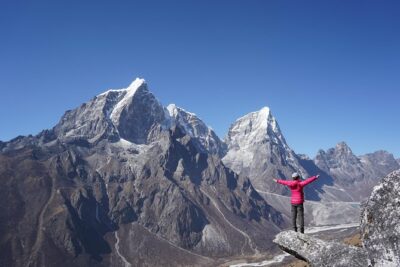
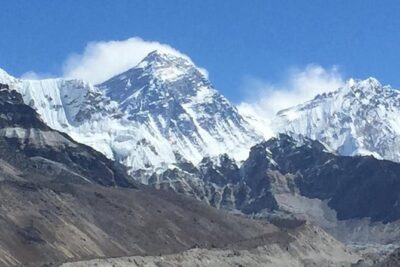
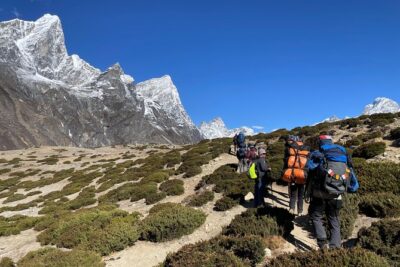
You also get a good mix of scenery. The lower trail follows the Dudh Koshi River through forest and villages. Higher up, trees thin out, the ground becomes rocky, and the views open toward Everest, Lhotse, Ama Dablam, Makalu, and Island Peak.
The trek is guided, and the group can include up to 12 people. That gives you companionship without the feel of a huge walking procession. A porter is provided for every two trekkers, so you will not need to carry all your gear yourself. You should still expect to carry a daypack with water, layers, and personal essentials.
More Everest Base Camp treks:
- Everest Base Camp Trek – 14 Days
★ 5.0 · 1,499 reviews - Everest Base Camp Trekking
★ 5.0 · 485 reviews - Everest Base Camp Trekking – 13 Day
★ 5.0 · 365 reviews
Kathmandu, Lukla, and the first steps to Phakding
Your first day begins at Tribhuvan International Airport in Kathmandu, where a representative meets you and takes you to your hotel. Later, you meet the guide for a briefing. That first evening is less about sightseeing and more about getting organized, checking your equipment, and preparing for the mountain flight.
On Day 2, the early flight to Lukla gives you an immediate sense that this is no ordinary walking holiday. From Lukla, you meet the trekking crew and walk downhill toward Phakding for about three hours.
This opening section is relatively gentle. You pass Sherpa villages, mani walls, and prayer wheels, with the Dudh Koshi River nearby. It is a good introduction to the rhythm of the route: short walking periods, steady mountain scenery, and frequent reminders that local culture is part of the journey.
The Lukla flight is also one of the practical uncertainties. Mountain weather can disrupt flights, which is why the schedule includes a spare day later in Kathmandu. Keep your plans flexible after the trek rather than scheduling an important international connection immediately after the Lukla return.
Namche Bazaar and the first acclimatization day
Day 3 takes you from Phakding to Namche Bazaar in about six hours. You cross suspension bridges decorated with prayer flags, walk through pine forest, and enter Sagarmatha National Park. The approach to Namche gives you a real feeling of leaving the lowlands behind.
Namche is the main trading center of the Khumbu and one of the most memorable stops on the route. It is a good place to slow down, look around, and let your body catch up with the altitude. The next day is reserved for acclimatization rather than a long transfer.
You can explore the market, local bakeries, and Sherpa Museum, then take a shorter hike toward the Everest View Hotel or Khumjung village. The listed outing lasts about four hours. This is not a wasted day. It lets you gain height during the day and return to Namche to sleep, giving your body a better chance to adjust.
The views begin to sharpen here. Everest, Lhotse, and Ama Dablam become part of the daily scene, and the trail starts to feel more like a mountain journey than a village walk.
Tengboche and its hilltop monastery
From Namche, the path climbs for about six hours toward Tengboche. The route offers broad mountain views before dropping toward the Dudh Koshi River. You then cross a suspension bridge and climb again through rhododendron and pine forest.
Tengboche is special because of its monastery and setting. The stop combines a cultural visit with one of the best mountain backdrops on the route. You will see prayer flags, mani walls, and signs of daily Sherpa life alongside views of Ama Dablam and the higher peaks.
The up and down nature of this day can be tiring. The trail does not simply climb in a straight line, so save energy for the final ascent toward Tengboche. You are already gaining altitude, and a steady pace matters more than speed.
More day hikes and treks in Kathmandu:
- Nagarkot Sunrise View and Day Hiking from Kathmandu
★ 5.0 · 471 reviews - Annapurna Circuit Trek with Tilicho Lake
★ 5.0 · 368 reviews - Everest Base Camp Trek -14 Days
★ 5.0 · 321 reviews - Annapurna base camp trek 5 Days
★ 5.0 · 252 reviews
Pangboche and two nights in Dingboche
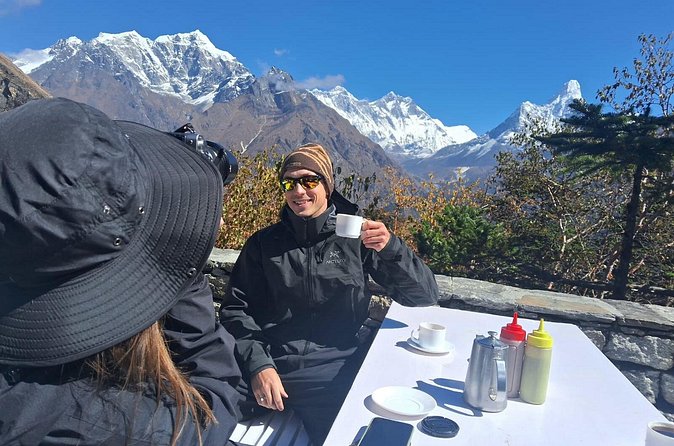
Day 6 begins with a descent through forest toward Debuche, followed by a crossing of the Imja Khola River. The trail then climbs through Pangboche, described as the highest permanent settlement in the region, before continuing to Dingboche.
The walking time is about six hours. You will notice a clear change in the surroundings as you move above the thicker forests. Mountain views become more open, and the route feels more exposed.
Dingboche gets two nights, with Day 7 set aside for acclimatization. The planned hike reaches Nagarjun Hill at about 5,100 meters and offers views toward Makalu, Lhotse, and Island Peak. This is a demanding acclimatization outing, even though it is shorter than a full transfer day.
You return to Dingboche for lunch and rest. Do not treat this as an ordinary sightseeing walk. At this altitude, every uphill section takes more effort. The useful goal is to move steadily, listen to your guide, and avoid trying to prove anything to the group.
Lobuche and the memorial ridge
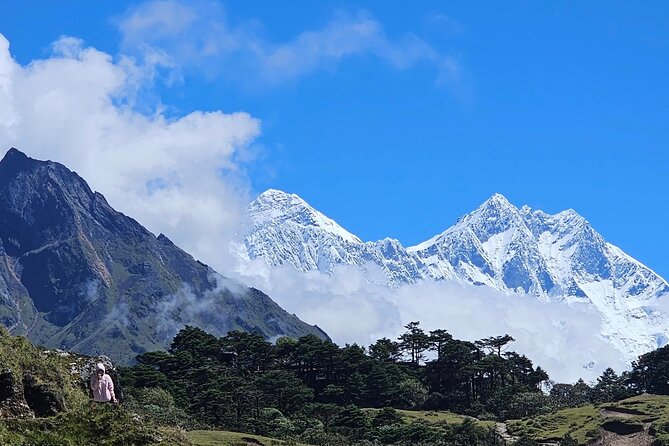
The route to Lobuche takes about five hours through a rockier area with little vegetation. You pass Dughla and then climb toward a memorial ridge honoring climbers who died on Everest.
This is one of the most serious moments of the trek. The memorials give the mountain a human dimension and make clear that Everest is not simply a scenic backdrop. You are walking through a place shaped by ambition, loss, and respect for the people who attempted these climbs.
The surroundings also become more stark. The lower forests are gone, and the trail is defined by rock, cold, and thin air. Your lodge stay at Lobuche is basic but well placed for the next day’s walk toward Gorak Shep and Base Camp.
Everest Base Camp from Gorak Shep
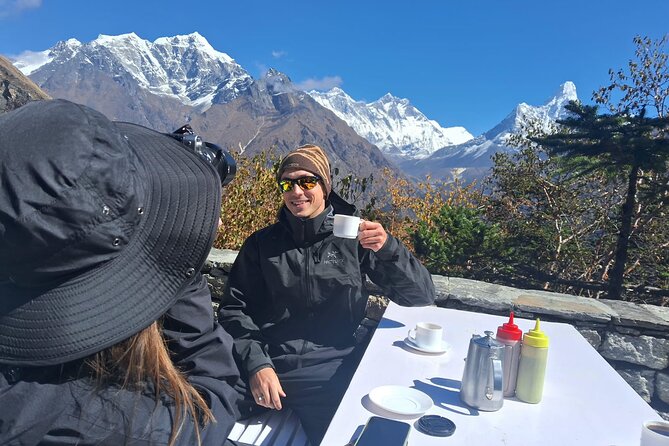
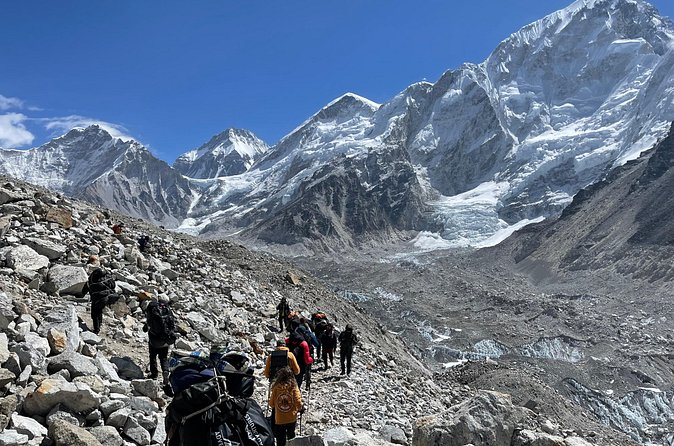
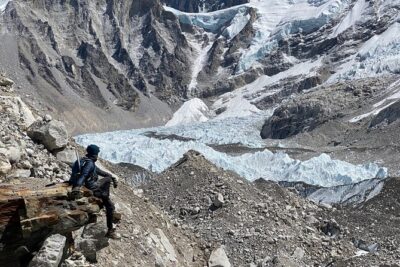
Day 9 is one of the longest days, lasting about seven hours. You first walk gradually to Gorak Shep, the final settlement before Base Camp. After lunch, you continue across rocky ground and glacier moraines toward Everest Base Camp.
The Base Camp walk is not a smooth promenade. Expect uneven terrain and a slower pace, especially at altitude. The reward is the knowledge that you have reached the foot of the world’s highest mountain by walking there from Lukla.
The view from Base Camp depends on the conditions and the exact position of climbing equipment, but the setting itself is powerful. You are surrounded by high peaks and glacial terrain, with the route behind you and the next day’s early climb still ahead.
Because the day includes both the approach to Gorak Shep and the out-and-back hike to Base Camp, you should be prepared for fatigue. The schedule does not treat Base Camp as the final moment. The highest viewpoint comes next.
Kala Patthar at sunrise
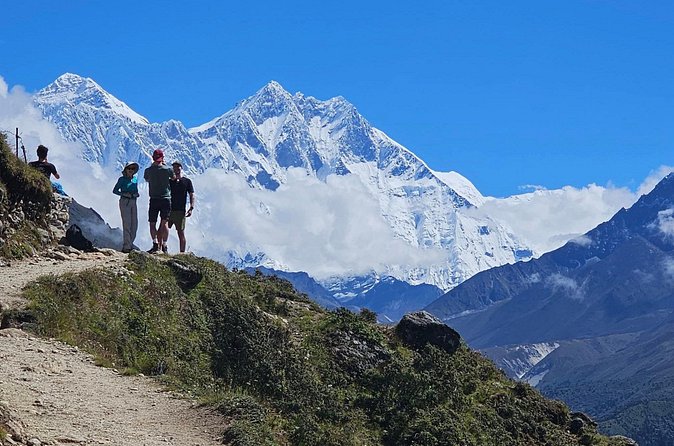
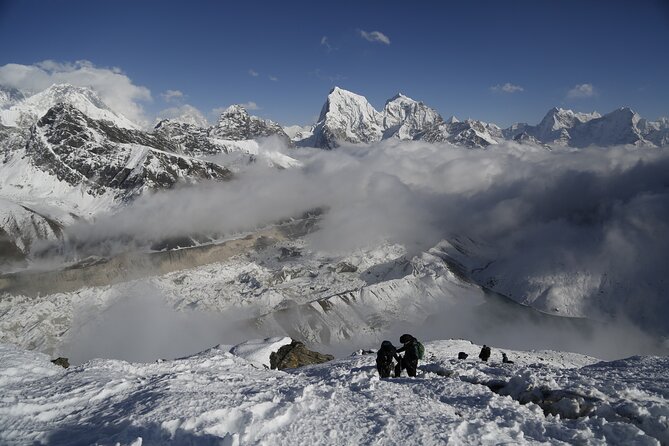
Day 10 starts early with a steep climb to Kala Patthar at 5,545 meters. This is the highest point of the trek and the best place on the route for sunrise views of Everest and the surrounding Himalayan giants.
The climb is short compared with a full trekking day, but the altitude makes it hard. You may need frequent pauses, and the cold before sunrise can be severe, especially in winter. December conditions can be extremely cold, so warm layers and good preparation matter.
After the sunrise stop, you descend to Gorak Shep for breakfast and continue toward Pheriche. The full day lasts about seven hours. This is an efficient plan because it combines the highest viewpoint with a descent to lower ground, but it will be tiring.
The strongest praise for the guided winter experience centers on this combination of harsh cold and memorable views. Guide Krishna is specifically associated with handling the practical details so you can focus on walking. That kind of support is valuable when the weather is below freezing and the air is thin.
The long return through Tengboche and Namche
The return is not simply an afterthought. Day 11 takes about seven hours back toward Namche, passing through Pangboche and Tengboche. Descending through forest and crossing suspension bridges feels different from the ascent, and you gain new views of peaks you first saw from the opposite direction.
Day 12 continues downhill to Lukla, again taking about seven hours. By now, you know the trail, but downhill walking can be hard on knees and legs. The final day gives you time to reflect on the route, the mountain villages, and the people who supported the journey.
The morning flight from Lukla to Kathmandu on Day 13 takes about 45 minutes. You return to your Kathmandu hotel for rest. Day 14 is kept open in case weather delays the flight, which is a sensible part of the schedule rather than unnecessary padding.
If the flight runs on time, you have an extra day in Kathmandu before your airport transfer on Day 15. The schedule gives you a better chance of reaching your onward flight without relying on perfect mountain weather.
What the $1,800 price really covers
At $1,800 per person, the price has real value because it includes many costs that can otherwise add up quickly. You receive:
- Three meals a day during the trek
- Three nights in a Kathmandu hotel
- Eleven nights in trekking lodges
- Kathmandu to Lukla and return flights
- Necessary trekking permits and Sagarmatha Conservation fees
- A guide and one porter for every two trekkers
- Ground transportation
- Sleeping bag, duffel bag, and walking pole
- Airport pickup and transfers
The food and lodging are practical rather than luxurious. The important benefit is that the main arrangements are handled for you across a remote route. You do not need to organize each lodge, permit, flight, meal, and porter separately.
International airfare, the Nepal visa, travel insurance, and tips for the guide and porter are not included. Insurance deserves special attention because this is a high-altitude trek with remote sections and possible flight disruption. Check that your policy covers the activity and the conditions you expect.
The booking is non-refundable and cannot be changed for any reason. I would not book until your flights, fitness, insurance, and available dates are settled.
Who should choose this trek
This trek suits you if you want a guided, organized route to Everest Base Camp and are comfortable with long walking days at high altitude. You should have a moderate level of physical fitness and be ready for days lasting five to seven hours.
It is a good choice if you value practical support. The guide, porter arrangement, included meals, lodges, permits, and flights remove much of the planning work. The group limit of 12 also keeps the experience reasonably personal.
It is less suitable if you want luxury rooms, a relaxed schedule, or flexible booking terms. It is also a poor match if cold, steep trails, long downhill walks, or altitude make you uneasy.
Past praise has focused on two things: the beauty of winter conditions and the way the guide team manages the difficult details. Babu is also named in especially positive comments about the team’s organization. Since guide assignments can vary, confirm who will lead your departure before booking.
FAQ
How long is the Everest Base Camp Trek?
The trek lasts approximately 15 days, including arrival and departure days in Kathmandu, trekking days, acclimatization days, and a spare day for possible Lukla flight delays.
What is the highest point reached?
The highest point is Kala Patthar at 5,545 meters. Everest Base Camp itself is at 5,364 meters.
Does the price include flights to Lukla?
Yes. The price includes the flight from Kathmandu to Lukla and the return flight from Lukla to Kathmandu.
Are meals included?
Yes. Breakfast, lunch, and dinner are included during the trek. The package lists 11 lunches, 12 dinners, and 14 breakfasts.
Is accommodation included?
Yes. The package includes three nights in a Kathmandu hotel and 11 nights in trekking lodges.
Is a porter included?
Yes. One porter is provided for every two trekkers.
Are trekking permits included?
Yes. Necessary trekking permits and Sagarmatha Conservation fees are included.
What is not included in the price?
International airfare, the Nepal visa fee, personal travel insurance, and tips for the guide and porter are not included.
What happens if the Lukla flight is delayed?
Day 14 is held as a buffer for flight delays or cancellations caused by mountain weather. If the flight operates on schedule, you can use the day in Kathmandu before your departure.
Should you book it?
I would choose this trek if you want the classic Everest Base Camp route with the main costs arranged in advance and enough time for acclimatization. The inclusion of flights, meals, lodges, permits, gear, guide support, and porter help makes the $1,800 price appealing.
Book only after checking your insurance, fitness, cold-weather clothing, and post-trek flight plans. If you accept the altitude, the basic lodges, the long walking days, and the strict non-refundable terms, this gives you a practical route to Everest Base Camp with standout moments at Tengboche, Base Camp, and sunrise on Kala Patthar.
Just added around Kathmandu
- Traditional Momo Making Class★ 5.0 · 10 reviews
- Wildlife Adventure in Chitwan Nepal★ 4.0 · 4 reviews
- Walking tour of real Kathmandu through back streets.★ 5.0 · 3 reviews
- Kathmandu 2 Nights 3 Days Chitwan Jungle Safari Tour★ 5.0 · 9 reviews
- Kathmandu Street Food Walking Tour – Eat Like a Local★ 5.0 · 3 reviews
- Private Manaslu Circuit Trek at Himalayas★ 5.0 · 3 reviews
- Walking tour of Kathmandu with awesome local guides★ 5.0 · 4 reviews
- Visit Swayambhunath and Bauddhanath Stupa with Guide★ 5.0 · 5 reviews
Everest Base Camp Treks from Kathmandu, compared.
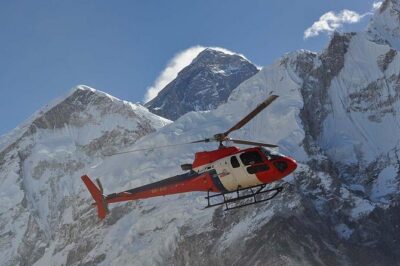
Everest Base Camp Trek with Helicopter Return from Gorakshep to Lukla
Read our review →Browse the lists this tour appears in