
Reviewed · EVEREST BASE CAMP TREKS FROM KATHMANDU
Everest Base Camp Trekking
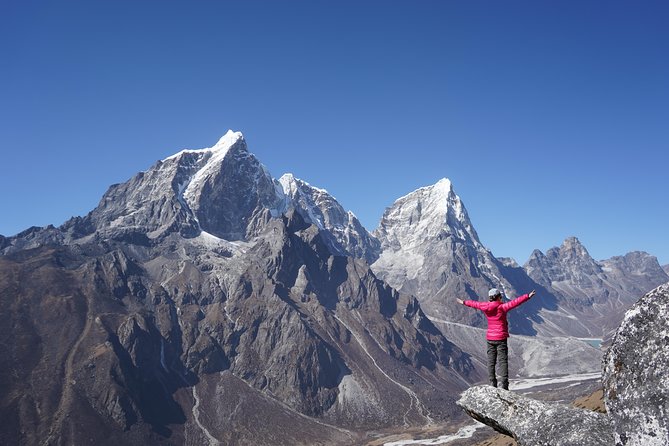
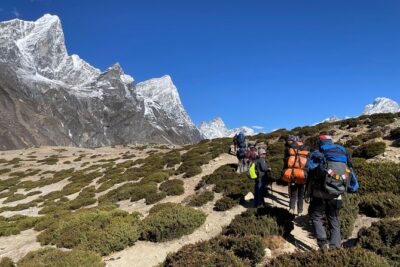
Everest Base Camp is the headline, but the real prize is the slow approach through the Khumbu. You walk beneath Ama Dablam, cross suspension bridges over the Dudh Koshi, pass prayer flags and Buddhist monasteries, and sleep in small mountain villages. The 14-day route gives you time to adjust rather than race uphill.
I like the small maximum group of 10, which makes it easier for a guide to watch your pace and respond when altitude starts to bite. I also like that teahouse lodging, meals, local transport, and airport pickup are arranged, so you can focus on walking instead of sorting out each night’s plan. The main drawback is simple: this is a serious high-altitude trek, not a sightseeing holiday. You need strong fitness, patience, and flexibility for mountain weather.
Key points to know before booking
- A 14-day route with two acclimatization-focused days gives you a better chance to adjust to the altitude.
- The group is limited to 10 people, offering more personal attention than a large trekking party.
- Namche Bazaar is your practical reset point, with bakeries, restaurants, ATMs, and Internet cafes.
- Kala Patthar provides the sunrise mountain view, while Everest Base Camp itself is the emotional goal of the route.
- Guides and porters are central to the experience, with Biru, Amabar, Ramesh, and others named in past departures.
- The $1,350 price has real value because meals, teahouse accommodation, transfers, and guiding are built into the trekking plan.
Why the Everest Base Camp route works
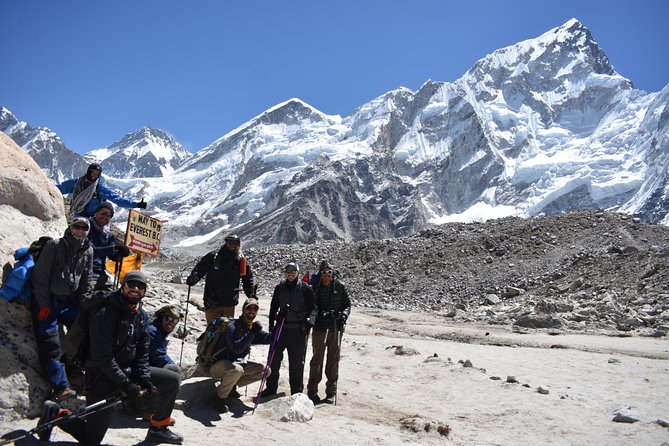
I like this trek because it combines a clear goal with a gradual change in scenery. You begin in Kathmandu, where the streets are busy and low altitude is easy, then fly toward Lukla and walk through pine forest, river valleys, alpine settlements, and glacier country.
The route is not designed as a quick march to Base Camp. It includes a short acclimatization hike at Namche and a second night in the high Khumbu before the final push. That matters. At altitude, extra time can be more useful than extra sightseeing.
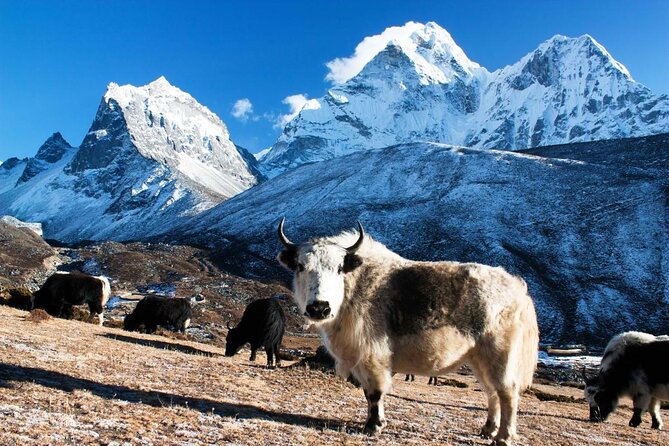
You are also not simply walking toward a famous sign. The route passes through places that give the trek its character: Namche Bazaar, Phorse, Dingboche, Pangboche, Lobuche, and Gorak Shep. Buddhist prayer flags, stone walls, yak herders, monasteries, and suspension bridges turn the walk into a look at daily life in the Himalaya.
More Everest Base Camp treks:
- Everest Base Camp Trek – 14 Days
★ 5.0 · 1,499 reviews - Everest Base Camp Trekking – 13 Day
★ 5.0 · 365 reviews - Everest Base Camp Trek -14 Days
★ 5.0 · 321 reviews
Day 1: A gentle start in Kathmandu
Your trip begins with airport pickup at Tribhuvan International Airport. A private tourist vehicle takes you to your hotel, and you can either rest or visit the operator’s office for a briefing and more details about the trek.
This is a useful first day because international flights into Kathmandu can leave you tired. Do not treat the arrival day as a sightseeing day unless your flight arrives early and you feel fresh. The airport transfer also removes one early worry, especially if this is your first visit to Nepal.
The meeting point is Tribhuvan International Airport on Ring Road. You need a current passport, and passport details are required when booking for every person in the party.
Day 2: Flying to Lukla and starting on foot
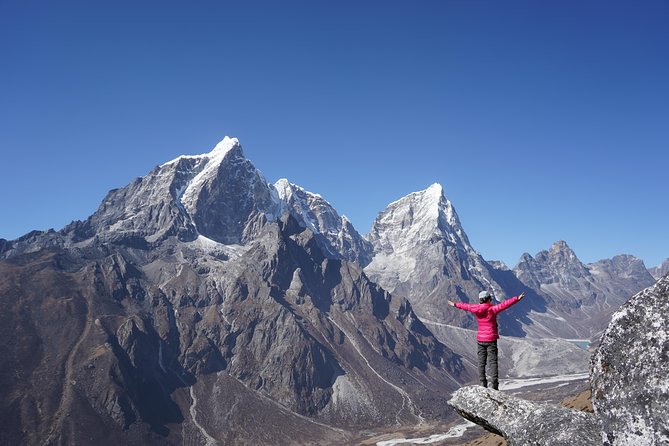
After breakfast, you transfer to the domestic airport for the flight to Lukla. The morning flight offers views of snow-covered mountains as the light changes, and the landing at Tenzing-Hillary Airport places you directly at the start of the trail.
Lukla is where the trip changes pace. From here, the mountain route is walked, not driven. The first day on foot passes through pine forest beside the Dudh Koshi River, with views toward Mount Thamserku and several settlements along the way.
The flight is an important part of the experience, but it also reminds you that Himalayan plans depend on weather. The trip operates in all weather conditions, so bring suitable clothing and keep some mental space for changes to the day’s plan.
Day 3: Pine forest, river valleys, and Namche Bazaar
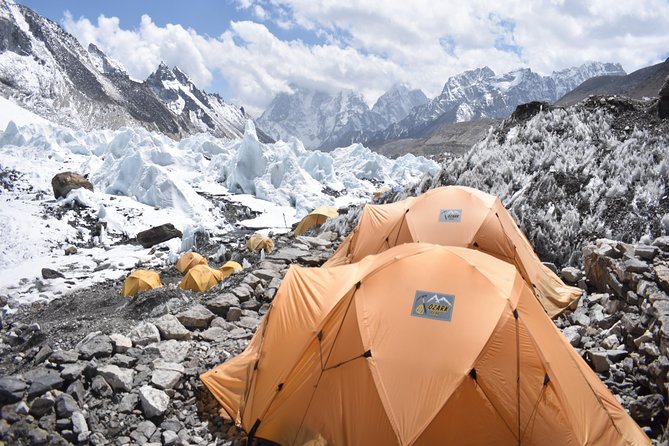
The route continues through forest and along the Dudh Koshi before reaching the entrance checkpoint for Sagarmatha National Park. The walk gradually becomes more demanding as you approach Namche Bazaar.
Namche is the largest settlement in the Khumbu and feels like a mountain service center. You will find restaurants, bakeries, ATMs, and Internet cafes, which makes it a good place to handle small practical needs before the trail gets more remote.
This day is less about ticking off a famous sight and more about noticing the change in altitude and terrain. Take your time. The trail may feel manageable at lower elevations, but the air becomes thinner as you climb.
More day hikes and treks in Kathmandu:
- Nagarkot Sunrise View and Day Hiking from Kathmandu
★ 5.0 · 471 reviews - Annapurna Circuit Trek with Tilicho Lake
★ 5.0 · 368 reviews - Annapurna base camp trek 5 Days
★ 5.0 · 252 reviews - Everest Base Camp Trekking – 2025/2026
★ 5.0 · 199 reviews
Day 4: Acclimatizing above Namche
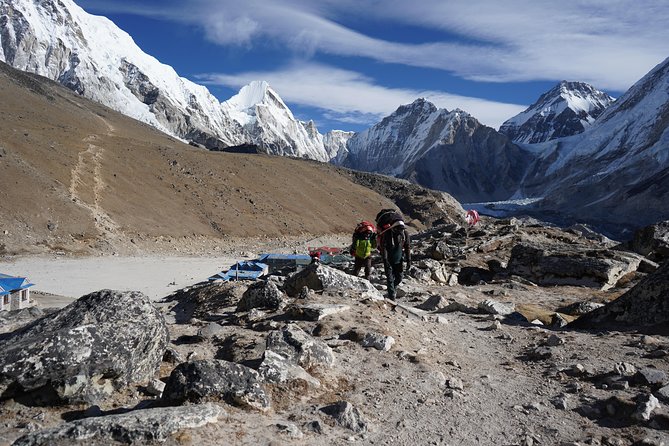
Day 4 is planned as a rest day, though you take a short hike to a nearby viewpoint. The itinerary names the area around Thyangboche, and the walk is meant to help your body adjust while giving you a stronger first look at the Himalayan peaks.
A rest day does not mean lying in bed all day. A controlled hike followed by a lower sleeping elevation is a standard way to help with acclimatization. Your guide can also observe how you are responding before the route heads higher.
I consider this one of the most valuable days in the schedule. It may feel like a slow use of time when you are eager to reach Base Camp, but skipping or shortening acclimatization can make the later stages much harder.
Day 5: Namche to Phorse via mountain views
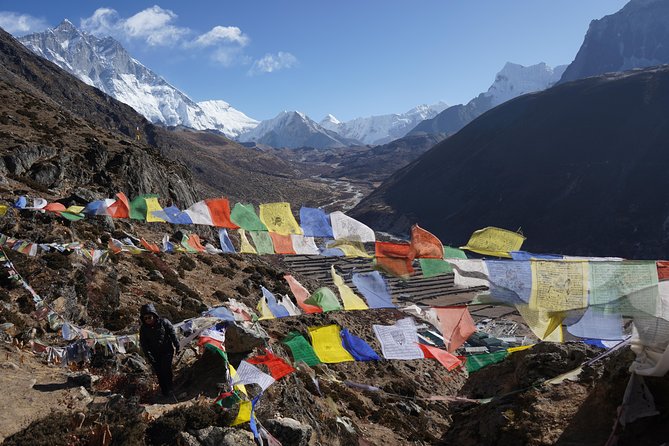
After breakfast, you leave Namche for Phorse. The route reaches the Mungla area and opens views toward Ama Dablam, Mount Khumbu, and Mount Thamserku before descending toward the Dudh Koshi and crossing the river.
Phorse offers a quieter overnight stop than Namche. The day includes both climbing and descending, so do not judge the difficulty by distance alone. Rocky trails and repeated changes in elevation can tire your legs even when the route does not look dramatic on paper.
This is also a good day to settle into the rhythm of guided trekking. Your guide sets the pace, helps with route decisions, and gives you a chance to ask about villages, mountain names, and local customs.
Day 6: Phorse to Dingboche through Buddhist country
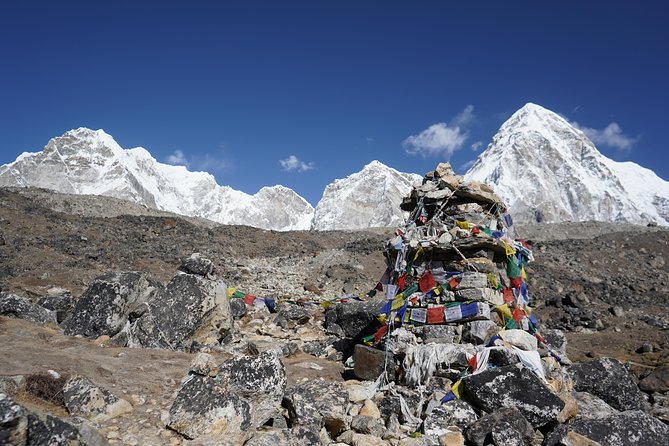
The walk from Phorse to Dingboche includes a visit to one of the region’s larger Buddhist monasteries. From there, the route continues through alpine forest to Pangboche and onward through Shomare toward Dingboche.
The monastery visit gives the route a cultural center, rather than making it only a mountain walk. You will also see how settlements become more spare as you move upward. The trees thin, the villages feel more exposed, and the trail takes on a high-country character.
Dingboche is an important stop because it is one of the main settlements before the route reaches the glacier and Base Camp area. Expect the cold to feel sharper here, especially in the morning and evening.
Day 7: Duglha, yak herders, and the Khumbu story
The itinerary describes a climb from Duglha through the Khumbu Khola valley. Along the way, you pass Dusa, associated with yak herders, and Phulung Karpo, linked with the 1953 Everest expedition. The route also refers to Chola Lake and views in the surrounding high country.
Some of the day’s descriptions combine several local landmarks, so your guide is especially useful here. Place names can be spelled in different ways, and the exact order of smaller points may vary with trail conditions.
What matters is the shift from village walking to glacier-country walking. The trail feels more exposed and the physical effort increases. Keep your water close, protect yourself from the cold, and tell your guide early if you develop a headache, nausea, unusual tiredness, or trouble walking steadily.
Day 8: Moving beside the Khumbu Glacier
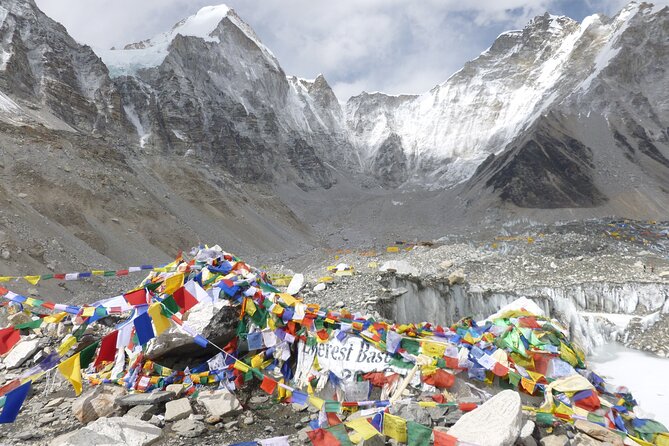
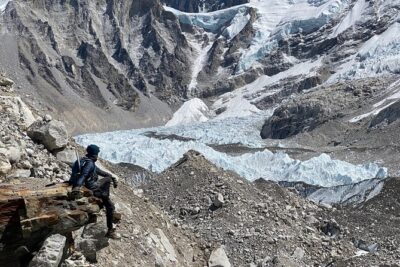
This day brings a steep climb over the terminal moraine of the Khumbu Glacier toward Chupki Lhara. The route passes boulder-covered slopes and collections of stones marked with prayer flags.
The prayer-flag memorials add a quiet, serious mood to the day. You are now walking through a place shaped by climbing history, high altitude, ice, rock, and loss. It is not a polished attraction. The path can feel rough, steep, and demanding.
I would not plan extra activities for this day. Save your energy for the trail, eat what you can, and let your guide judge the pace. A small group helps here because the guide can keep an eye on each person rather than simply leading a long line.
Day 9: Reaching Everest Base Camp
This is the main day of the trek. From Thangma Riju, you can experience a wide view of snow-covered peaks, though Everest itself is not visible from that point. The route then continues toward Everest Base Camp.
Reaching Base Camp is powerful because it marks the end of days of walking through increasingly high and severe country. It is important to keep expectations realistic, though. Base Camp is not a summit, and the view of Everest is not necessarily best from the Base Camp route itself.
The appeal is the setting and the achievement: standing at the point used by expeditions, surrounded by glacier terrain and major peaks. The stop is listed as about 30 minutes, which is enough for photos and a pause, but not a long stay.
Day 10: Kala Patthar at sunrise
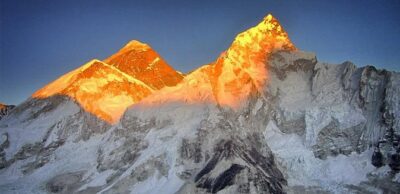
The next morning begins very early for the climb to Kala Patthar. The goal is to reach the viewpoint as darkness gives way to daylight, with the first light touching the surrounding peaks.
This is often the visual high point of the trip. The itinerary specifically highlights sunrise views, and Kala Patthar is the place to focus your camera and attention on the mountain panorama. The listed stop lasts around 30 minutes, but the full morning includes the early start and the climb.
The altitude makes this a serious effort. You need to walk slowly and listen to your body. If you are exhausted after Base Camp, tell your guide rather than treating the viewpoint as a test of willpower.
Days 11 and 12: The long return through Pangboche
The return route follows the same general corridor through Duglha and Pheriche, with Orsho and Shomare along the way. At Pangboche, you can explore the old monastery before continuing through the mountain villages.
Descending is easier for breathing, but it is not effortless. The trail remains rocky and uneven, and tired legs can make downhill walking awkward. Day 12 includes a steep descent toward the Dudh Koshi and a suspension bridge, with the trail continuing through the lower Khumbu.
Use trekking poles if you normally rely on them, and keep your pace controlled. The final days reward patience. It is tempting to rush once the altitude drops, but a twisted ankle on a descent can spoil an otherwise successful trip.
Days 13 and 14: Returning to Kathmandu
On Day 13, you fly from Lukla back to Kathmandu. Once back in the city, you have time for shopping and walking around before an evening celebration of the completed trek.
Day 14 is your final day in Nepal. You can shop or sightsee around the Kathmandu Valley before your scheduled flight from Tribhuvan International Airport.
These city days are useful buffers after the mountain route. They give you a chance to replace anything lost or damaged on the trail and enjoy a more relaxed setting before flying home.
What the $1,350 price really covers
At $1,350 per person, this trek is not a casual budget outing, but it offers solid value for a 14-day guided route. The plan includes teahouse accommodation, meals, local transportation, airport pickup, and a small-group guide. Those elements would be difficult to arrange smoothly on your own, especially when the route includes flights, acclimatization stops, and several remote overnight locations.
The value is strongest if you want structure. You are paying for route planning, local support, guiding, and the practical work of moving between Kathmandu, Lukla, and the high Khumbu. The price also makes more sense for solo clients who do not want to organize every detail alone.
Check the final inclusions carefully before booking, especially the precise handling of flights, permits, gear, porter arrangements, tips, and personal expenses. The provided plan confirms meals, teahouses, and local transport, but it does not spell out every possible extra.
Who should book this trek
You should consider it if you:
- Can handle long days of walking on steep, rocky ground
- Want a guide and a group no larger than 10
- Prefer teahouse lodging to arranging rooms independently
- Want cultural stops as well as mountain views
- Are comfortable with cold, changing weather and a demanding route
- Value a set schedule with airport pickup and local transfers
This is best for an active person with strong fitness. It is not a good match if you want easy walks, guaranteed weather, private luxury lodging, or a flexible sightseeing schedule.
Past departures have included guides named Biru, Amabar, Ramesh, and Parshu, with porters such as Kanchar also receiving specific praise for practical help. You are not guaranteed one of these individuals, but the repeated importance of guide and porter support is worth noting. Ask who will lead your departure and how porter support is organized before you pay.
Practical details that matter
The group maximum is 10 people, and mobile tickets are offered. Group discounts may be available. Confirmation is provided at booking, and a valid passport is required on the day of the trip.
The experience operates in all weather conditions, so proper clothing is not optional. I would also treat the cancellation rule seriously: you receive a full refund if you cancel at least 24 hours before the local start time, but cancellations or changes inside that window are not accepted for a refund.
Free cancellation is helpful, but it does not remove the need to prepare well. Your fitness, clothing, travel documents, and willingness to follow your guide’s pace will shape the experience far more than a last-minute change of plan.
Should you book the Everest Base Camp trek?
Book this trek if you want the classic Everest route with a guide, a small group, teahouse stays, and a schedule that gives you time to adjust to altitude. The strongest reasons are the careful progression from Lukla to Namche, Dingboche, Base Camp, and Kala Patthar, plus the local support that keeps you from handling every detail yourself.
Think twice if you are not already comfortable with strenuous walking or if you need a predictable, low-risk holiday. The route is cold, steep, and exposed to mountain weather. For a fit and prepared person, though, the combination of Buddhist villages, glacier country, famous viewpoints, and the final walk to Base Camp makes the $1,350 package a sensible way to tackle one of Nepal’s great treks.
FAQ
How long is the Everest Base Camp trek?
The experience lasts approximately 14 days, including arrival and departure time in Kathmandu, the flight to Lukla, the trek to Base Camp, the return to Lukla, and the flight back to Kathmandu.
What is the maximum group size?
The trek has a maximum of 10 people.
Is airport pickup available?
Yes. An airport representative meets you at Tribhuvan International Airport, and a private tourist vehicle takes you to the hotel.
What fitness level is required?
The trek requires a strong physical fitness level. It includes steep, rocky trails, high altitude, glacier moraine, and long walking days.
Are meals and accommodation included?
Teahouse accommodation and meals are included in the trekking plan. The route uses teahouses in the mountain settlements.
Can I cancel for a full refund?
Yes, if you cancel at least 24 hours before the experience start time. Cancellations or changes made less than 24 hours before the local start time are not accepted for a refund.
Just added around Kathmandu
- Traditional Momo Making Class★ 5.0 · 10 reviews
- Wildlife Adventure in Chitwan Nepal★ 4.0 · 4 reviews
- Walking tour of real Kathmandu through back streets.★ 5.0 · 3 reviews
- Kathmandu 2 Nights 3 Days Chitwan Jungle Safari Tour★ 5.0 · 9 reviews
- Kathmandu Street Food Walking Tour – Eat Like a Local★ 5.0 · 3 reviews
- Walking tour of Kathmandu with awesome local guides★ 5.0 · 4 reviews
- Private Manaslu Circuit Trek at Himalayas★ 5.0 · 3 reviews
- Visit Swayambhunath and Bauddhanath Stupa with Guide★ 5.0 · 5 reviews
Everest Base Camp Treks from Kathmandu, compared.
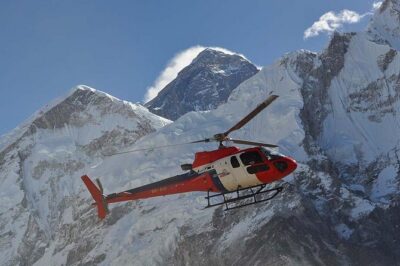
Everest Base Camp Trek with Helicopter Return from Gorakshep to Lukla
Read our review →
Browse the lists this tour appears in