
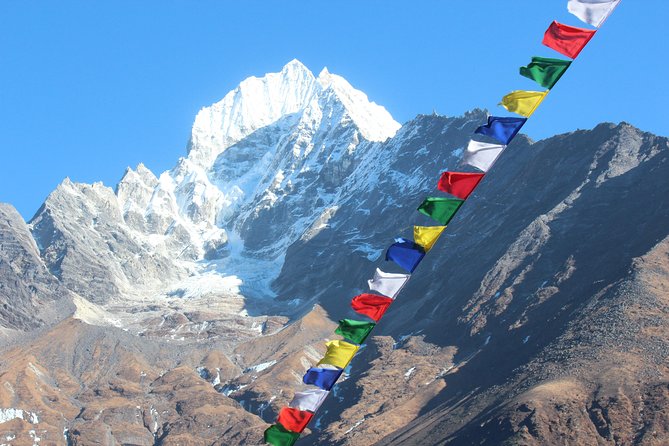
Reviewed · EVEREST BASE CAMP TREKS FROM KATHMANDU
Everest Three Pass Trek
The Everest Three Pass Trek is the hard way to see the Khumbu, and that is exactly its appeal. In 15 days, you cross Kongma La, Cho La, and Renjo La, each above 5,300 meters, while still visiting Kala Patthar, Gokyo, Namche, and the Everest trail.
I like the smart route design, especially the short move from Dingboche to Chhukung before Kongma La. I also like that the $1,800 price covers domestic flights, permits, meals, guesthouses, a guide, and porters, not just trail support.
The catch is simple: this is a serious high-altitude trek. Rough ground, icy sections, long uphill days, and thin air demand strong fitness, patience, and a willingness to accept changing flight and weather conditions.
Key points at a glance
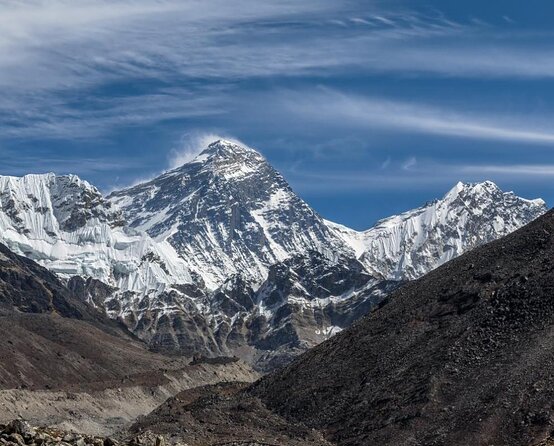
- Three high passes in one circuit: Cross Kongma La at 5,535 meters, Cho La at 5,420 meters, and Renjo La at 5,360 meters.
- A well-planned acclimatization pattern: Spend time in Namche, then use Chhukung to shorten the approach to Kongma La.
- Two famous viewpoints: Watch sunrise from Kala Patthar and hike to Gokyo Ri for broad views over the valley, lakes, glaciers, Everest, and nearby peaks.
- A private trek: Only your group participates, with a local government licensed English-speaking guide and porters.
- Most core costs are covered: Guesthouses, 14 breakfasts, 14 lunches, 14 dinners, permits, staff costs, equipment loans, ground transport, and Kathmandu to Lukla flights are included.
- The main practical risk is weather: The Lukla flights and high passes depend on conditions, so keep spare flexibility around this trip.
Why the Three Pass route is worth the effort
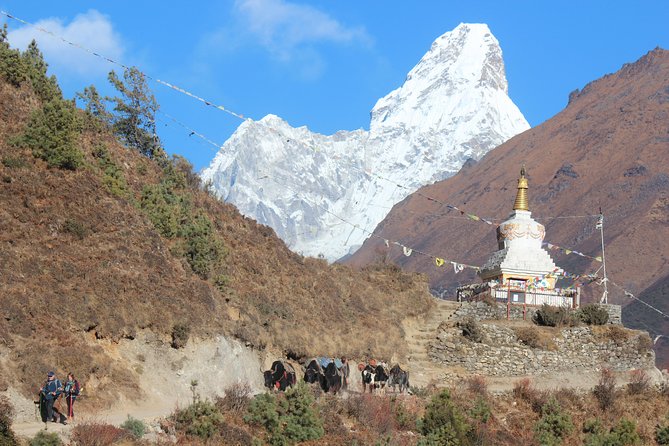
The standard Everest Base Camp route gives you one famous destination. This trek gives you a full circuit through the Khumbu, with three demanding crossings and a wider view of the region.
You get the celebrated Everest scenery, but you also see very different sides of the high country. The route moves from river valleys and rhododendron forest to open mountain country, glaciers, icy passes, and the blue-green lakes around Gokyo. The passes are not simple viewpoints reached by a short path. They are the central work of the trip.
Kongma La is the highest of the three at 5,535 meters. Cho La reaches 5,420 meters and includes an ice-covered trail. Renjo La is 5,360 meters and is reached on a snow-filled path. These numbers matter because altitude affects every ordinary task. A walk that would be easy at home can feel slow and tiring here.
I also like the private format. Your group is not tied to a large public departure, so the guide can focus on the people actually walking the route. That said, private does not mean easy. It means you share the days with your own party, not that the terrain becomes more forgiving.
More Everest Base Camp treks:
- Everest Base Camp Trek – 14 Days
★ 5.0 · 1,499 reviews - Everest Base Camp Trekking
★ 5.0 · 485 reviews - Everest Base Camp Trekking – 13 Day
★ 5.0 · 365 reviews
Day 1: Flying from Kathmandu to Lukla
The trip begins early, with a 6:15 am start from Base Camp Adventure in Kathmandu. The flight to Lukla is part of the experience, carrying you over green hills and snow-covered peaks before landing at Tenzing-Hillary Airport.
In Lukla, you meet the trekking staff and begin on foot. The included domestic airfare and airport tax are valuable here, since the flight is an essential part of reaching the trailhead rather than an optional extra.
The early start may be inconvenient, especially after arriving in Nepal, but it helps set the rhythm for the trek. You should also treat the flight as weather dependent. The company says poor weather can lead to a changed date or a full refund for the activity, but you still need room in your wider Nepal plans.
Day 2: Along the Dudh Koshi to Namche
The trail follows the Dudh Koshi River and crosses suspension bridges decorated with prayer flags. You then enter Sagarmatha National Park and climb toward Namche Bazaar.
This is a good first full trekking day because it introduces the basic pattern of the route: river crossings, uphill sections, forest, mountain views, and a steady change in altitude. Namche is a Sherpa town and the main service center of the Khumbu route, so arriving here feels like a real transition from the lower valley to the high mountains.
The climb into Namche can feel tougher than its distance suggests. You are gaining altitude, and this is where pacing matters. Keep your steps short, drink regularly, and resist the temptation to race ahead simply because the path is still busy with ordinary trail activity.
Day 3: Acclimatizing around Namche
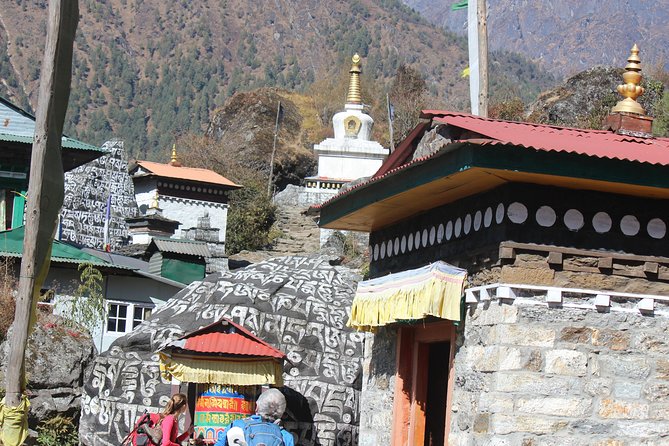
Day three is set aside for acclimatization, which is not a wasted day. You explore Namche and walk uphill to the Everest View Hotel, where the itinerary lists views of Everest, Nuptse, Thamserku, and other peaks.
This outing gives your body time to adjust while still keeping you active. It also gives you an early look at the scale of the mountains before the route becomes more remote.
Namche is one of the better places on the trek to pause and get organized. Check your layers, sort your day bag, and make sure the equipment supplied by the company fits properly. The package includes a down jacket, sleeping bag, and duffel or kit bag, but your personal trekking equipment is your responsibility.
More day hikes and treks in Kathmandu:
- Nagarkot Sunrise View and Day Hiking from Kathmandu
★ 5.0 · 471 reviews - Annapurna Circuit Trek with Tilicho Lake
★ 5.0 · 368 reviews - Everest Base Camp Trek -14 Days
★ 5.0 · 321 reviews - Annapurna base camp trek 5 Days
★ 5.0 · 252 reviews
Days 4 and 5: Tengboche, Pangboche, and Dingboche
From Namche, you follow the Dudh Koshi upstream toward Phunke Tenga, where water-driven prayer wheels mark the route. The trail then climbs above the Imja Khola to Tengboche.
Tengboche is a memorable stop because of its mountain setting and monastery. The itinerary includes a short visit before continuing. The route here also passes through rhododendron forest, which makes this section feel greener and more sheltered than the high pass days ahead.
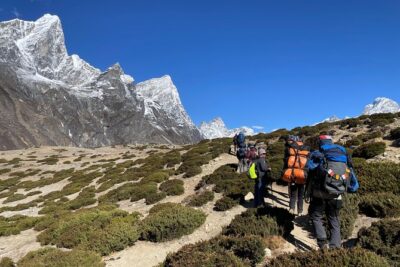
The next day takes you toward Dingboche through Pangboche, with views of Ama Dablam, Lhotse, and Everest. Ama Dablam is especially striking from this part of the valley, while Lhotse and Everest remind you that the route is steadily entering very high country.
Dingboche is an important altitude marker. You are no longer simply walking through a Himalayan valley. From here, the air is thinner, the nights are colder, and the route begins to demand more from your legs and lungs.
Day 6: A short day to Chhukung
Instead of taking an extra night in Dingboche, the plan moves you to Chhukung. This is a clever choice for the route ahead because it shortens the following day, when you cross Kongma La.
The walk to Chhukung is short but uphill, with views toward the surrounding peaks and the Imja Valley. You gain a little more altitude before the first pass, but you avoid making the Kongma La day longer than necessary.
This is one of the itinerary’s best practical decisions. On a hard trek, a short preparation day can make the next morning more manageable. Still, you should not mistake short for effortless. Your body is already working at altitude, and rest, food, and sleep matter more than squeezing in extra exploration.
Day 7: Crossing Kongma La at 5,535 meters
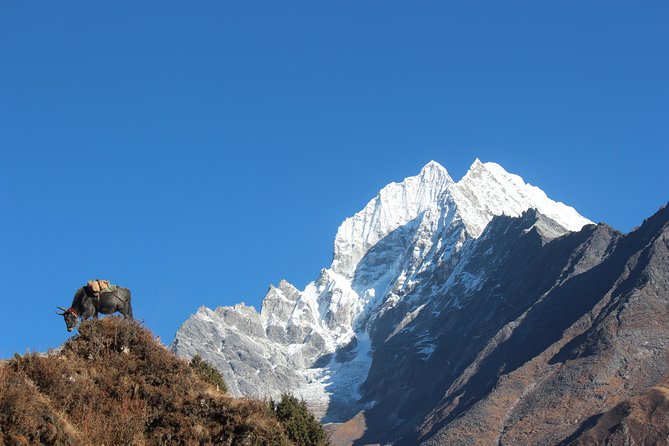
Kongma La is the highest of the three passes and one of the hardest days of the trip. The trail climbs steeply over rough ground, and conditions can include snow and ice.
At the top, you get broad views of the Mahalangur Himalayan range, including Everest and surrounding peaks. The reward is not only the view. It is the feeling of completing the first major test of the circuit.
This is a day when your guide and porters are especially important. The package covers their wages, insurance, food, accommodation, and equipment, along with luggage support. You still need to carry a day pack with personal essentials, but the porters take the main load.
Expect a slow pace. If the trail is snowy or visibility changes, the crossing may take longer than the neat itinerary suggests. The route is challenging enough that strong physical fitness is not a minor preference. It is a basic requirement.
Days 8 and 9: Gorakshep and sunrise at Kala Patthar
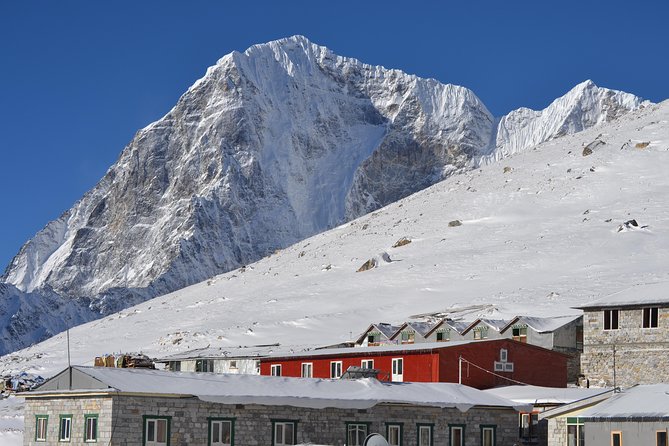
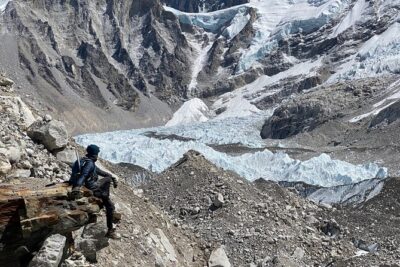
The route continues over stony tracks toward Gorakshep, with views of glaciers and snow-covered peaks. The surroundings become more exposed and severe, and the walking surface is less forgiving than the lower trail.
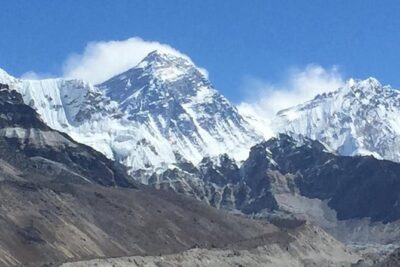
Early on day nine, you climb Kala Patthar for sunrise. At 5,550 meters, it is slightly higher than Kongma La and gives you a famous view toward Everest as the first light reaches the summit and nearby valleys.
Kala Patthar is a highlight because the viewpoint brings Everest into clear focus. The climb is steep and the early start is cold, but the timing gives the mountain a changing light show rather than a flat midday view.
The itinerary does not list a separate Everest Base Camp visit. If reaching Base Camp itself is essential to you, confirm the exact route before paying. This trip focuses on the three passes, Kala Patthar, Gokyo, and the wider circuit.
Day 10: Cho La and the route to Gokyo
Cho La is the second pass and another demanding day. The trail climbs steeply over an ice-covered section before reaching the 5,420-meter top.
After the crossing, you continue toward Gokyo, one of the most appealing parts of the circuit. The setting changes again, with glacial terrain and the Gokyo lakes providing a different visual experience from the Everest Base Camp corridor.
This is likely to be one of your longest and most tiring days. Ice underfoot adds a technical concern even when the distance looks reasonable on paper. Good footwear, warm layers, and careful instructions from your guide matter here.
Gokyo is more than a place to sleep between passes. It gives the route a second high valley and brings you close to a chain of striking lakes. The stop also breaks up the hard crossings before Renjo La.
Day 11: Gokyo Ri and the high lakes
The planned rest day in Gokyo includes a morning hike to Gokyo Ri at 5,360 meters. From the top, you can look across the Gokyo Valley, its small lakes, nearby glaciers, and the surrounding peaks.
Calling this a rest day does not mean you stay in bed. The climb is still strenuous, but it is shorter and more focused than a pass-crossing day. It gives your body a pause from long-distance travel while keeping you active at altitude.
Gokyo Ri is a strong reason to choose this circuit over a simpler out-and-back route. You get a different high viewpoint and a closer look at the lakes rather than seeing Everest from only one side of the region.
Day 12: Renjo La at 5,360 meters
The final pass begins early. The path climbs gradually over snow toward Renjo La, where you get views toward Cho Oyu, Everest, and other major peaks.
Renjo La is the lowest of the three passes by a small margin, but do not expect an easy finish. By this stage, you have already crossed Kongma La and Cho La, and fatigue can make a moderate climb feel hard.
The early start is sensible because it gives you more daylight for the crossing and descent. It also makes this another cold morning, so keep your warm clothing accessible rather than packed at the bottom of your duffel.
Completing Renjo La turns the trek into a true circuit. You have crossed the three high passes rather than simply retracing the same route to Everest.
Days 13 and 14: Returning through Namche to Lukla
After Renjo La, the trail descends toward Namche on a more relaxed route. You can enjoy distant views of Everest and other peaks without facing another major pass.
The return to Namche provides a useful change of pace. You have finished the most demanding mountain crossings, and the path feels easier by comparison, although downhill walking can still be hard on tired knees.
Day fourteen continues from Namche to Lukla through villages, forests, rivers, and suspension bridges. Reaching Lukla gives you a chance to rest and explore the market before the flight back to Kathmandu.
This final walking day is not just a transfer. It lets you notice the lower valley again after time in the high country. Forest, river sounds, and village life feel different after the stark terrain around the passes.
Day 15: Flying back to Kathmandu
The final morning flight returns you from Lukla to Kathmandu over green hills and snowy peaks. The activity ends back at the Kathmandu meeting point.
The return flight is another reason to leave flexibility in your schedule. Mountain weather can affect flights, so do not plan an international departure immediately after this trek unless your arrangements allow changes.
What the $1,800 price really covers
At $1,800 per person, the package offers solid value for a private, fully supported high-altitude trek. You are not only paying for guiding. The price includes:
- Twin-sharing guesthouse accommodation
- A licensed English-speaking local guide
- Porters and the required trekking staff
- Staff food, accommodation, wages, insurance, and equipment
- Sagarmatha National Park entry
- TIMS permit
- Down jacket, sleeping bag, and duffel or kit bag on loan
- First aid medical kits
- Necessary land transport
- Kathmandu to Lukla and Lukla to Kathmandu airfare
- Airport tax
- Fourteen breakfasts, fourteen lunches, and fourteen dinners
That list removes many costs that can otherwise add up quickly in Nepal. The strongest value comes from the staff support, permits, domestic flights, and meals being bundled together.
You still need to budget for international airfare, international departure tax, personal equipment, drinks, laundry, hot showers, alcohol, tips, and anything not listed. Tea, bottled drinks, charging, and personal purchases can add to the daily cost, though exact prices are not provided here.
The accommodation is mainly twin-sharing guesthouses, so this is practical mountain lodging rather than a comfort-focused hotel trip. If you want private rooms, upgraded rooms, or guaranteed hot showers, ask before booking.
Who should book this trek
I would recommend it to you if you want a demanding Everest-region route with more variety than the main Base Camp trail. It suits people who are comfortable walking on rough terrain, climbing steep paths, spending nights in basic guesthouses, and handling cold conditions.
You should have a strong fitness level. The three passes are high, and the route includes steep sections, stony trails, ice, snow, and long days. A good attitude helps, but it cannot replace physical preparation.
This is not the right choice if your priority is a relaxed mountain holiday, hotel comfort, or a short visit to Everest. It is also not the best fit if you need a fixed schedule with no room for weather-related changes.
Base Camp Adventure’s team has been praised for organization and guide support, with names including Shiva, Jwala, Shree, Nabracht, Bhim, and Ram appearing in the company’s wider trekking work. Your assigned guide may differ, so confirm who will lead your group and ask about porter arrangements before departure.
The tour is commonly booked about 39 days ahead. That is a useful planning window, especially if you need to coordinate international flights, training, insurance, and extra days around Lukla weather.
Should you book the Everest Three Pass Trek?
Book this trek if your main goal is the full Khumbu experience: three high passes, Kala Patthar, Gokyo Ri, mountain villages, monasteries, glaciers, lakes, and a private support team. The route is ambitious, but the staging from Namche to Chhukung and the rest day in Gokyo make practical sense.
Skip it if you want an easy Everest introduction or if you are not ready for icy trails and high-altitude exertion. For the right person, the $1,800 fee is a fair price for a supported 15-day circuit with flights, permits, meals, staff, and loaned gear included.
Cancellation is free up to 24 hours before the 6:15 am start. Poor weather can lead to a different date or a full refund, but you should still protect your wider Nepal itinerary with extra time.
FAQ
How long is the Everest Three Pass Trek?
The trek lasts approximately 15 days, beginning and ending in Kathmandu.
What are the three passes on the route?
The route crosses Kongma La at 5,535 meters, Cho La at 5,420 meters, and Renjo La at 5,360 meters.
Is domestic airfare included?
Yes. The price includes Kathmandu to Lukla and Lukla to Kathmandu airfare, along with airport tax.
Are meals included?
Yes. The package includes 14 breakfasts, 14 lunches, and 14 dinners.
Is accommodation included?
Yes. Best available guesthouses are included, mainly in twin-sharing rooms.
Does the trek include a guide and porters?
Yes. A local government licensed English-speaking guide and the required trekking staff and porters are included.
What is not included in the price?
International airfare and departure tax, alcoholic and other drinks, laundry, hot showers, personal trekking equipment, tips, and expenses not specifically listed are excluded.
Just added around Kathmandu
- Traditional Momo Making Class★ 5.0 · 10 reviews
- Wildlife Adventure in Chitwan Nepal★ 4.0 · 4 reviews
- Walking tour of real Kathmandu through back streets.★ 5.0 · 3 reviews
- Kathmandu 2 Nights 3 Days Chitwan Jungle Safari Tour★ 5.0 · 9 reviews
- Kathmandu Street Food Walking Tour – Eat Like a Local★ 5.0 · 3 reviews
- Private Manaslu Circuit Trek at Himalayas★ 5.0 · 3 reviews
- Walking tour of Kathmandu with awesome local guides★ 5.0 · 4 reviews
- Visit Swayambhunath and Bauddhanath Stupa with Guide★ 5.0 · 5 reviews
Everest Base Camp Treks from Kathmandu, compared.
Everest Base Camp Trek with Helicopter Return from Gorakshep to Lukla
Read our review →Browse the lists this tour appears in