
Reviewed · KATHMANDU COOKING CLASSES
Half day cooking class in Thamel kathmandu
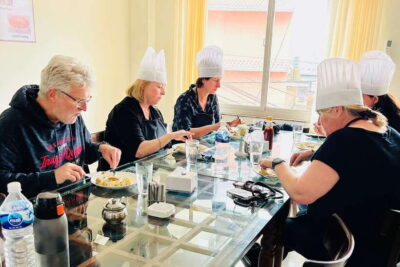
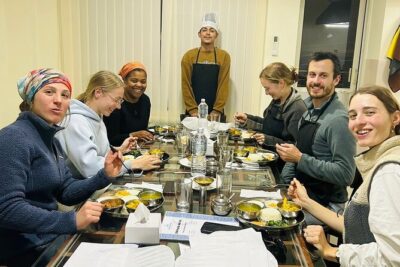
The best part of this Thamel cooking class is that you do not simply watch a chef work. You choose ingredients, shape dough, season dishes, and eat each course while it is fresh. The lesson usually includes a short walk through local food and spice shops, followed by four Nepali dishes, including momos.
I like the choice of three menus, which gives vegetarians and less adventurous eaters room to make a sensible pick. I also like the warm, hands-on teaching style associated with instructors such as Anshu and Nilam. The main consideration is time: the market visit can feel longer than expected, and the kitchen is reached by four flights of stairs.
Key points to know before booking
- Momos appear on every menu: You will learn to make Nepal’s famous dumplings, not just eat them.
- Four dishes are included: You cook a full meal, then eat it in stages while it is hot.
- Three daily shifts are available: Choose morning, afternoon, or evening.
- A market stop adds local context: You may visit a spice or produce shop before cooking.
- Groups stay small: The maximum is eight people, with solo participants also accommodated.
- The $28 price covers plenty: Food, tea or coffee, snacks, and the cooking lesson are included.
Making momos in the heart of Thamel
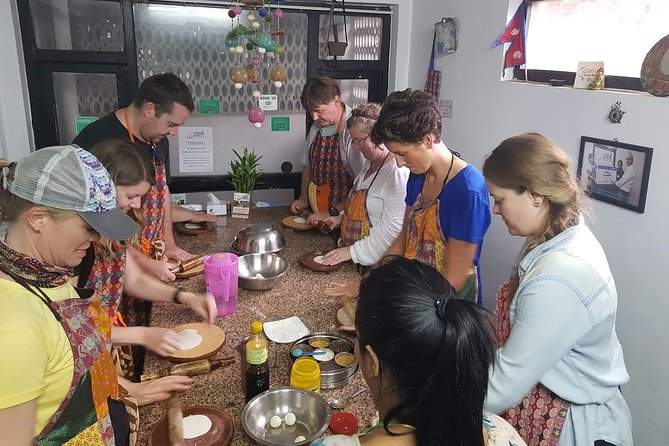
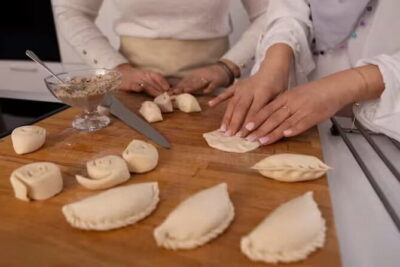
Momos are the natural star here. These dumplings are common across Nepal, but shaping the wrappers and sealing the filling gives you a better sense of the work behind a plate served in a restaurant.
The chef takes you through the process in clear stages. You start with ingredients and dough, then move into filling, folding, and cooking. You do not need prior experience. The instructors demonstrate a step, let you try it, and help when your first few momos look more artistic than circular.
I like that every menu includes momos. You are not forced to choose between learning Nepal’s signature dumpling and trying another menu. Depending on your selection, the meal may include dishes such as dal, chicken curry, chapati egg roll, chatamari, or even chocolate momos.
The class is not built around strict restaurant-style precision. You can add more chili, use less spice, and adjust the seasoning to suit your taste. That matters if you enjoy hot food, but it is also helpful if you are cooking with children or prefer gentler flavors.
More cooking classes in Kathmandu:
- Kathmandu: Local Women-Led Nepali Cooking & Momo Class
★ 4.9 · 360 reviews - Kathmandu: Local Lead Nepali Cooking & Momo-Making Class
★ 5.0 · 212 reviews - The best Private Nepali Cooking Class in Kathmandu
★ 5.0 · 83 reviews
The market walk before the cooking begins
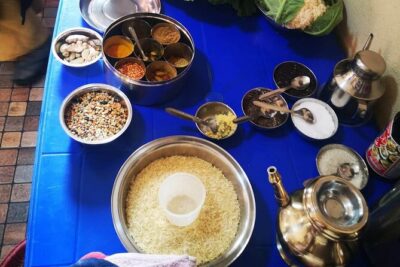
The class may begin with a short visit to a local market or spice shop. This is not a major sightseeing stop. It is a practical introduction to the ingredients you will use, with attention to spices, produce, and the way food is selected in Kathmandu.
I find this useful because spices can be hard to identify when you see them in an unfamiliar shop. A guide can explain what you are looking at and how each item fits into Nepali cooking. Some people also use the stop to buy spices to take home.
The market portion is not perfect for every schedule. If you want maximum cooking time, you may find the shopping visit a little long, especially since some participants would rather prepare an extra dish. Think of it as part of the cultural lesson, not as a separate market tour.
The exact flow can vary, but the cooking school is in Thamel, near the Divine Kathmandu Hotel on Paknajol Marg and Amrit Marg. The activity begins and ends at the same meeting point, which keeps the day simple in a busy part of Kathmandu.
Three menus, four dishes, and a meal you prepare yourself
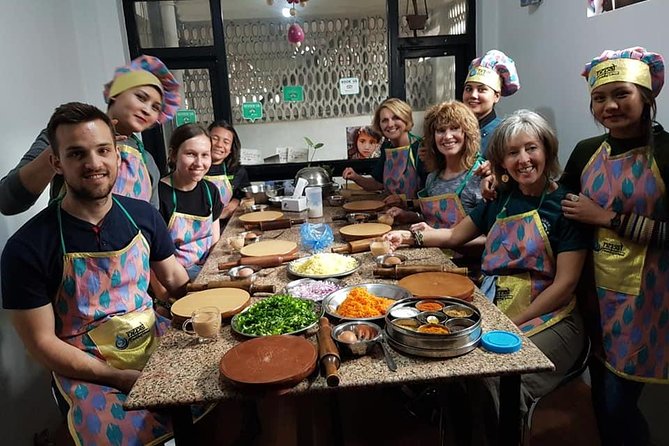
You choose from three menus, and each contains four traditional Nepali dishes. The selection gives the class more variety than a fixed demonstration. It also lets you match the meal to your appetite and dietary preferences.
Vegetarians are accommodated well. A vegetarian participant can choose a suitable menu, and dietary adjustments have been made for gluten-free diners. Still, tell the school about restrictions when booking or before the class starts, so the kitchen can plan properly.
The menu examples show the range of the lesson. You might make a chapati egg roll, prepare dal, cook chicken curry, or work with batter for chatamari. The class can also include chocolate momos, a playful change from the usual savory version.
Each course is cooked and eaten before you move on. That keeps the food fresh and makes the class feel like a meal rather than a long kitchen demonstration. It also means you should arrive hungry. With four dishes, snacks, and drinks included, this is not a light tasting.
How the 2.5-hour class works
The advertised duration is about two hours and 30 minutes, though the morning shift runs from 9:00 a.m. to 12:30 p.m. The afternoon shift is listed as 1:30 p.m. to 4:00 p.m., and the evening shift runs from 4:30 p.m. to 8:00 p.m.
The difference between the stated duration and some shift windows suggests that the pace can vary. Market visits, group size, and the menu selected may affect how long the full session takes. I would avoid booking a tight appointment immediately afterward.
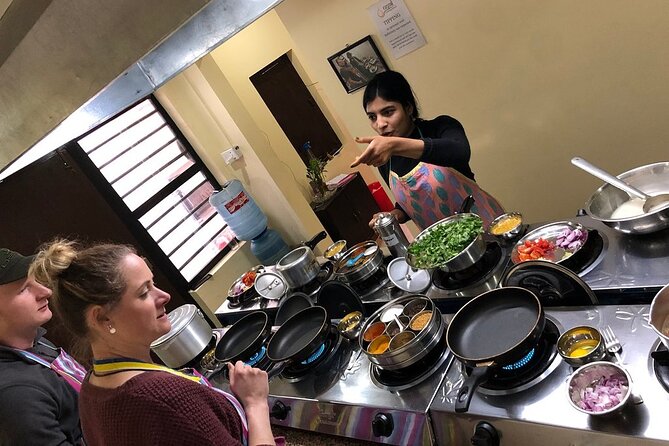
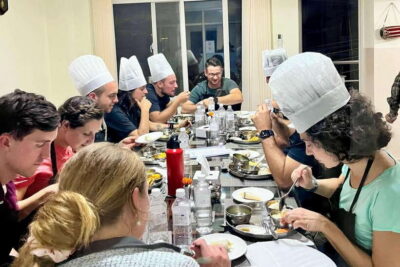
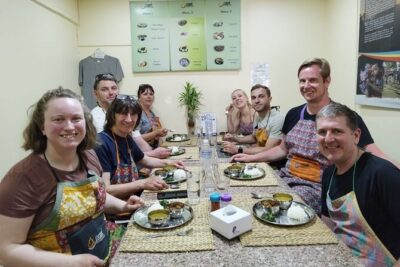
The chef leads the class step by step. You work with the ingredients rather than standing behind a counter watching someone else do everything. The small maximum of eight people should make it easier to ask questions and get help with dough, spices, or shaping.
Solo participation is possible. One person has taken the class alone and still cooked four dishes with individual attention. That is useful if you are traveling alone and want a social activity without needing to bring a companion.
Same city, a completely different sort of day:
- Everest Base Camp Trek – 14 Days
★ 5.0 · 1,499 reviews - Private Kathmandu Sightseeing Tour | UNESCO World Heritage sites
★ 5.0 · 756 reviews - Everest Base Camp Helicopter Tour landing at Everest View Hotel
★ 5.0 · 668 reviews - Everest Base Camp Trekking
★ 5.0 · 485 reviews
The teaching style and the people behind it
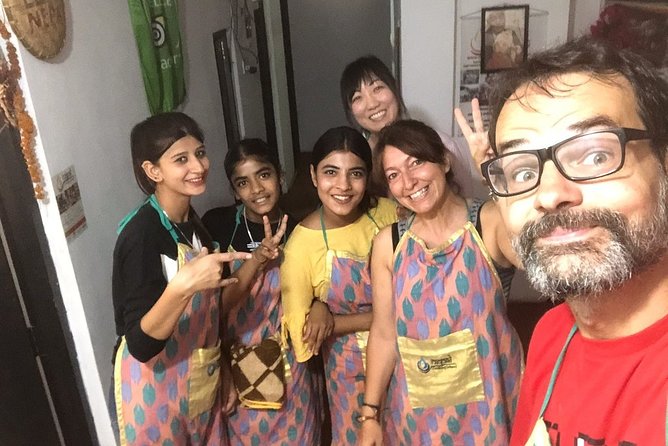
The strongest part of this experience is the human side. Instructors including Anshu and Nilam are described as friendly, patient, clear, and fun, with strong English skills. The approach is relaxed enough for beginners but still gives experienced home cooks useful ideas.
You learn more than a list of ingredients. The lesson explains how spices are used and how dishes fit into Nepali food traditions. The market walk can add information about local produce and ingredients, while the kitchen session shows how those items become a meal.
The atmosphere can also include a little fun outside the recipe itself. One evening session ended with a brief dance lesson. That is not the central promise of the class, so do not book it expecting an entertainment show, but it gives the activity a warm social feel.
The instructors also appear willing to adapt. Menus have been modified for gluten-free diners, and vegetarian participants have been able to cook comfortably. The best results come when you explain your needs clearly at the start.
A clean kitchen, with one practical catch
The cooking facilities have been described as clean and hygienic, which matters when you are preparing food by hand. Clear instructions and an orderly setup help beginners keep up, especially when several dishes are being prepared during one session.
The main physical issue is the staircase. The kitchen is reached by four flights of stairs. That may be no problem for many people, but it is worth considering if stairs are difficult for you or if you are carrying heavy bags after a long day of sightseeing.
Transportation is not included, though pickup is offered in the general tour details. The meeting point is central Thamel, and the experience ends there. Confirm the pickup arrangement when booking rather than assuming door-to-door transportation is part of the $28 price.
What the $28 price really buys
At $28 per person, the value is good if you want both a meal and a practical activity. You are not paying only for a recipe sheet or a short demonstration. The price includes the class, four dishes, beverages, snacks, and the food you prepare.
It also replaces one restaurant meal with an experience you can repeat at home. The recipes are simple enough for home cooks with limited skills, and dal in particular has inspired people to keep cooking it after returning home.
The value is lower if you dislike cooking, want a fast meal, or have no interest in local ingredients. The market stop and hands-on preparation take time. This is a class first and a meal second, even though the meal is a substantial part of the experience.
Alcoholic drinks are not included. Coffee or tea is included, along with other food listed as breakfast, lunch, or dinner depending on the shift. The exact meal label is less important than the practical point: you will eat the dishes you make.
Who will enjoy this Thamel activity
I would recommend it to first-time visitors who want an introduction to Nepali food beyond restaurant ordering. It works particularly well for people who enjoy taking home a skill, since momos, dal, curry, and flatbreads can all become part of your own kitchen routine.
Families can also find it a good fit. Children who like shaping dough or mixing ingredients have something active to do, and the ability to control chili makes the meal easier for mixed groups.
Vegetarians should consider it, since suitable menu choices are available. Gluten-free diners should also ask about adjustments in advance. Food-focused visitors will get the most from the market explanation, spice lesson, and chance to compare different cooking methods.
It is less suitable for someone with serious mobility limits because of the four flights of stairs. It may also disappoint anyone expecting a long guided tour of Kathmandu. The setting is Thamel, but the main purpose is cooking.
Booking times, group size, and cancellation
You can choose from three shifts: morning, afternoon, or evening. The evening option is useful after a day in Kathmandu, while the morning class leaves the rest of the day open. Allow extra time around the session because the pace may change with the market stop and group.
The maximum group size is eight people. That is small enough for direct help without guaranteeing a private class. If few people book, you may receive more individual attention, but the class can still run normally with a single participant.
Confirmation is provided when you book, and the activity is near public transportation. Free cancellation is available if you cancel at least 24 hours before the local start time. Cancellations or changes inside that window are not refunded or accepted.
Should you book the Nepal Cooking School?
Book it if you want to learn by doing, especially if momos are high on your Nepal wish list. The combination of three menus, four dishes, market ingredients, tea, and a full meal makes the $28 price fair.
I would choose the class early in your Kathmandu stay. You can then use the spice tips and recipes during the rest of your visit, and you will have time to return home with a clearer idea of what to order in local restaurants.
Skip it if you want a quick, polished food demonstration or if four flights of stairs are a serious problem. For everyone else, this is a friendly, useful way to connect a Kathmandu meal with the people, ingredients, and techniques behind it.
FAQ
Where does the cooking class meet?
The meeting point is the Divine Kathmandu Hotel on Paknajol Marg and Amrit Marg in Thamel, Kathmandu. The activity ends back at the same meeting point.
How long does the class last?
The experience is approximately two hours and 30 minutes. The listed shifts are 9:00 a.m. to 12:30 p.m., 1:30 p.m. to 4:00 p.m., and 4:30 p.m. to 8:00 p.m.
How many dishes will I cook?
You will cook four traditional Nepali dishes. Three menus are available, and momos are included on every menu.
Are food and drinks included?
Yes. The experience includes the cooking meal, coffee or tea, snacks, and the food prepared during the class. Alcoholic drinks are not included.
Can vegetarians or gluten-free diners participate?
Yes. Vegetarian options are available, and gluten-free menu changes have been made for participants. Tell the cooking school about your needs before the class.
Is transportation included?
Private transportation is not included. Pickup is offered, and the meeting point is near public transportation. Confirm the pickup details when booking.
What happens if I need to cancel?
You can receive a full refund if you cancel at least 24 hours before the local start time. Cancellations or changes made less than 24 hours before the experience are not accepted for a refund.
Just added around Kathmandu
- Traditional Momo Making Class★ 5.0 · 10 reviews
- Wildlife Adventure in Chitwan Nepal★ 4.0 · 4 reviews
- Walking tour of real Kathmandu through back streets.★ 5.0 · 3 reviews
- Kathmandu 2 Nights 3 Days Chitwan Jungle Safari Tour★ 5.0 · 9 reviews
- Kathmandu Street Food Walking Tour – Eat Like a Local★ 5.0 · 3 reviews
- Private Manaslu Circuit Trek at Himalayas★ 5.0 · 3 reviews
- Walking tour of Kathmandu with awesome local guides★ 5.0 · 4 reviews
- Visit Swayambhunath and Bauddhanath Stupa with Guide★ 5.0 · 5 reviews
Kathmandu Cooking Classes, compared.
The best Private Nepali Cooking Class in Kathmandu
Read our review →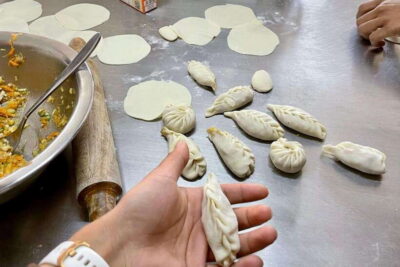
Best Nepali Cooking Class in Thamel with Local Market Trip
Read our review →Browse the lists this tour appears in