
Reviewed · ANNAPURNA TREKS FROM KATHMANDU
Kathmandu: 10-Day Adventurous Annapurna Circuit Trek
Crossing Thorong La Pass at 5,416 meters is the big prize here, but the route earns its drama long before that high point. You move from green forest and suspension bridges to dry Mustang country, with village life, mountain views, and changing weather packed into ten days.
I like the built-in acclimatization day in Manang, and I like the practical support. Guides such as Prakash, Keshab, Mahesh, Suresh, and Keshab have been praised for careful pacing, good route information, and handling transport, permits, meals, and tea houses. The main drawback is the schedule: the 12-hour Thorong Phedi to Muktinath day is a serious test, and the long road journeys are not for anyone seeking a gentle holiday.
Key points to know before booking
- Thorong La is the main challenge: The pass reaches 5,416 meters, followed by a long descent to Muktinath.
- Manang provides one acclimatization day: You get time to rest, explore, and adjust before climbing higher.
- The scenery changes fast: Forest, alpine pasture, snowy peaks, and Mustang’s dry terrain all appear on one route.
- This is a private-group trek: You travel with an English-speaking guide, with porter service available for an extra charge.
- The price covers major essentials: Permits, nine nights of trek accommodation, staff costs, scheduled transport, and a Pokhara hotel are included.
- Expect basic mountain lodging: Tea houses offer comfort and local atmosphere, but not hotel-style facilities at every stop.
A 10-day route built around one high pass
This Annapurna Circuit trek costs $467 per person, a low price for a package that includes permits, government fees, staff expenses, scheduled transport, nine nights of trek lodging, and one night at Hotel Orchid in Pokhara.
The price needs a close look. It does not automatically include meals unless you choose the Full Package, and it excludes bottled or boiled water, drinks, showers, battery charging, laundry, personal spending, insurance, and extra porters. Read the meal option carefully before paying, since food can become a sizeable daily cost in the mountains.
You travel as a private group with an English-speaking guide. A porter is not included in the basic guide service, so ask about the extra charge if you want help carrying your main bag. The company handles staff meals, lodging, salaries, equipment, insurance, and transport, which removes much of the usual planning work.
The route is a compact version of the Annapurna Circuit. You do not simply walk through one type of mountain country. The scenery shifts from lower valleys and forest to high alpine ground, then drops into the dry Mustang region. That variety is one of the best reasons to choose this trip.
More Annapurna treks:
- Annapurna Circuit Trek with Tilicho Lake
★ 5.0 · 368 reviews - Annapurna base camp trek 5 Days
★ 5.0 · 252 reviews - Annapurna Base Camp Trek
★ 5.0 · 111 reviews
Day 1: Kathmandu to Dharapani by bus and shared Jeep
Your first day is mostly about reaching the trailhead. A bus takes you from Kathmandu to Besisahar, a journey of about ten hours, and you then continue toward Dharapani by shared Jeep.
This is a long travel day before the walking even begins. The switch from bus to shared Jeep is practical rather than luxurious, and road conditions can make the journey tiring. Still, it gets you into the Annapurna region without adding extra trekking days.
Dharapani sits at about 1,800 meters, so you begin at a moderate altitude rather than jumping straight into high mountain conditions. Your overnight stay here gives you a chance to organize your daypack, check your layers, and get ready for the walking ahead.
Hotel pickup and drop-off are included, though pickup is optional. You should wait in your hotel lobby ten minutes before the planned time. Keep essential items with you during the drive, including water, sunscreen, a jacket, medication, and cash.
Day 2: Dharapani to Chame through forest and bridges
The six-hour trek from Dharapani to Chame brings the first real walking day. You climb through forest, cross suspension bridges, and watch the scenery change as the route gains height.
Chame is at about 2,670 meters. The increase is noticeable, but the day is designed as a steady introduction rather than a sudden high-altitude push. Your guide can help set a sensible pace, and the private-group format makes it easier to stop when you need a drink or short rest.
This is also where the trek begins to feel less like transport between points and more like a journey through mountain communities. Expect tea-house accommodation and basic comforts. You may have a clean, welcoming place to sleep, but you should not expect every facility you would find in a city hotel.
Day 3: Chame to Upper Pisang and the first big views
The six-hour walk to Upper Pisang reaches about 3,300 meters. The route continues through changing forest and mountain country before arriving at a village with broad views toward the Annapurna range.
Upper Pisang is a worthwhile overnight stop because it gives you time to see how village life adapts to a high mountain setting. You can spend part of the afternoon looking around the settlement and taking in the views rather than treating the stop as just a bed for the night.
At this altitude, cold mornings and evenings are possible, even when the day feels sunny. Pack your warm layer where you can reach it. A sleeping bag is listed as essential, and you can also rent one in Kathmandu. One useful service detail is that the company has arranged transport for rented sleeping bags after the trek, which can save you from carrying them onward.
More day hikes and treks in Kathmandu:
- Everest Base Camp Trek – 14 Days
★ 5.0 · 1,499 reviews - Everest Base Camp Trekking
★ 5.0 · 485 reviews - Nagarkot Sunrise View and Day Hiking from Kathmandu
★ 5.0 · 471 reviews - Everest Base Camp Trekking – 13 Day
★ 5.0 · 365 reviews
Day 4: Upper Pisang to Manang
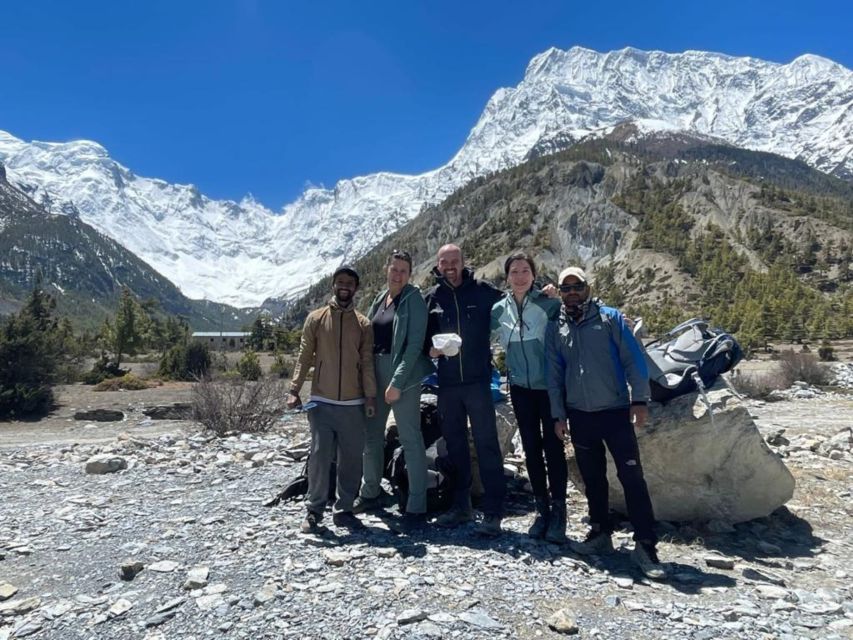
The walk to Manang takes about six hours and reaches 3,540 meters. This is one of the most scenic days, with views toward Annapurna II, Annapurna III, and Gangapurna.
Manang sits in a broad valley and feels like an important pause point on the route. You have arrived high enough for altitude to matter, but the village still has enough activity and services to make a rest day pleasant.
The trek’s cultural side is easiest to appreciate here and in the villages along the way. You see local homes, tea houses, prayer sites, and daily routines shaped by the mountains. The appeal is not a staged cultural show. It is the chance to walk through places where the route is part of ordinary life.
Day 5: A needed acclimatization day in Manang
This rest day is one of the strongest features of the plan. Instead of racing higher, you stay in Manang, explore the village, and give your body time to adjust.
Altitude sickness is a real concern on this route. Your guide should help you watch for symptoms and keep the pace sensible, but you also need to speak up if you feel unwell. Headache, nausea, unusual tiredness, or poor coordination should not be brushed aside simply because the schedule is fixed.
Use the day well. Walk gently, drink water, check your gear, and organize the small items you will need for the next two days. You may also want to confirm how your bag will be carried if you have arranged a porter.
The guides assigned to this trek have been praised for explaining route conditions, adjusting plans when needed, and avoiding a rushed pace. That matters most around Manang, where patience is more useful than bravado.
Day 6: Manang to Yak Kharka at 4,050 meters
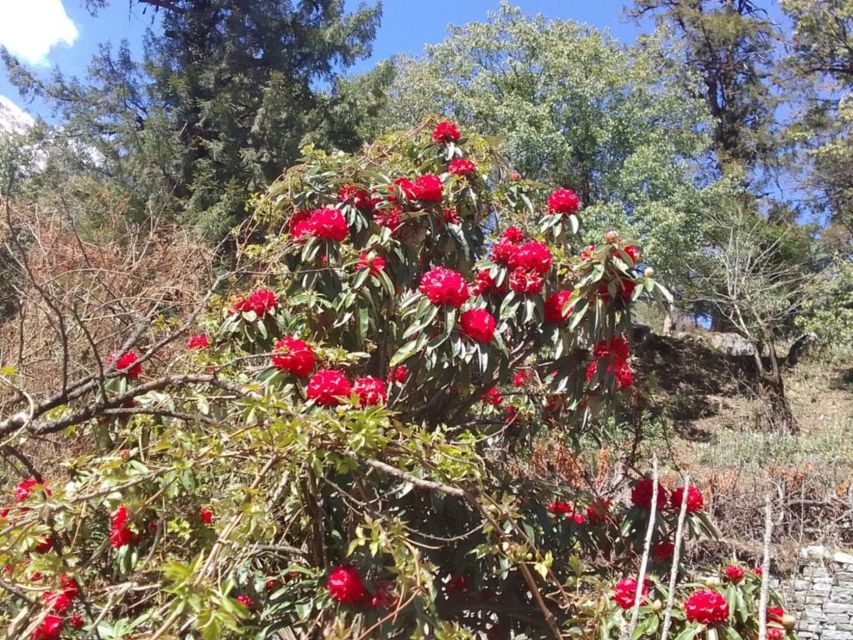
The six-hour trek to Yak Kharka takes you to 4,050 meters. The forest gives way to more open alpine ground, and the route passes grazing areas surrounded by high peaks.
This is a quieter section of the trek. You are now well above the tree line in places, and the scenery feels more exposed. The air is thinner, the nights are colder, and small tasks such as getting dressed or packing your bag can take longer.
The best approach is steady and unhurried. Keep your daypack light, use trekking poles if you normally rely on them, and protect yourself from the strong sun. Sunscreen, sunglasses, a hat, and water are not optional extras at this elevation.
The basic tea-house setting becomes more important here. A warm meal and a dry sleeping place matter more than decorative touches. Dal bhat, the familiar Nepalese combination of lentils and rice, is a practical choice, and other food options are available during the trek.
Day 7: Yak Kharka to Thorong Phedi
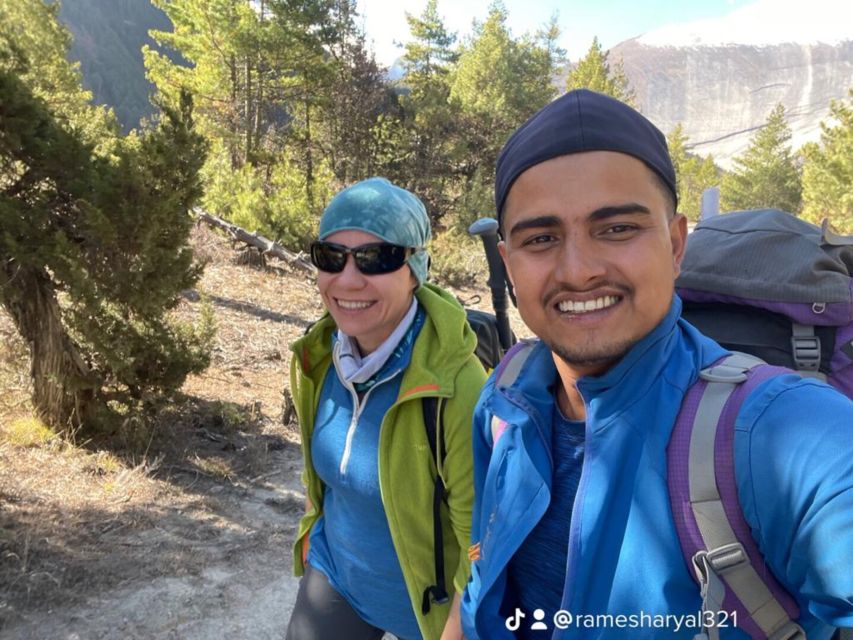
The route to Thorong Phedi takes about six hours and reaches 4,450 meters. This is the staging day for the pass crossing, so the mood changes. You are no longer simply moving from one village to the next. You are preparing for the hardest day.
Thorong Phedi is the base area for the climb to Thorong La. Keep your warm clothes, headlamp, water, snacks, and personal medication ready before you settle in. An early start is expected the next morning, and a slow pack search in the dark is no fun.
This is a good point to discuss the route honestly with your guide. Ask about the day’s timing, weather, water, and how your group will respond if conditions change. Mountain weather can bring rain or snow, even though clear and sunny conditions are common.
Day 8: Over Thorong La to Muktinath
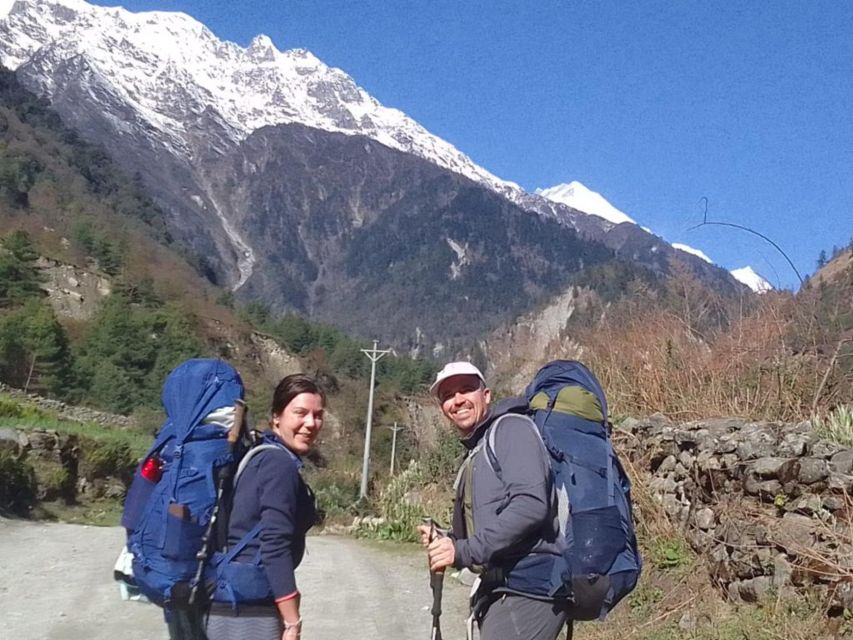
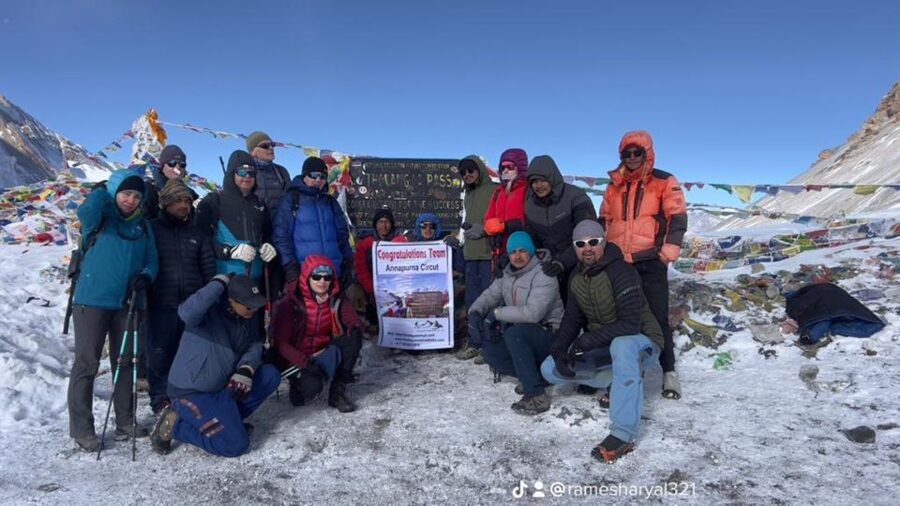
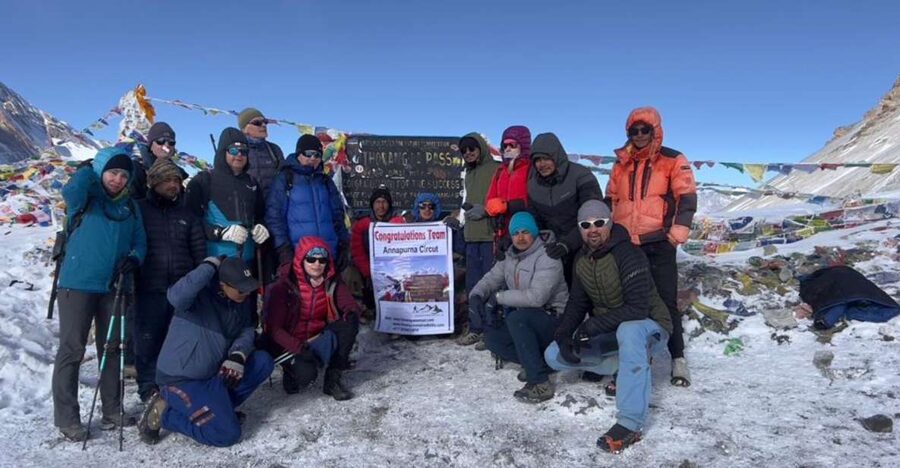
This is the defining day. You leave Thorong Phedi early and climb to Thorong La Pass at 5,416 meters, then descend to Muktinath. The full trek is listed at about twelve hours.
The climb is demanding because of the altitude and the length of the day. The pass itself is a major achievement, but the descent is not a free bonus. Your legs may be tired, and the route still has a long way to go before you reach Muktinath.
At the top, you get wide mountain views and the satisfaction of crossing one of the world’s better-known high passes. Take the moment, but keep drinking and stay aware of your condition. Your guide’s role is especially important here, both for pacing and for watching how you are coping.
Muktinath, at about 3,800 meters, adds a cultural reason to the day. The temple is sacred to both Hindus and Buddhists, and the village provides a meaningful destination after the pass. Be respectful around religious sites, follow local customs, and let the place be more than a photo stop.
Day 9: Muktinath to Jomsom and the Mustang change
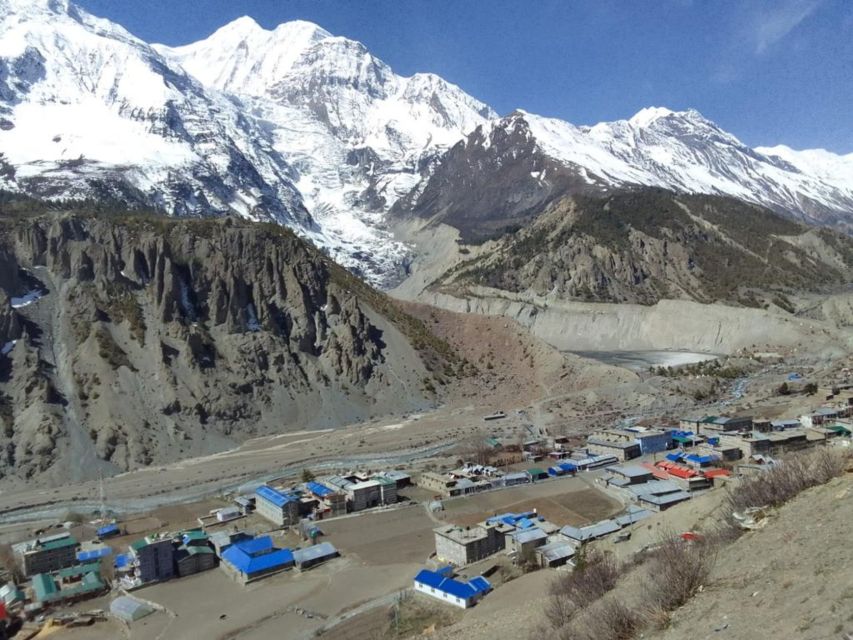
The five-hour descent to Jomsom reaches about 2,720 meters. You will notice a sharp change in the surroundings as the route enters the Mustang region, with dry, desert-like terrain replacing the greener valleys.
Jomsom is known as a windy town, so keep a jacket or wind layer close. The lower altitude should make breathing easier after Thorong La, but the walk may still feel long after the previous day.
This day shows why the Annapurna Circuit is so rewarding as a route rather than just a pass. You have moved through several distinct climate zones and village settings in a short time. Jomsom also gives you a final night in the mountains before the road to Pokhara.
Day 10: Jomsom to Pokhara by bus
The final transfer takes about eight hours by bus. You travel through the mountain region toward Pokhara, with more time to look back on the route you have completed.
The ride may be tiring after several walking days, but it saves you from adding another trekking stage. The package includes a night at Hotel Orchid in Pokhara, described as a tourist-standard luxury hotel, plus a typical Nepalese farewell dinner in the Lakeside area.
You also receive a luxury sofa-seater tourist air-conditioned bus from Pokhara to Kathmandu. The transport arrangement is useful if your Nepal trip continues in the capital, though check the exact timing with the coordinator before you make tight flight plans.
What the $467 price really gives you
The value is strongest if you want a guide-led trek without arranging permits, tea houses, staff support, and road transport yourself. Included items cover:
- Hotel pickup and drop-off
- An authorized English-speaking guide
- Trekking permits, paperwork, TIMS fees, and government taxes
- Nine nights of trek accommodation
- One night at Hotel Orchid in Pokhara
- Scheduled bus and shared Jeep transport
- Luggage storage
- Staff wages, food, lodging, equipment, insurance, and transport
- A farewell dinner in Pokhara
The Full Package includes breakfast, lunch, and dinner during the trek. Drinks, water, showers, charging, laundry, bar bills, phone calls, and personal purchases are extra.
Travel insurance with high-altitude and rescue cover is essential. It is not included, and ordinary medical insurance may not cover a mountain evacuation. You should also budget for a sleeping bag if you do not bring one, trekking poles if useful to you, and a porter if you do not want to carry your main luggage.
Guides, pace, and the human side of the trek
The strongest part of the service is the guide support. Prakash has been singled out for careful organization and attention to comfort, while Keshab has handled route explanations, tea houses, transport, and itinerary changes. Mahesh has been praised for keeping people informed and arranging meals and rooms throughout the trek.
Other named guides, including Suresh, Bipin, Jeet, Milani, and Silwal, have also been credited with kindness, route knowledge, motivation, and care around altitude. One guide was especially appreciated for finding the right balance between conversation and quiet time in nature.
That balance matters. A good guide should explain the route without talking over every view, and should know when to adjust the plan. The company has also helped with practical issues after the trek, including moving luggage and returning rented sleeping bags.
Because the group is private, you can discuss your walking pace and comfort more easily than in a large fixed group. Still, a private group does not make the pass easy. You need a good level of fitness for sustained inclines, long walking days, and a 12-hour crossing day.
What to pack for this Annapurna Circuit trek
Bring a passport or ID card, cash, sunscreen, a daypack, a first aid kit, a jacket, a hat, water, hiking shoes, trekking clothing, a headlamp, and sunglasses.
Layering is the sensible strategy. Mountain weather can change, with rain or snow possible, so do not pack only for the clear photographs shown in brochures. Warm socks, a sleeping bag, and comfortable boots matter more than extra casual clothing.
Pack light but keep important items with you. Your daypack should hold water, sun protection, a rain or warm layer, snacks if you use them, medication, and your camera. Follow local customs and carry your rubbish out. A high mountain route is a shared home, not a disposable picnic ground.
Who should book it, and who should think twice?
You should consider this trek if you want a short, structured introduction to the Annapurna Circuit, enjoy long walks, and value having a guide handle permits, rooms, meals, and transport. It suits fit first-time Nepal trekkers who want a private group and a strong mix of scenery, village life, and high-altitude adventure.
It is less suitable if you dislike basic tea-house accommodation, long road journeys, shared transport, or uncertain mountain weather. Pregnant women should not book this activity, and anyone with health concerns should get suitable medical advice before planning a high-altitude trek.
The schedule can be customized to suit your pace and preferences. That is useful, but changes may affect cost, accommodation, transport, or the number of days. Ask specific questions before booking rather than assuming the $467 price covers every variation.
Should you book this Annapurna Circuit trek?
I would choose this trip if your priority is reaching Thorong La with a guide and a clear support system, while keeping the cost fairly low. The built-in Manang acclimatization day, private-group format, and strong guide care make the plan more sensible than a rushed pass crossing.
Go in with realistic expectations. You are buying a demanding mountain journey, not a soft adventure holiday. If you can handle the inclines, prepare for the altitude, insure yourself properly, and accept basic lodging, this ten-day route offers a striking run from forest to high pass to dry Mustang country.
FAQ
How high is Thorong La Pass?
Thorong La Pass reaches 5,416 meters, or 17,769 feet.
Is there an acclimatization day?
Yes. Day 5 is an acclimatization and rest day in Manang at about 3,540 meters.
How long is the pass-crossing day?
The trek from Thorong Phedi to Muktinath via Thorong La is listed at about 12 hours.
Are meals included in the price?
Breakfast, lunch, and dinner during the trek are included with the Full Package. Drinks and bottled or boiled water are not included.
Is a porter included?
The authorized English-speaking guide is included, but porter service costs extra.
What transport is included?
The scheduled transport includes a bus from Kathmandu to Besisahar, a shared Jeep from Besisahar to Dharapani, and a bus from Jomsom to Pokhara. A luxury sofa-seater tourist air-conditioned bus from Pokhara to Kathmandu is also included.
Just added around Kathmandu
- Traditional Momo Making Class★ 5.0 · 10 reviews
- Wildlife Adventure in Chitwan Nepal★ 4.0 · 4 reviews
- Walking tour of real Kathmandu through back streets.★ 5.0 · 3 reviews
- Kathmandu 2 Nights 3 Days Chitwan Jungle Safari Tour★ 5.0 · 9 reviews
- Kathmandu Street Food Walking Tour – Eat Like a Local★ 5.0 · 3 reviews
- Walking tour of Kathmandu with awesome local guides★ 5.0 · 4 reviews
- Private Manaslu Circuit Trek at Himalayas★ 5.0 · 3 reviews
- Visit Swayambhunath and Bauddhanath Stupa with Guide★ 5.0 · 5 reviews
Annapurna Treks from Kathmandu, compared.
Kathmandu to Annapurna Base Camp (ABC) 5-Day Trek
Read our review →
Browse the lists this tour appears in