
Reviewed · ANNAPURNA TREKS FROM KATHMANDU
Annapurna Circuit with Tilicho Lake Trek
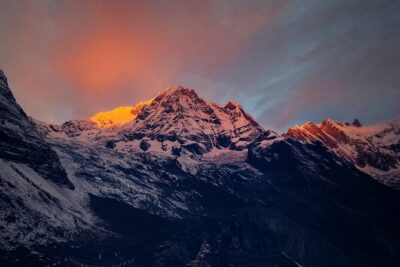
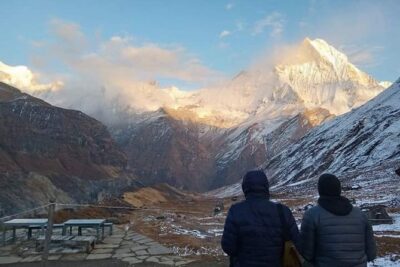
Tilicho Lake is the prize here: a high mountain detour added to Nepal’s classic Annapurna Circuit. You’ll walk through pine forests, Tibetan-style villages, high valleys, and snow country before crossing Thorong La Pass. The scenery is huge, but this is not a gentle holiday.
I like the small group limit of eight, which makes a guide-led trek more personal and easier to manage. I also like the practical package: permits, teahouse accommodation, meals, porters, gear, and the Jomsom to Pokhara flight are covered. The main catch is the physical demand. Long walking days, cold at altitude, and the climb to Thorong La require solid fitness and careful pacing.
The supplied schedule is laid out over 13 days, although one description refers to an 18-day itinerary. Confirm the exact number of nights and walking days before paying. The route itself is clear, and the named team includes NC Sherpa as guide and MisterD Sherpa as porter, both praised for professional, kind support.
Key points to know before you book
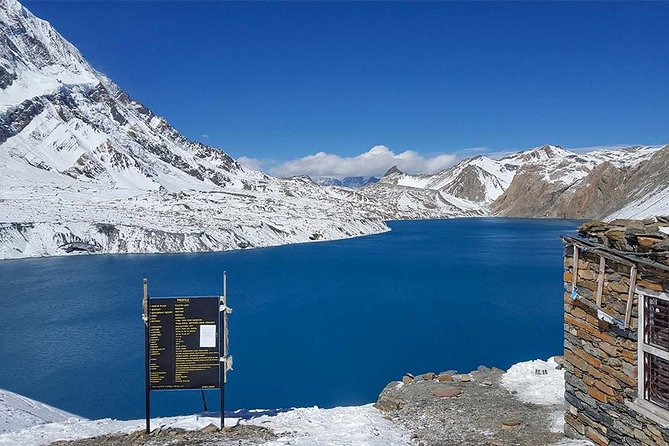
- Tilicho Lake adds the serious challenge: The route reaches one of the trek’s highest and most demanding points before rejoining the Annapurna Circuit.
- Thorong La is the big test: Day 10 includes the high pass and a long descent to Muktinath.
- A group of up to eight keeps things manageable: You get organized support without the feel of a large tour.
- Major trekking costs are bundled: Permits, meals, teahouses, guide, porters, sleeping bag, duffel bag, and transport are included.
- Jomsom to Pokhara is by air: This saves a long overland return and gives you a mountain flight at the end.
- You need to be comfortable with long days: Walking times range from about four to nine hours, with altitude adding strain.
The route from Besisahar to Chame
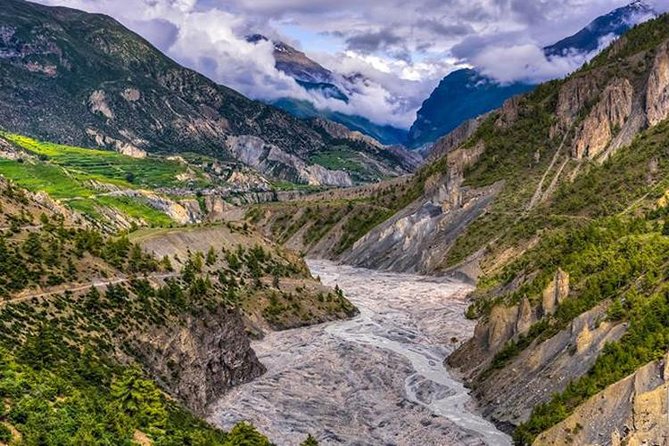
Your first day begins with a long drive from Kathmandu toward Besisahar, following the Kathmandu to Pokhara highway before turning along the Marsyangdi River. The journey to Chame takes about nine hours, so you should think of this as a transport day rather than an easy warm-up walk.
The road becomes narrower as it follows the river, and the scenery changes from busy lowland routes to mountain valleys. Private transport is included, which is useful here because it keeps the group together and avoids the uncertainty of arranging several local connections.
Chame is the first real mountain stop. You will already have spent much of the day sitting in a vehicle, so the main value of this stage is getting into position for the trek. The schedule gives you a starting point without adding another complicated transfer.
More Annapurna treks:
- Annapurna Circuit Trek with Tilicho Lake
★ 5.0 · 368 reviews - Annapurna base camp trek 5 Days
★ 5.0 · 252 reviews - Annapurna Base Camp Trek
★ 5.0 · 111 reviews
Forest trails and the approach to Manang
On day two, you walk toward Pisang for about six hours. The trail passes through forest and a narrow valley, with bridges at roughly 2,910 and 3,040 meters. Lamjung Himal provides the first major snow-covered mountain views.
This is where the trip begins to feel like a proper trek. The route is not simply a road walk, and the bridges and rising trail give you a sense of the terrain ahead. You should still conserve energy. The high point of the trip is not the first scenic afternoon, and rushing early can make later altitude gains harder.
The next day brings a five-hour walk to Manang. The route climbs a ridge with views over Manang Valley and toward Tilicho Peak, which reaches 7,134 meters. You also pass Humde and its airstrip at about 3,280 meters.
Manang is more than a place to sleep. It is the trip’s key adjustment stop. The schedule includes a full rest day here, a smart feature on a route that keeps gaining height. You can explore the village, meet local residents, and allow your body time to adapt before heading toward Tilicho Lake.
Why the Manang rest day matters
The rest day in Manang is one of the most valuable parts of the plan. At this altitude, extra time is not wasted time. It gives you a chance to walk around locally without taking on another major stage, and it breaks up the steady pressure of the route.
The itinerary describes Manang as a sizable remote village, with opportunities to explore local life. Do not treat the day as a chance to overdo it. The goal is to arrive at the Tilicho section ready, not tired from an unnecessary side outing.
Your guide handles the daily route planning, which matters most when weather, trail conditions, or fatigue affect the day. The guide also reduces the risk of getting lost on unfamiliar paths. That does not remove the physical work, but it lets you focus on walking, food, rest, and the views.
Khangsar and the turn toward Tilicho Lake
From Manang, you follow the river toward Khangsar, crossing the Khangsar Khola and climbing to the village. The walk takes about four hours, making it shorter than several other days.
Khangsar is described as a typical Tibetan-style village, and it marks the shift away from the main circuit toward Tilicho Lake. This is an important change in the route. You are no longer simply following the standard circuit rhythm. You are taking a high-altitude side trip that adds both scenery and strain.
The next stage takes you toward Tilicho Lake, with about eight hours of walking. After passing a gompa, you follow a newer trail up toward a high ridge. There are two route options in this section, one older and more difficult, and one newer and easier.
That detail is worth noting. The easier route does not mean the day is easy. You are still gaining height and walking in exposed mountain country. It simply offers a more manageable line than the older trail. A guide is especially useful here because the route choice can affect both safety and energy.
More day hikes and treks in Kathmandu:
- Everest Base Camp Trek – 14 Days
★ 5.0 · 1,499 reviews - Everest Base Camp Trekking
★ 5.0 · 485 reviews - Nagarkot Sunrise View and Day Hiking from Kathmandu
★ 5.0 · 471 reviews - Everest Base Camp Trekking – 13 Day
★ 5.0 · 365 reviews
Reaching Tilicho Lake before the wind rises
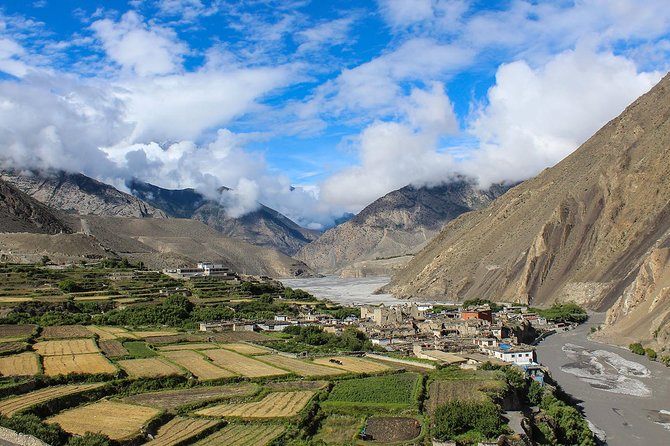
The schedule gives another day to reach Tilicho Lake from base camp, with about nine hours on foot. The advice is practical: start early because winds often become stronger later in the day as warm and cold air meet.
You should take that timing seriously. An early start means a longer morning, but it gives you a better chance of reaching the lake before conditions become rough. The high point of this detour is not just the view. It is the effort required to get there and return safely.
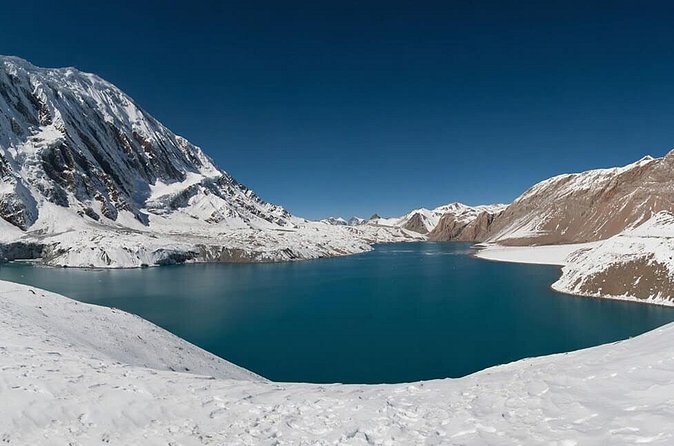
Tilicho Lake is the emotional center of the trek. You get the reward of a high Himalayan lake, but you pay for it with a long walking day and altitude stress. If you want a relaxed holiday with occasional mountain views, this section will feel too demanding. If you want a hard trek with a distinct goal, it gives the route a strong sense of purpose.
The plan includes a night at Tilicho Lake or its base area before you continue. Since accommodation at altitude is generally simple, expect teahouse conditions rather than hotel comfort. Meals are included, but drinks and alcohol are not, so keep extra money available for purchases along the way.
Rejoining the circuit near Yak Kharka
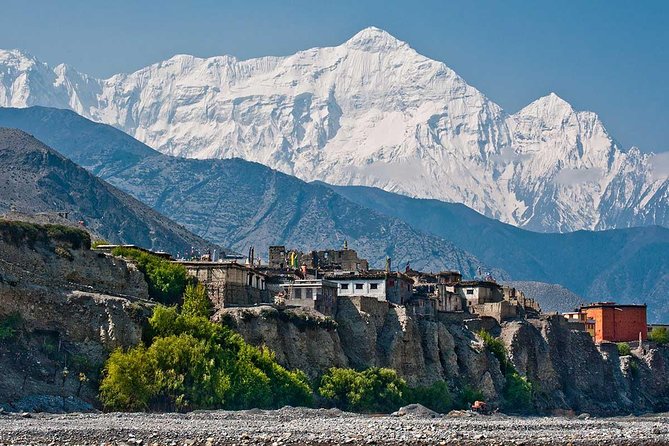
After Tilicho Lake, you descend gradually from base camp and then climb about 500 meters toward Yak Kharka. The walk takes around seven hours.
The route passes through Tengi and leaves the Marsyangdi Valley behind as it heads toward the Thorung La area. This is a demanding transition. You have completed the lake detour, but the trek is not easing off yet. You still need to cross the major pass.
Yak Kharka is a useful staging point because it places you near the next section without forcing the pass crossing immediately. The itinerary’s steady approach helps spread the effort across several days. Still, you should expect tired legs here, especially after the Tilicho stage.
Thorong Phedi and the road to Thorong La
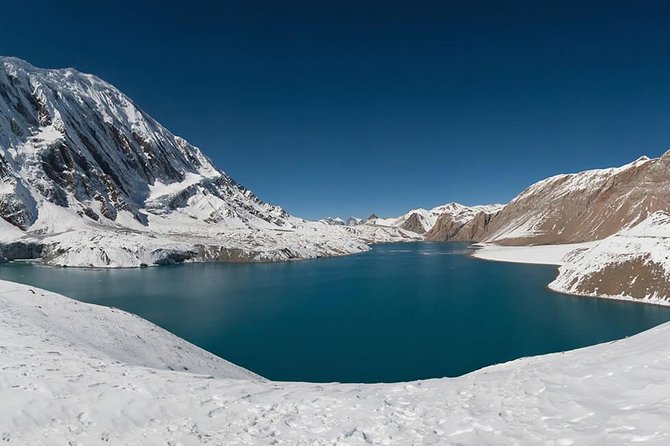
The next day takes about five hours and includes the approach toward Thorong Phedi and the Thorong La trail. You climb toward a ridge, descend toward the Kone River, cross by a wooden bridge, and continue along a narrow trail.
This day may look shorter on paper, but walking time is not the whole story at altitude. A five-hour stage can feel tougher than a longer low-altitude walk. The narrow paths and changing elevation call for careful footing and a steady pace.
Thorong Phedi is the launch point for the pass crossing. You will want a quiet evening, a good meal, and an early night rather than extra activity. The guide’s role is important here, especially when the group needs to move at a sensible pace.
Crossing Thorong La and descending to Muktinath
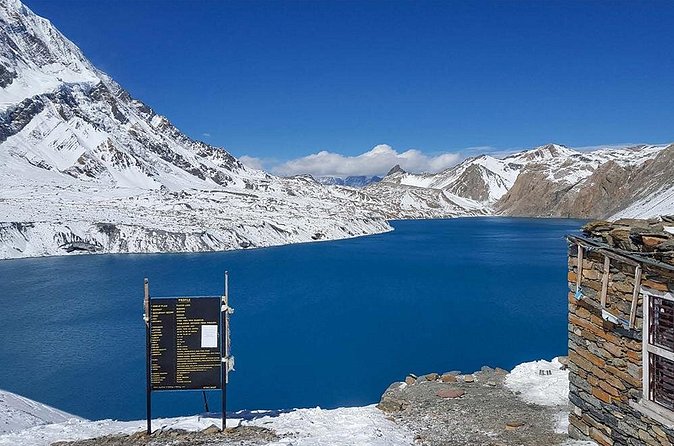
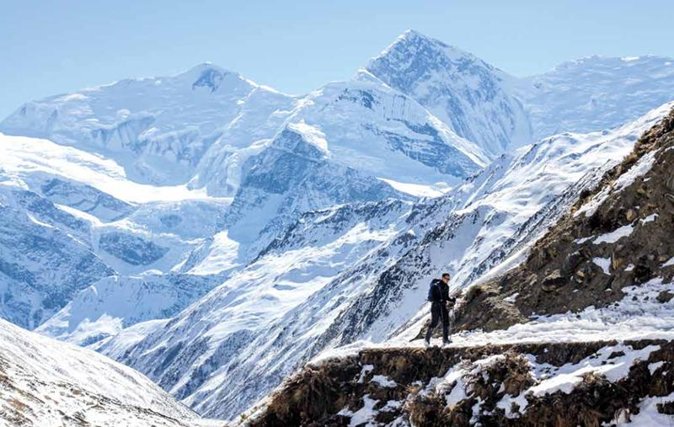
Day 10 is the trek’s major test. You start early and climb to Thorong La Pass before descending to Muktinath. The walking time is about eight hours, and the schedule warns that high altitude, cold, and snow can create serious difficulty.
This is the day to judge your own readiness honestly. You need moderate fitness at a minimum, but being accustomed to long uphill walks will make the experience far better. The itinerary does not promise an easy crossing, and it should not be treated as one.
The reward is the change in scenery and the satisfaction of completing the pass. Muktinath provides a strong endpoint for this difficult stage, but the descent can be hard on knees and tired legs. Trekking poles may be useful, though the supplied information does not confirm that they are provided, so ask before departure.
Kali Gandaki Valley and Jomsom
From Muktinath, you continue to Jomsom in about six hours. You can follow the trail through Kagbeni or Lupra, then walk beside the Kali Gandaki River.
Jomsom is described as a chilly valley with plenty of amenities, making it a welcome place after the higher and more remote stages. The town serves as the final mountain base before your flight south.
This day also gives you a change in rhythm. You are still walking, but the route toward Jomsom feels like a move out of the highest section of the trek. The choice between Kagbeni and Lupra may depend on conditions and the guide’s plan, so ask which route is expected for your departure.
The Jomsom to Pokhara flight
The morning flight from Jomsom to Pokhara is included. You should expect an early start, and the short flight offers views of snow-covered peaks from a very different angle.
This flight is a real value point in the package. It avoids a long return by road after nearly two weeks of walking, and it gets you to Pokhara in about two hours according to the schedule, including the transfer and arrival process. Flight conditions can affect mountain routes, so keep your plans flexible rather than arranging an important international connection immediately afterward.
Once in Pokhara, the itinerary includes an escorted transfer to your accommodation. Kathmandu accommodation is not included, so check exactly what is covered in Pokhara and Kathmandu before booking.
Returning to Kathmandu and judging the price
The final day uses a tourist coach from Pokhara to Kathmandu, taking roughly seven hours. The package lists overnight accommodation in Kathmandu according to the agreed category and a bed-and-breakfast plan, but the inclusion notes also say Kathmandu accommodation is not included. That is another point to clarify in writing.
At $1,093.34 per person, the price has real value if you use the included services. You receive a professional guide, one porter for every two people, trekking accommodation, 11 dinners, 13 breakfasts, 11 lunches, permits, transport, a first-aid kit, sleeping bags, duffel bags, and the Jomsom to Pokhara flight.
You still pay for drinks, alcoholic drinks, other food and drinks, international flights, Nepal’s entry visa, insurance, and possibly Kathmandu accommodation. The price is not an all-in holiday, but it covers many of the expensive and difficult pieces of a Nepal trek.
The porter ratio is also worth noticing. One porter for two people means you are not expected to carry every personal item yourself, although you should still pack sensibly. A duffel bag and sleeping bag are supplied for use during the trip.
Who this trek suits best
I would choose this trip if you want a guided mountain challenge and prefer a small group to independent route planning. It suits fit, active people who are comfortable walking four to nine hours a day and dealing with cold, high-altitude conditions.
The route is less suitable if you want luxury accommodation, short walking days, or a flexible sightseeing holiday. Teahouses are practical, not lavish, and the Thorong La and Tilicho sections demand focus.
The small group and organized support are strong advantages. The operation has been praised for professionalism and kindness, with NC Sherpa and MisterD Sherpa specifically named in the trip’s team. That human support matters on a long route where patience, good planning, and steady encouragement count for a lot.
You can cancel for a full refund up to 24 hours before the start time. You will need to provide passport details for every person at booking, and travel or medical insurance is not included. The start time is listed as 8:00 a.m., with pickup offered.
Should you book the Annapurna Circuit with Tilicho Lake Trek?
Book it if Tilicho Lake is important to you and you want the main costs organized before you arrive. The combination of a small group, guide, porters, permits, meals, mountain gear, and the Jomsom flight makes the price reasonable for a demanding Nepal trek.
Do not book it casually. Confirm the 13-day schedule against the separate 18-day reference, clarify Kathmandu accommodation, and make sure your fitness and insurance are in order. If you accept basic teahouses and long high-altitude days, this route offers a powerful mix of mountain scenery, village life, and genuine physical achievement.
FAQ
How long is the Annapurna Circuit with Tilicho Lake Trek?
The detailed schedule runs for 13 days. One description refers to an 18-day itinerary, so you should confirm the exact trip length and overnight plan before booking.
What is included in the price?
The package includes teahouse or guesthouse accommodation during the trek, a certified guide, porters, trekking permits, private transport, meals listed in the package, a first-aid kit, sleeping bags, duffel bags, and the Jomsom to Pokhara flight.
Is the Jomsom to Pokhara flight included?
Yes. The morning flight from Jomsom to Pokhara is included in the trip.
Are international flights included?
No. International flight tickets are not included.
Do I need travel insurance?
Travel and medical insurance are not included in the package. You should arrange your own insurance before the trek.
How large is the group?
The maximum group size is eight people.
Can I cancel for a full refund?
Yes. You can cancel at least 24 hours before the experience start time for a full refund. Cancellations or changes made less than 24 hours before the start are not accepted for a refund.
Just added around Kathmandu
- Traditional Momo Making Class★ 5.0 · 10 reviews
- Wildlife Adventure in Chitwan Nepal★ 4.0 · 4 reviews
- Walking tour of real Kathmandu through back streets.★ 5.0 · 3 reviews
- Kathmandu 2 Nights 3 Days Chitwan Jungle Safari Tour★ 5.0 · 9 reviews
- Kathmandu Street Food Walking Tour – Eat Like a Local★ 5.0 · 3 reviews
- Private Manaslu Circuit Trek at Himalayas★ 5.0 · 3 reviews
- Walking tour of Kathmandu with awesome local guides★ 5.0 · 4 reviews
- Visit Swayambhunath and Bauddhanath Stupa with Guide★ 5.0 · 5 reviews
Annapurna Treks from Kathmandu, compared.
Kathmandu to Annapurna Base Camp (ABC) 5-Day Trek
Read our review →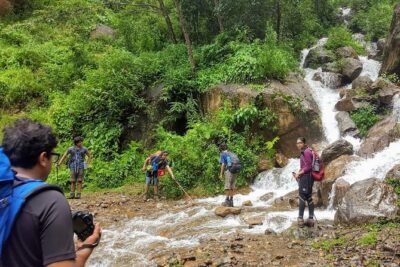
Browse the lists this tour appears in