
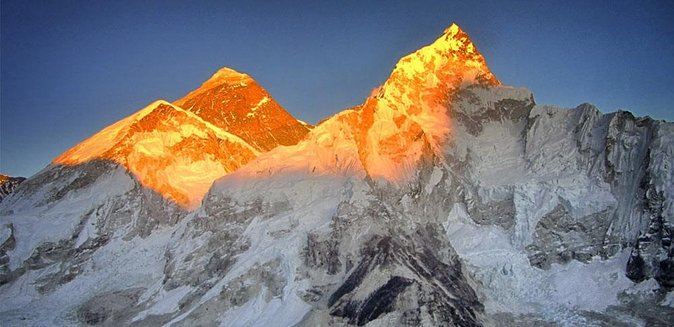
Reviewed · EVEREST BASE CAMP TREKS FROM KATHMANDU
Everest Base Camp Trek 14 Days
Everest Base Camp is the main event here, but the journey earns its keep long before you reach the Khumbu Glacier. You fly into Lukla, walk through Sherpa villages, cross suspension bridges, visit Tengboche Gompa, and spend two acclimatization days near Dingboche. I like the private format and the steady pace, which gives your group more personal attention than a large departure. I also like the practical support, including airport pickup, local flights, permits, and a guide whose job is to keep the trek organized.
The main caution is the altitude and the early start. This is not a scenic stroll. You’ll walk on rocky trails for long hours, and the itinerary includes a demanding day to Everest Base Camp followed by Kala Patthar the next morning. The price is attractive at $999, but your accommodation, meals, travel insurance, and emergency evacuation cover are not included, so your real budget will be higher.
Key things to know before booking
- Two acclimatization days: You stay in Namche Bazaar and Dingboche, with optional hikes to higher viewpoints.
- Lukla flight included: The package covers flights from Kathmandu or Manthali to Lukla and back.
- Private group experience: Only your own group takes part, with a guide assigned to support the trek.
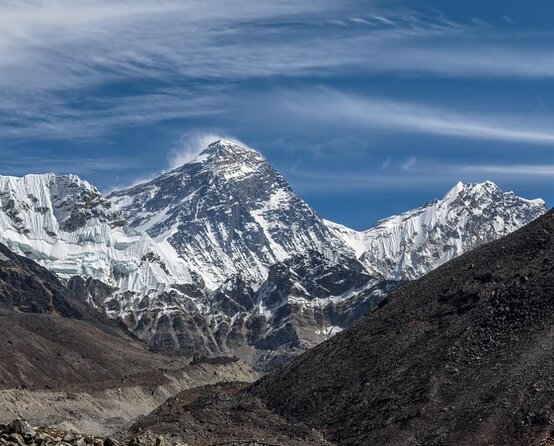
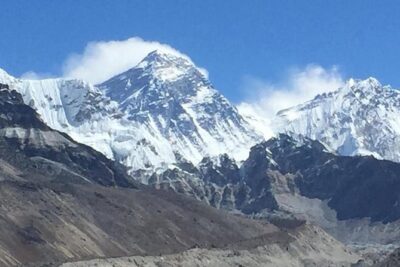
- Major Himalayan viewpoints: Expect views of Everest, Lhotse, Ama Dablam, Thamserku, Island Peak, Pumori, and Nuptse.
- Long walking days: Several days are listed at roughly 16 hours, so confirm the daily schedule with the operator before setting out.
- Strong guide support: Guides named in past trips include Raju, Roshan, Abinash, Ram, Man Bahadur, and Navraj.
Why this 14-day Everest trek works
The route follows the classic approach to Everest Base Camp rather than trying to rush you straight toward the mountain. That matters. At high altitude, a slower schedule gives you time to adjust, and the two rest days are not wasted time. They are part of the safety plan.
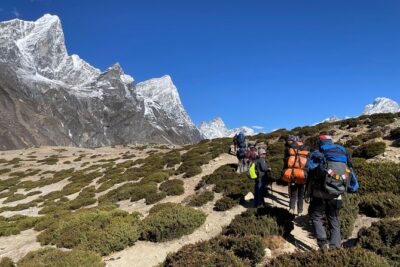
I also like the way the trek combines big mountain views with ordinary village life. You’ll pass through Monjo, Namche Bazaar, Tengboche, Dingboche, Lobuche, Gorakshep, and Pheriche. These are working mountain communities, not staged attractions. You’ll see prayer flags, stone paths, teahouses, suspension bridges, and the daily rhythm of the Sherpa region.
This is a private activity, so your group does not have to match the pace of a large mixed party. That can be especially useful if one person needs a slower morning or if your group wants more time at a monastery or viewpoint. The guide team has included people such as Raju, Roshan, Abinash, and Ram, with past trips also supported by Man Bahadur, Navraj, Bhairas, and Bala. Your assigned guide may be different, so ask for the name and experience of your guide before departure.
More Everest Base Camp treks:
- Everest Base Camp Trek – 14 Days
★ 5.0 · 1,499 reviews - Everest Base Camp Trekking
★ 5.0 · 485 reviews - Everest Base Camp Trekking – 13 Day
★ 5.0 · 365 reviews
Day 1: Kathmandu arrival and Thamel preparation
Your airport representative meets you at Tribhuwan Airport or at your hotel and takes you to your accommodation in Kathmandu. The listed start point is Nepal Nirvana Trails on Saat Ghumti Marg, in the Thamel area.
The useful part of this first day is the equipment check. You meet the guide in the evening, review what you have, and identify anything missing before heading into the mountains. That is a much better time to discover a problem with your footwear or warm layers than at 4,000 meters.
You have about an hour scheduled in Thamel. Use it for last-minute purchases, cash, snacks, and a little rest. The following morning begins early, with a listed start time of 5:45 am.
Day 2: The Lukla flight and the walk to Phakding
The flight to Tenzing Hillary Airport at Lukla is one of the trip’s memorable moments. The flight is included, though flights may operate from Kathmandu or Manthali depending on the local schedule.
From Lukla, you walk to Phakding for the night. This first walking day helps you shift from city time to trail time. You are already in the Khumbu region, but the route remains relatively gentle compared with the days ahead.
The package includes local flight arrangements, guide costs, guide equipment, and applicable permits. It does not include your own food or accommodation, so confirm how those costs will be handled and what type of teahouse room is expected.
Day 3: Entering Sagarmatha National Park and reaching Namche
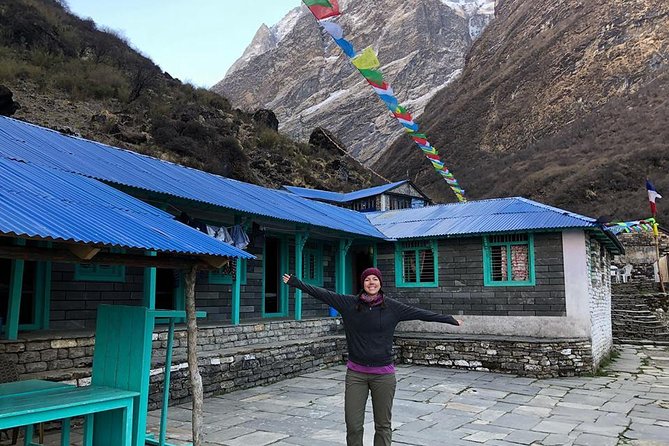
You cross the Dudh Koshi River and pass through Monjo before entering Sagarmatha National Park. From there, the trail climbs through forest toward Namche Bazaar.
Namche is the main trading center of the region and an important stopping point. It feels less like a simple overnight village and more like a mountain town, with lodges and shops serving people heading toward Everest and other high valleys.
The schedule lists this day at around 16 hours, which should be clarified. Walking times in Himalayan itineraries can be described broadly, and your actual time depends on weather, trail conditions, group pace, and rest stops. Either way, expect a serious day of walking and a noticeable gain in altitude.
More day hikes and treks in Kathmandu:
- Nagarkot Sunrise View and Day Hiking from Kathmandu
★ 5.0 · 471 reviews - Annapurna Circuit Trek with Tilicho Lake
★ 5.0 · 368 reviews - Everest Base Camp Trek -14 Days
★ 5.0 · 321 reviews - Annapurna base camp trek 5 Days
★ 5.0 · 252 reviews
Day 4: Acclimatization above Namche Bazaar
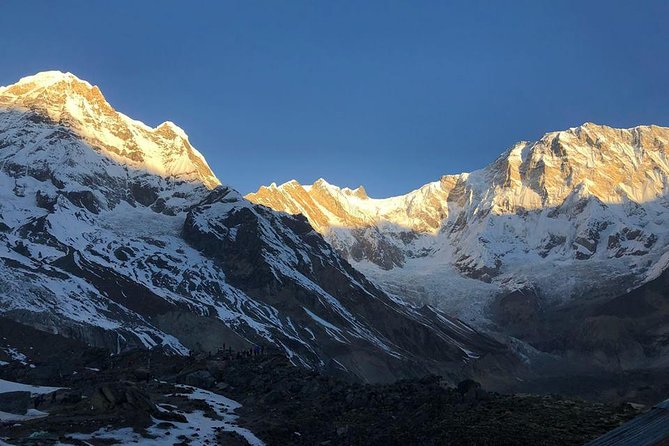
You stay another night in Namche and hike toward the Everest Hotel viewpoint. From the higher ground, you can see Everest, Ama Dablam, Thamserku, and Lhotse.
This is one of the most important days of the trek. You gain height during the day, then return to Namche to sleep lower than your highest point. That pattern helps your body adjust better than simply pushing upward every day.
The viewpoint is also a good reminder that Everest is part of a much larger mountain group. Ama Dablam often catches the eye first, while Lhotse and Thamserku add scale to the horizon. I would treat this day as both a short hike and a test of how your body is handling altitude.
Day 5: Forest trails and Tengboche Gompa
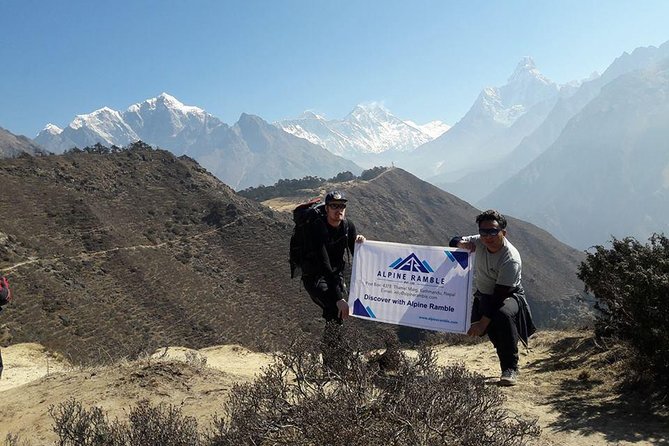
Leaving Namche, you walk through juniper and rhododendron forests toward Tengboche. The trail offers repeated views of the high peaks, then brings you to Tengboche Gompa.
The monastery is one of the cultural highlights of the route. The setting matters as much as the building, with mountain walls rising behind the settlement. You get a clear sense that this trek is not only about reaching a famous point on a map. It also passes through a region shaped by Sherpa Buddhist traditions.
The day is listed at roughly 16 hours, so ask your guide for the expected walking time and departure hour. Even if the actual walking time is shorter, the trail’s ups and downs can make this day tiring.
Day 6: Across the Imja Khola to Dingboche
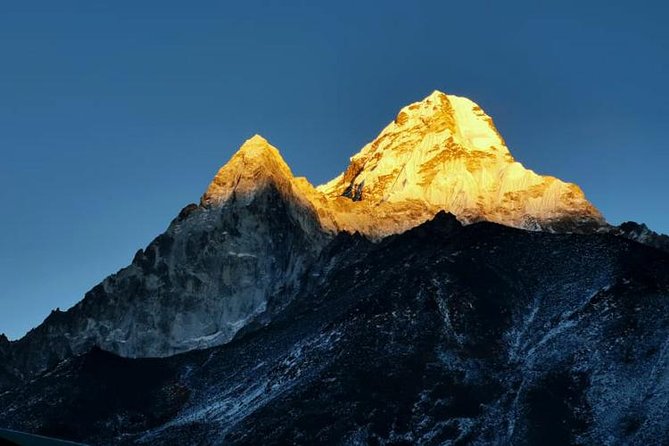
The route continues to Dingboche, crossing the Imja Khola and opening views toward Island Peak and Ama Dablam. The trail becomes more exposed and feels increasingly high and dry as you leave the lower forests behind.
Dingboche is a sensible place for another rest day because the next section leads toward Lobuche and Gorakshep. The village also gives you a base for the optional high hikes planned for the following day.
At this stage, your pace matters more than speed. You want enough energy left for the acclimatization hike and the long approach to Base Camp.
Day 7: The second acclimatization day at Dingboche
You have a choice of hiking to Nangkartshang Peak at 5,083 meters or Chhukung Ri at 5,546 meters. Both offer views of Everest, Ama Dablam, Island Peak, and Pumori.
These options are not equal in difficulty. Chhukung Ri reaches a higher elevation, while Nangkartshang may be the more sensible choice if you are tired or already feeling the altitude. Ask your guide which option fits your condition rather than choosing the highest number simply because it sounds impressive.
This is another day where the private format helps. Your guide can discuss the options with your group and adjust the plan if needed. Do not hide symptoms to protect the schedule. A slower trek is better than a forced evacuation.
Day 8: Rocky ground on the way to Lobuche
You continue along an uneven rocky path toward Lobuche. The views now include Pumori, Nuptse, and Lobuche Peak.
This section has less forest and more stark high-altitude scenery. The trail can feel rough underfoot, so sturdy footwear and trekking poles are useful choices. You will want to keep your pack light and make frequent small adjustments to your layers.
Lobuche is a staging point for the main goal. The next day includes the walk to Everest Base Camp and the return to Gorakshep, so use this evening to prepare your water, clothing, and headlamp.
Day 9: The long day to Everest Base Camp
You walk through the Khumbu Glacier area toward Everest Base Camp, then return to Gorakshep. The route is rocky and demanding, and the altitude makes every section feel longer.
At Base Camp, you can view the Khumbu Icefall. The experience is not a quick roadside stop. You have worked your way through villages, forests, high passes of trail, and glacier country to reach it. The surrounding peaks and ice formations give the moment its force.
The description lists only one hour at Mount Everest, but the full day is much longer because of the approach and return. Keep that distinction in mind when judging the schedule. Base Camp itself is also seasonal in character, and the exact scene can vary with climbing activity and time of year.
Day 10: Kala Patthar and the descent to Pheriche
The next morning brings the climb to Kala Patthar, the classic viewpoint for Everest. This is often the strongest mountain panorama of the trek, with Everest and surrounding peaks filling the view.
You then descend toward Pheriche through forested sections of trail. The listed time at Mount Everest is only about 30 minutes, but the day includes the early hike and the walk down, so expect a full mountain day rather than a short viewpoint visit.
The descent is welcome after Base Camp, but it still takes work. Your knees may notice the drop, and rocky paths require care. The reward is a lower sleeping elevation and the feeling that the route is now turning back toward Lukla.
Days 11 and 12: Returning through Namche to Lukla
Day 11 takes you back toward Namche, crossing suspension bridges and passing mountain villages. You are leaving the highest section, but the trail still has climbs, so do not expect an effortless downhill walk.
On Day 12, you pass Jorsale and Monjo, reach Phakding, and continue along the Dudh Koshi River to Lukla. The repeated bridges and familiar villages give the return a different mood. You now recognize the route, and the finish feels close.
Both days are listed at roughly 16 hours. Confirm the planned walking hours with the guide, especially if your group has a range of fitness levels. A private trip should allow sensible pacing, but you still need to be ready for long days.
Day 13: Flight back to Kathmandu and free time
You take an early morning flight of about 35 minutes back to Kathmandu. After landing, the rest of the day is free.
This is a useful buffer rather than a minor extra. You can rest, walk around Thamel, and shop for souvenirs without trying to squeeze city time into the night before an international flight. Since mountain flights can be affected by local conditions, ask how the operator handles schedule changes and whether you should protect extra time before your onward journey.
Day 14: Airport transfer or extra time in Nepal
On the final day, you can extend your stay in Nepal or arrange a transfer to the airport. The arrival and departure transfer service is included.
The simple ending works well for people who want help with the final transport but do not need a longer Kathmandu program. If you do want more time in Nepal, the operator can extend the tour, though the additional arrangements are not detailed here.
What the $999 price really covers
At $999 per person, the package covers several major costs: airport transfers, local flights, guide salary, guide food and equipment, guide insurance, national park fees, local permits, government taxes, and VAT.
That is solid value for an organized private trek, especially because the Lukla flights and permits can be complicated to arrange independently. The guide’s support is also important at altitude, where route decisions and pacing matter.
The headline price is not your complete trip budget. You still pay for international flights, the Nepal entry visa, your accommodation and food throughout the trek, and travel and health insurance. Your insurance must cover emergency rescue and evacuation. Tips for the guide are expected, so include them when planning your spending.
Who should book this trek
I would choose this trip if you want the classic Everest route, prefer a private group, and value help with airport transfers, permits, local flights, and guide arrangements. It also suits solo trekkers and families who want one team managing the route. Past groups have included solo women, a parent and teenage daughter, and pairs who wanted close support.
You need moderate physical fitness and a willingness to walk for long periods at altitude. This is not the right choice if you want short daily walks, guaranteed flight times, or a package with every meal and hotel included.
The care shown by guides such as Roshan, who was praised for humor and support, and Abinash, who tailored the experience to the group, is exactly what you want on a demanding trek. Still, ask who will guide your specific departure and what happens if a flight or walking day changes.
Should you book the Everest Base Camp Trek?
Book it if reaching Everest Base Camp matters to you and you want a structured private trek with two acclimatization days. The route includes the essential stops, the key viewpoints, and the cultural pause at Tengboche Gompa.
Before paying, get a written breakdown of teahouse accommodation, meals, expected walking hours, flight departure airport, and emergency procedures. If you are comfortable budgeting beyond the $999 headline price and preparing seriously for altitude, this is a practical way to tackle the classic Everest Base Camp route.
Cancellation is free up to 24 hours before the start time. Within 24 hours, the payment is not refunded.
FAQ
Where does the Everest Base Camp trek start?
The experience starts in Kathmandu. Pickup is available at Tribhuwan Airport or at the hotel where you are staying, and the listed meeting point is Nepal Nirvana Trails in the Thamel area.
How long is the trek?
The full experience lasts 14 days, including arrival arrangements, the trek, the return flight to Kathmandu, and the final airport transfer or extension day.
What time does the trek start?
The listed start time is 5:45 am. The first trekking flight to Lukla is scheduled early, so confirm the exact pickup time with the operator.
Are flights to Lukla included?
Yes. The package includes flights from Kathmandu or Manthali to Lukla and the return flight from Lukla to Kathmandu or Manthali.
Are airport transfers included?
Yes. Arrival and departure airport transfer services are included.
Is this a private tour?
Yes. Only your own group participates in the activity.
Are permits and national park fees included?
Yes. The package includes applicable national park fees, TIMS, local permits, government expenses, taxes, and VAT.
Are accommodation and meals included?
No. Your own accommodation and food for the full trip are not included. The guide’s food is included as part of the guide costs.
Is travel insurance included?
No. You must arrange travel and health insurance that covers emergency rescue and evacuation.
What fitness level is required?
The activity requires a moderate physical fitness level. The route includes long walking days, uneven rocky trails, high altitude, and demanding hikes to Everest Base Camp and Kala Patthar.
Just added around Kathmandu
- Traditional Momo Making Class★ 5.0 · 10 reviews
- Wildlife Adventure in Chitwan Nepal★ 4.0 · 4 reviews
- Walking tour of real Kathmandu through back streets.★ 5.0 · 3 reviews
- Kathmandu 2 Nights 3 Days Chitwan Jungle Safari Tour★ 5.0 · 9 reviews
- Kathmandu Street Food Walking Tour – Eat Like a Local★ 5.0 · 3 reviews
- Private Manaslu Circuit Trek at Himalayas★ 5.0 · 3 reviews
- Walking tour of Kathmandu with awesome local guides★ 5.0 · 4 reviews
- Visit Swayambhunath and Bauddhanath Stupa with Guide★ 5.0 · 5 reviews
Everest Base Camp Treks from Kathmandu, compared.
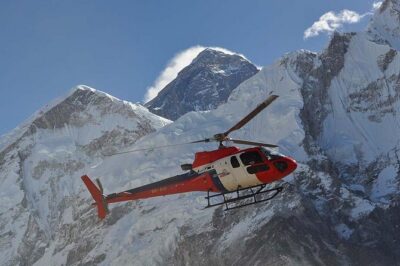
Everest Base Camp Trek with Helicopter Return from Gorakshep to Lukla
Read our review →Browse the lists this tour appears in