
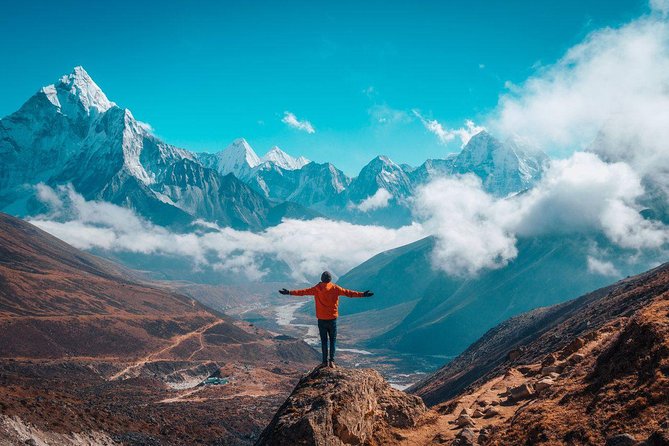
Reviewed · EVEREST BASE CAMP TREKS FROM KATHMANDU
Everest Base Camp Trek 15 Days
Everest Base Camp is not just a mountain viewpoint. It is a demanding walk into the Khumbu, where Sherpa villages, Buddhist monasteries, and high glaciers become part of your daily world. This 15-day private trek takes you to the foot of Everest at 5,364 meters, with nights in clean scenic lodges and meals included.
I like the strong human side of this trip. Guides and porters such as Pasang, Lakpa, Neema, Kumar, and Buddha Tamang have been praised for their care, flexibility, and practical help, including carrying day packs when hikers were worn out. I also like that the route brings you close to local customs rather than treating Everest as a quick photo stop.
The main caution is altitude. This is a serious high-mountain trek, not a casual walking holiday. You need a moderate fitness level, patience with changing conditions, and enough time to handle the physical demands of reaching 5,364 meters.
Key points to know before booking
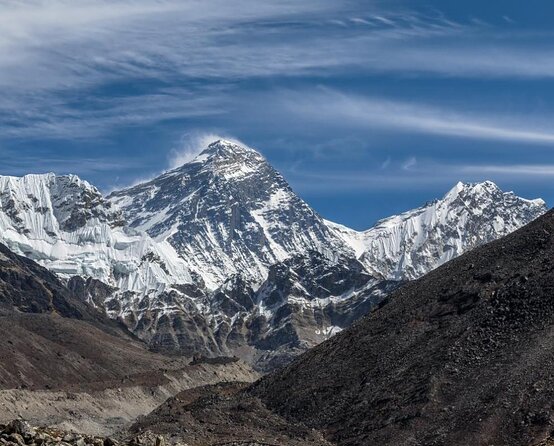
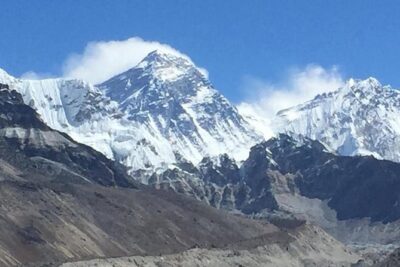
- Everest Base Camp at 5,364 meters: The trek reaches the foot of the world’s highest peak, with views of high mountains, glaciers, and the Khumbu icefall.
- Sherpa culture along the route: You pass traditional villages, old heritage sites, and monasteries shaped by Buddhist customs.
- Private group format: Only your own group participates, giving you a more personal arrangement than a large fixed departure.
- Full board is included: Breakfast, lunch, dinner, a sleeping bag, a duffel bag, fees, and taxes are covered.
- Strong guide support: Past guide teams have included Pasang, Lakpa, Buddha Tamang, Gumbo, and others praised for care and flexibility.
- A 15-day commitment: You start at 6:15 am in Kathmandu and return to the meeting point at the end of the activity.
What the Everest Base Camp route gives you
I like this trek because it combines a clear goal with a changing sense of place. Everest is the headline, but the walk is made memorable by the transition from Kathmandu to Sherpa settlements, forested paths, alpine country, and finally the stark world around the Khumbu glaciers.
The route is presented as an exploration of traditional Sherpa villages and Buddhist culture. That matters. You are not simply walking toward a famous mountain. You are moving through communities where monasteries, customs, and mountain life are part of the setting.
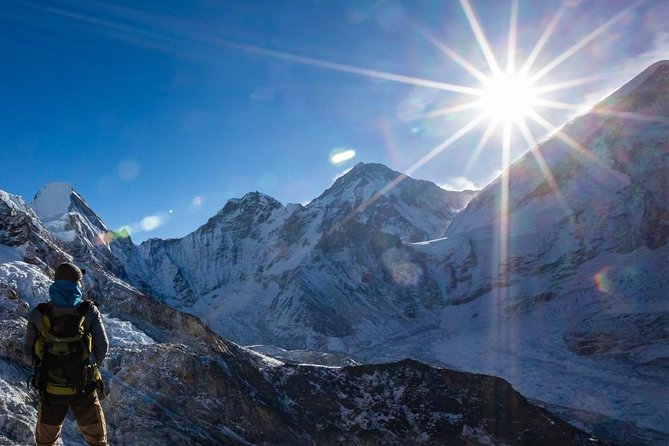
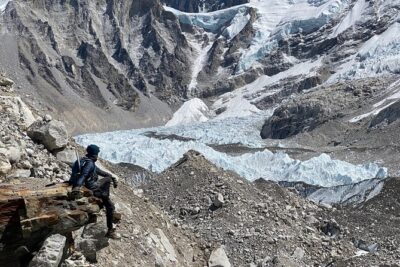
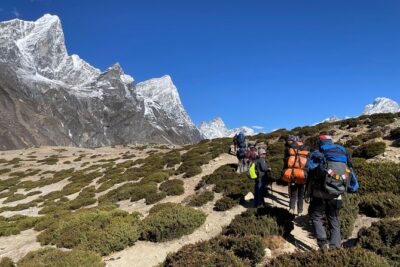
The scenery changes as you gain height. Lower sections include pine and rhododendron forests, while higher sections become more open and barren. The final approach brings you toward the Khumbu icefall and the rough, glacial terrain associated with Everest expeditions.
At Base Camp, the altitude reaches 5,364 meters. The experience is about standing at the starting point for major Everest climbs, seeing the surrounding peaks, and understanding how much effort is required to travel through this country. The trip does not promise an easy walk, and that is part of its appeal for people who want a real Himalayan challenge.
More Everest Base Camp treks:
- Everest Base Camp Trek – 14 Days
★ 5.0 · 1,499 reviews - Everest Base Camp Trekking
★ 5.0 · 485 reviews - Everest Base Camp Trekking – 13 Day
★ 5.0 · 365 reviews
A realistic look at the 15-day pace
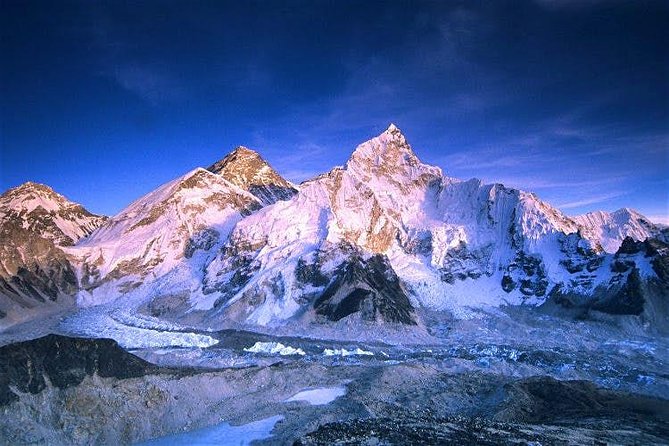
The supplied schedule gives the overall duration but not a full day-by-day breakdown with named overnight stops. That means you should ask Sherpa Expedition & Trekking for the exact daily plan before paying, especially if you want to know the walking hours, rest days, altitude gains, and accommodation for each night.
What is clear is the broad rhythm. You begin in Kathmandu, travel into the Everest region, spend nights in scenic lodges, and continue through Sherpa settlements toward Base Camp. The return follows the mountain route back toward the starting point, with the activity ending at the same meeting point in Kathmandu.
A 15-day plan requires a steady pace. You will need to walk for many days in a row, often while dealing with thinner air and tired legs. Even a person who is reasonably fit should treat the altitude as the key issue, not just the distance.
I would use the first part of the trek to settle into the walking rhythm. The villages and forests offer more variety than the upper route, where the setting becomes increasingly exposed and spare. Near the high point, the scenery may be dramatic, but your energy and comfort will matter just as much as the views.
Kathmandu start and early preparation
The listed meeting point is Sherpa Expedition & Trekking on Chaksibari Marg in Kathmandu, with a 6:15 am start. That is an early beginning, so you should arrange your personal schedule around it and confirm the exact pickup details in advance. Pickup is offered, but the supplied information does not specify whether that means airport, hotel, or another location.
Kathmandu is the practical staging point for the trek. It is where you meet the operator, prepare equipment, and begin the journey into the Everest region. The company provides a sleeping bag and duffel bag, which removes two bulky items from your own packing list.
You still need to pay attention to personal gear. The provided information does not list clothing or footwear, so you should ask for the recommended packing list. At high altitude, being comfortable and properly prepared is more important than saving space in your bag.
Sherpa villages, monasteries, and local customs
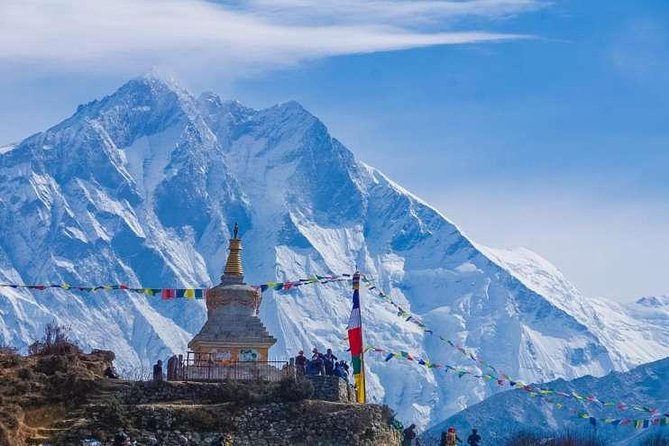
The cultural side of this experience is one of its best features. The route includes traditional Sherpa villages, old heritage sites, and interesting monasteries, all set among some of the world’s highest mountains.
You should not expect a museum-style cultural program. The value is in seeing how the villages and religious sites fit into the route. Buddhist customs and mountain life are not separate attractions here. They form the character of the communities you pass through.
I especially like this part of the trip because it gives meaning to the scenery. A mountain view is impressive, but a monastery, prayer tradition, or Sherpa settlement helps you understand who lives in this demanding region and why the route matters beyond its famous endpoint.
The information does not specify which monasteries you will visit or how much time you will spend at each one. Ask the operator if particular heritage sites are guaranteed on your departure. Conditions, route planning, and the pace of your group may affect the details.
More day hikes and treks in Kathmandu:
- Nagarkot Sunrise View and Day Hiking from Kathmandu
★ 5.0 · 471 reviews - Annapurna Circuit Trek with Tilicho Lake
★ 5.0 · 368 reviews - Everest Base Camp Trek -14 Days
★ 5.0 · 321 reviews - Annapurna base camp trek 5 Days
★ 5.0 · 252 reviews
Forest paths and the move toward the high country
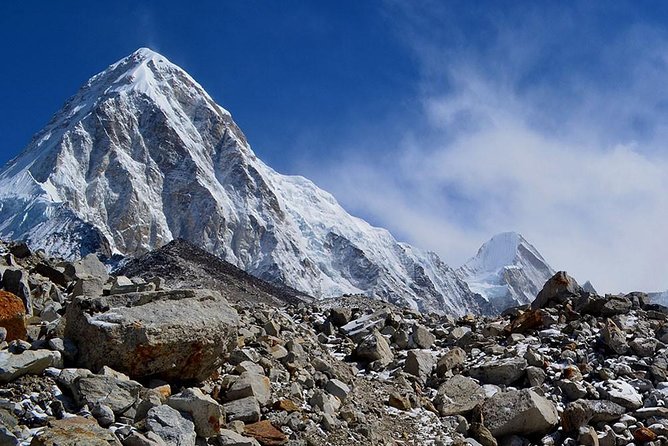
The route includes alpine rhododendrons and pine forests, then gradually opens into a harsher high-altitude setting. This change gives the trek a useful sense of progress. You can feel that the world is becoming less sheltered as you approach Everest.
Lower forest sections may be the most visually varied part of the journey. Rhododendrons add color when in bloom, while pine forests provide a different mood from the bare rock and ice higher up. The exact appearance depends on the season, and the tour information does not promise a particular flowering period.
As you continue upward, the mountains become the main event. Panoramic views are a major reason to choose this trek, but clouds and weather can affect what you see. The company specifically notes that good weather is required, so you should keep some flexibility in your plans.
Lodges, meals, and the value of comfort
Each night is spent in clean scenic lodges, with the warmth and hospitality associated with the Sherpa communities. The description does not promise luxury, and you should not book this expecting a resort-style stay. The appeal is having a reliable place to rest in a remote mountain region.
Breakfast, lunch, and dinner are included. That is useful on a 15-day trek because meal planning becomes one less daily concern. Snacks, soda, and alcoholic drinks are not included, so you should budget separately for those items.
The included sleeping bag and duffel bag add practical value. You still need to confirm the bag specifications and whether the supplied equipment suits your personal comfort needs. These details can matter when nights are cold and your body is already tired from walking.
Food and lodge quality can vary along a mountain route, so keep your expectations sensible. The strongest value here is the combination of meals, equipment support, guide services, and transport or operating costs folded into one price, not a promise of high-end accommodation.
How the guide team affects the experience
A good guide can make a difficult trek feel manageable. This is especially true at altitude, when you need clear decisions, steady encouragement, and someone who notices when your condition is changing.
Guide names connected with past departures include Pasang, Lakpa, Buddha Tamang, Gumbo, and Tendi. Porters have included Neema, Pasang, and Kumar. Their praised qualities include careful attention to physical condition, help with day packs, strong communication, and flexibility when plans changed.
One useful detail is that a guide team helped hikers who were exhausted by carrying day packs. That is not something you should assume will happen automatically on every departure, but it shows why the porter arrangement matters. Ask exactly what your porter carries, what weight limits apply, and what you should keep in your own day pack.
The trip is private, so your group will be the only group participating in the activity. That can make communication easier and may allow the guide to respond to your group’s pace. It does not remove the physical challenge, and it does not guarantee that the schedule can change freely in poor weather or difficult conditions.
What the $2,400 price really covers
At $2,400 per person, this is a major purchase, but the price covers more than the guided walking itself. Included items are breakfast, lunch, dinner, a sleeping bag, a duffel bag, all fees, and taxes.
That package can offer solid value if you want a structured private trek and do not want to arrange each service separately. The cost also includes the operator’s planning and guide support, which are important on a high-altitude route.
The price does not include alcoholic drinks, soda, snacks, a Nepal visa, travel insurance, or tips for the guide and porter. Those extras can affect your final budget. Insurance deserves particular attention because the tour is physically demanding and the weather can affect mountain travel.
I would compare this trek with other 15-day Everest Base Camp options by checking what each one includes, not just the headline price. Ask about the exact accommodation, porter service, transfers, guide-to-group ratio, and the daily schedule. A cheaper package may leave more costs for you to arrange.
Fitness, weather, and the hard parts
The operator asks for a moderate fitness level, but that phrase should not make you underestimate the route. You need to be comfortable walking for multiple days in a mountain environment, with the added challenge of altitude.
The highest point is 5,364 meters, and the information does not describe an altitude guarantee, medical plan, or evacuation policy. You should ask those questions directly and buy suitable travel insurance before departure.
Weather is another important factor. The activity requires good weather, and poor conditions can lead to a different date or a full refund. That policy offers useful protection, but it also means you should avoid scheduling the trek too close to an important flight or fixed commitment.
The route can be physically tiring even when the scenery is beautiful. Take the slow approach, listen carefully to your guide, and do not treat reaching Base Camp as a race. The private format may help your group communicate clearly, but it cannot change the basic demands of the mountain.
Who should book this trek
I would recommend this experience to you if Everest is a serious personal goal, you want Sherpa culture alongside mountain scenery, and you prefer a private group rather than a large shared departure.
It is also a good fit if you value practical support. Meals, a sleeping bag, a duffel bag, fees, and taxes are included, while guide and porter teams have earned strong praise for personal care and help with difficult days.
I would hesitate if you want a relaxed holiday, a luxury lodge experience, or a tightly guaranteed sightseeing schedule. The exact daily stops are not provided, and the altitude, weather, and long walking days require flexibility.
Booking details that matter
Confirmation is provided at the time of booking. The activity starts at 6:15 am from the Sherpa Expedition & Trekking office on Chaksibari Marg in Kathmandu and ends back at the meeting point.
Free cancellation is available when you cancel at least 24 hours before the start time. Cancellations or changes made less than 24 hours in advance are not accepted for a refund. If poor weather or failure to meet the minimum number of participants causes cancellation, you can receive a different date or a full refund.
Ask for the full itinerary before booking. In particular, confirm the daily walking hours, altitude profile, accommodation standards, guide assignment, porter arrangements, and what pickup includes. Those answers will tell you far more about fit than the impressive name of the destination.
Should you book the Everest Base Camp Trek?
I would book this trek if you want the full Everest Base Camp experience, including Sherpa villages, Buddhist sites, forest paths, glacial scenery, and the satisfaction of reaching 5,364 meters with a private support team.
The strongest reasons to choose it are the complete meal package, included sleeping and luggage equipment, personal guide support, and the cultural character of the route. The biggest caution is equally clear: this is a serious high-altitude trek, and the 15-day schedule leaves little room for treating the journey casually.
Go in with realistic expectations, confirm the detailed schedule, arrange proper insurance, and budget for visa costs, snacks, drinks, and tips. If you are fit enough for the challenge and Everest has been on your list for years, this offers a practical way to make the goal part of a much broader Himalayan experience.
FAQ
How long is the Everest Base Camp Trek?
The trek lasts approximately 15 days.
What altitude does the trek reach?
The route reaches Everest Base Camp at 5,364 meters.
Where does the activity start?
It starts at Sherpa Expedition & Trekking on Chaksibari Marg in Kathmandu, Nepal.
What time does the trek start?
The listed start time is 6:15 am.
Where does the activity end?
The activity ends back at the meeting point in Kathmandu.
Is this a private tour?
Yes. Only your own group participates in the activity.
What meals are included?
Breakfast, lunch, and dinner are included.
What equipment is provided?
A sleeping bag and duffel bag are included.
What costs are not included?
Alcoholic drinks, soda, snacks, a Nepal visa, insurance, and tips for the guide and porter are not included.
Just added around Kathmandu
- Traditional Momo Making Class★ 5.0 · 10 reviews
- Wildlife Adventure in Chitwan Nepal★ 4.0 · 4 reviews
- Walking tour of real Kathmandu through back streets.★ 5.0 · 3 reviews
- Kathmandu 2 Nights 3 Days Chitwan Jungle Safari Tour★ 5.0 · 9 reviews
- Kathmandu Street Food Walking Tour – Eat Like a Local★ 5.0 · 3 reviews
- Private Manaslu Circuit Trek at Himalayas★ 5.0 · 3 reviews
- Walking tour of Kathmandu with awesome local guides★ 5.0 · 4 reviews
- Visit Swayambhunath and Bauddhanath Stupa with Guide★ 5.0 · 5 reviews
Everest Base Camp Treks from Kathmandu, compared.
Everest Base Camp Trek with Helicopter Return from Gorakshep to Lukla
Read our review →Browse the lists this tour appears in