
Reviewed · EVEREST BASE CAMP TREKS FROM KATHMANDU
Everest Base Camp Trek from Kathmandu 12 Days
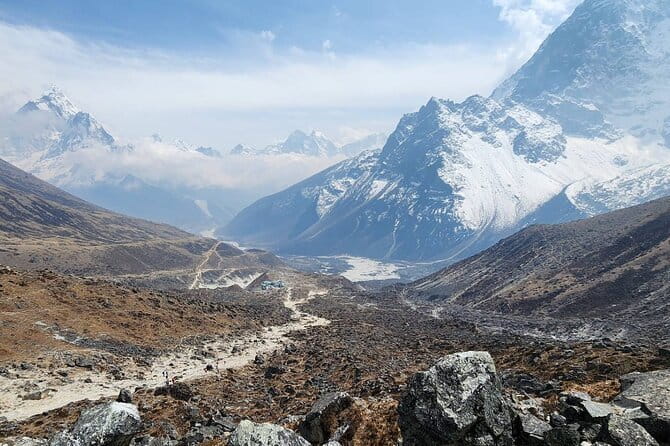
The great hook here is the classic Khumbu route in a tight 12-day plan. You fly from Kathmandu to Lukla, walk through Sherpa villages and Buddhist monasteries, then reach Everest Base Camp with the high peaks of Everest, Lhotse, Nuptse, and Makalu around you. The early start for Kala Patthar adds one of the finest mountain viewpoints in the region.
I like the private format, since your group can move at its own pace and work directly with the guide. I also like that the package includes the Lukla flights, trekking permits, TIMS card, guesthouse accommodation, hotel transfers, and a guide with a first aid kit. Guides named in past trip accounts include Milan and Bikram, both praised for calm support and careful planning.
The main catch is the pace. This is a demanding high-altitude trek, not a gentle walking holiday. You need strong physical fitness, and the return from Everest Base Camp still requires several long days on rocky trails. The price of $1,350 is fair for the listed inclusions, but you should budget separately for personal expenses.
Key points to know before booking
- Classic Everest route: Walk from Lukla to Phakding, Namche Bazaar, Tengboche, Dingboche, Lobuche, Gorakshep, and Everest Base Camp.
- Two acclimatization days: Rest days in Namche Bazaar and Dingboche include optional short walks or local exploration.
- Private trip: Only your own group participates, with an English-speaking guide.
- Flights are included: The package covers the round-trip Kathmandu to Lukla flight.
- Strong guide reputation: Milan and Bikram are specifically associated with organized, friendly guiding and attention to safety.
- A serious physical challenge: Several days last six or seven hours, with steep, rocky sections and high-altitude walking.
Why this 12-day Everest trek works
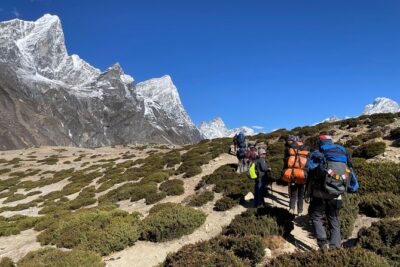
Everest Base Camp is not simply a destination you reach by walking uphill. The route builds gradually through river valleys, pine forests, high villages, monasteries, and glacial terrain. That change in scenery is what gives the trek its power.
You begin low enough for a relatively short first day, then gain height in measured stages. Namche Bazaar provides a useful pause, as does Dingboche. Those rest days are not wasted time. They give your body a better chance to adjust before the trail reaches Gorakshep and Base Camp.
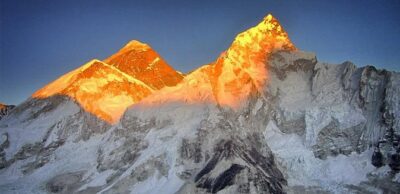
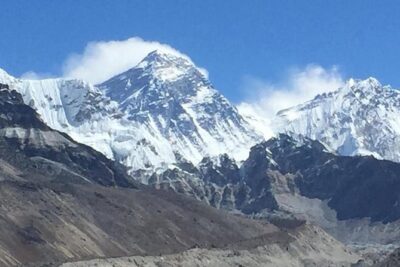
The itinerary also gives you two visual rewards near the top. Everest Base Camp is the emotional goal, but Kala Patthar usually provides the clearer mountain view. From there, you can look toward Everest, Lhotse, Nuptse, and the surrounding peaks in one sweeping scene.
The private setup matters here. You are not tied to a large group’s slowest walker or fastest photographer. Your guide can help manage the rhythm of the day, which is useful when altitude affects people differently.
More Everest Base Camp treks:
- Everest Base Camp Trek – 14 Days
★ 5.0 · 1,499 reviews - Everest Base Camp Trekking
★ 5.0 · 485 reviews - Everest Base Camp Trekking – 13 Day
★ 5.0 · 365 reviews
Day 1: Lukla flight and the short walk to Phakding
The trip starts with a transfer to Kathmandu’s domestic terminal for the morning flight to Lukla. The flight itself takes about an hour according to the schedule, followed by a meeting with the trekking guide and the walk toward Phakding.
The first walking day lasts about four hours, but the actual hike to Phakding is intentionally short. That is sensible. You are beginning a high-altitude journey, and there is little value in exhausting yourself on the first afternoon.
Phakding is your first overnight stop and a gentle introduction to the route. You will already notice suspension bridges, the Dudh Koshi river system, and the steady presence of porters and mountain animals along the trail. The included guesthouse accommodation is basic rather than luxurious, so pack with comfort and simplicity in mind.
Day 2: Pine forests and the climb to Namche Bazaar
The second day is longer, at about six hours, and feels more like a proper trek. You follow the Dudh Koshi River through pine forest and cross several suspension bridges before climbing toward Namche Bazaar.
Namche is the main trading center of the Khumbu region and one of the most memorable stops on the route. The change from river valley to high mountain town is dramatic. It is also where the trek starts to feel serious, because the air is thinner and the trail rises more sharply.
Your guide’s role becomes more important here. A good guide will help you keep a steady pace rather than race uphill. The company’s guides, including Milan and Bikram, are praised for being friendly, organized, and attentive to safety. Those qualities matter more than theatrical speeches when you are tired and adjusting to altitude.
Day 3: Acclimatization around Namche Bazaar
You spend a second night in Namche Bazaar, with about five hours set aside for activity. The plan allows for a day hike toward Thame, a visit to Khunde, or time exploring Namche itself.
The key point is to stay active without pushing too hard. An acclimatization day does not mean lying in bed all day, but it also is not the time to prove your fitness. A short walk gives you a chance to look around while allowing your body to adjust.
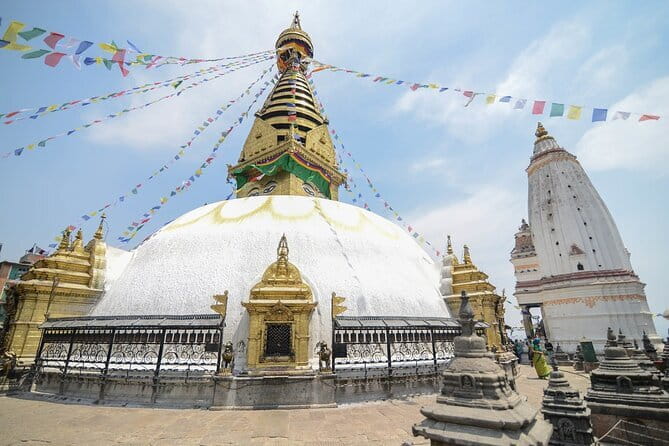
Namche is also a useful cultural stop. You can see how Sherpa communities connect trade, tourism, Buddhism, and mountain life. This is one reason I prefer this route to a simple point-to-point mountain walk. You are not just passing through scenery. You are moving between settled communities with their own traditions.
More day hikes and treks in Kathmandu:
- Nagarkot Sunrise View and Day Hiking from Kathmandu
★ 5.0 · 471 reviews - Annapurna Circuit Trek with Tilicho Lake
★ 5.0 · 368 reviews - Everest Base Camp Trek -14 Days
★ 5.0 · 321 reviews - Annapurna base camp trek 5 Days
★ 5.0 · 252 reviews
Day 4: Tengboche and its famous monastery
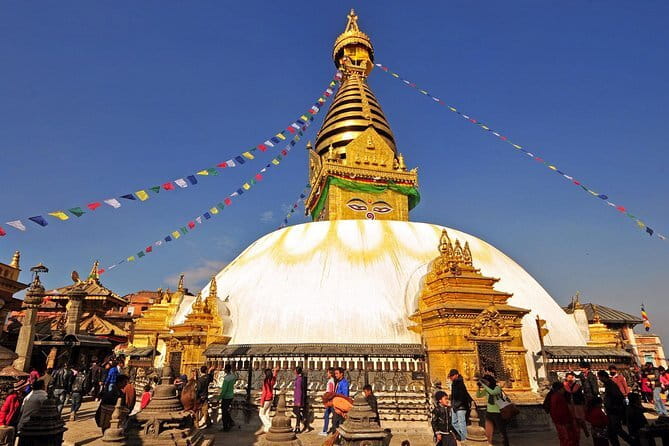
The trail to Tengboche takes around six hours. The route is described as dusty and winding, with some climbs and descents but enough open views for photographs.
Tengboche is special because of its monastery and broad mountain outlook. The monastery gives the day a cultural focus, while the views bring you back to the scale of the Himalayas. This is a good place to slow down and appreciate the setting rather than treat the walk as a race between overnight stops.
The trail can be tiring despite the moderate description. Dust, uneven ground, and repeated rises add up. You will want sturdy footwear and a comfortable day pack. The guide can also help you judge how much time to spend at viewpoints without turning the day into a late arrival.
Day 5: Tengboche to Dingboche through alpine country
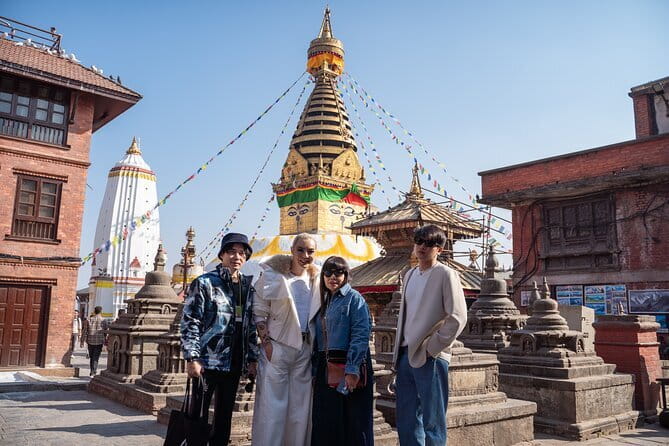
This is one of the longer days, at about seven hours. The walk begins with a visit to the region’s oldest Buddhist monastery, then continues through alpine woodland toward Upper Pangboche and Shomare before reaching Dingboche.
Pangboche is a notable settlement on the route, and the villages help break up a day that otherwise becomes a long march through increasingly open country. By Dingboche, the mountains feel closer and the vegetation begins to thin.
The altitude now deserves your full attention. You might feel fine, or you might notice headaches, tired legs, or a slower pace. The itinerary includes another acclimatization day here, which is an important feature rather than a filler day.
Day 6: Dingboche rest day
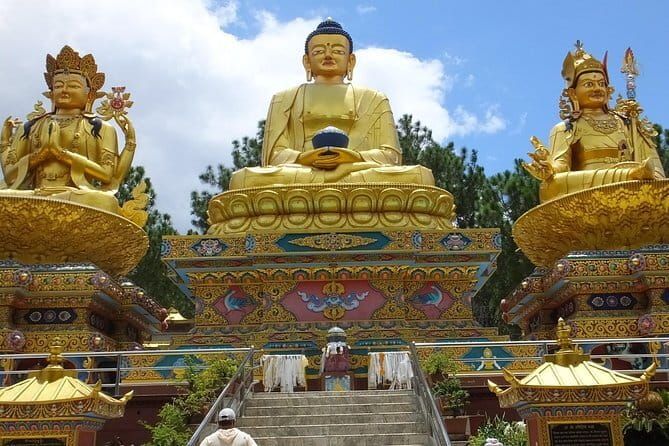
Dingboche gives you another five-hour activity window for local walks and village exploration. You may choose to visit nearby settlements or stay close to town while taking short walks.
This is another day to protect your energy. The next stages lead toward Lobuche, Gorakshep, and Base Camp, where the air is much thinner and the walking becomes more demanding. A guide who watches your condition and adjusts the pace is especially valuable at this point.
The trip’s safety support includes a first aid kit carried by the guide. That does not replace travel insurance or personal preparation, but it is a useful part of the basic setup.
Day 7: Dingboche to Lobuche
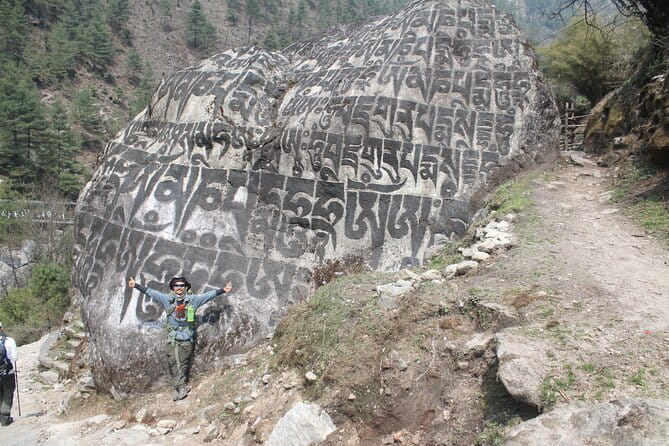
The route climbs through the Khumbu Khola valley toward Duglha and then into narrower, rougher country. The schedule gives this section about seven hours.
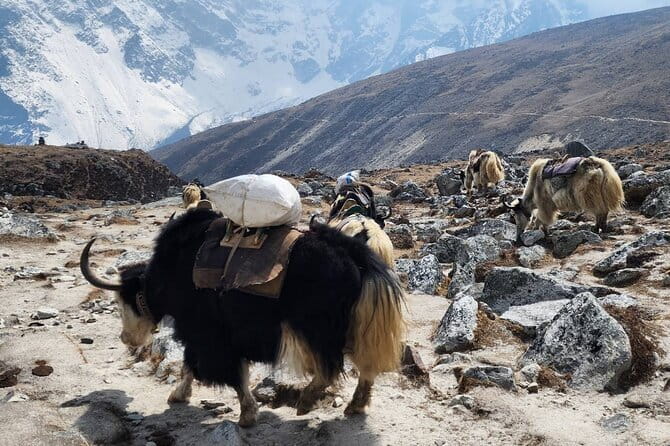
This is a hard day. The trail includes large boulders, uneven ground, and mountain yaks moving through the same corridor. The narrowing valley and higher altitude make the distance feel longer than it looks on a map.
Lobuche is not presented as a sightseeing stop in the usual sense. It is a staging point for the push to Gorakshep and Base Camp. That is fine. On a trek like this, practical overnight stops are part of the experience, and reaching Lobuche means you have crossed an important threshold.
Day 8: Gorakshep and Everest Base Camp
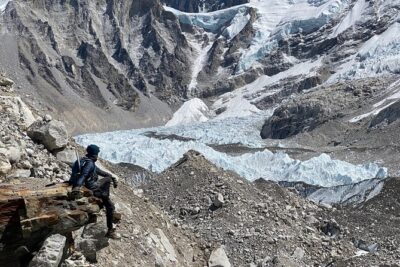
The walk to Gorakshep takes about three hours and follows the side of the Khumbu Glacier. You pass the pyramid signpost and climb toward Thangma Riju, where the high mountain views open up.
After reaching Gorakshep, you continue to Everest Base Camp. The Base Camp section is scheduled for about two hours, followed by a two-hour return to Gorakshep for the night.
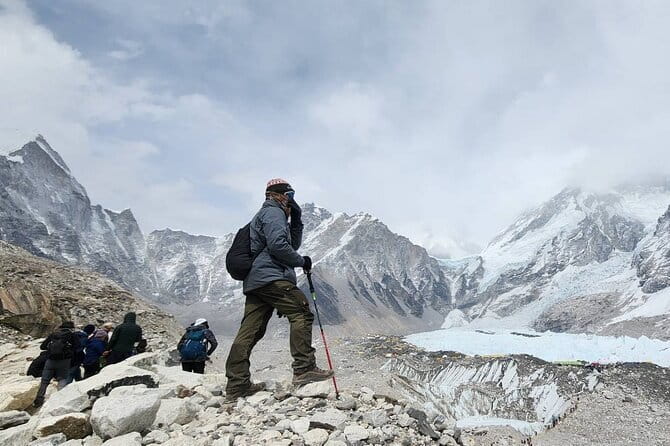
This is the emotional center of the trek. You are walking beside glacial terrain with Everest and the surrounding peaks in view, then arriving at the famous base camp used by climbers. The exact appearance of Base Camp changes with the season and climbing activity, so the experience is about the setting and the achievement, not a fixed display.
Do not underestimate the return walk. You may feel excited at Base Camp, but the altitude and rough trail remain when you turn around. Keeping enough strength for the way back is part of good pacing.
Day 9: Kala Patthar and the descent to Pheriche
The day begins early with the climb to Kala Patthar. The scheduled ascent takes about three hours, followed by a descent to Gorakshep, a rest period, and roughly four hours down to Pheriche.
Kala Patthar is one of the strongest reasons to choose this itinerary. It is widely regarded as one of the best viewpoints on the Everest Base Camp route, and it gives you a dramatic look at Everest and neighboring peaks. The early start is practical because mountain visibility is often a major part of the appeal.
After the viewpoint, the trip changes character. You are no longer gaining height toward a goal. You are descending, though the rocky trail can still be hard on knees and ankles. Pheriche provides a welcome overnight stop after a demanding morning.
Days 10 to 12: Returning through Namche, Lukla, and Kathmandu
Day 10 follows the route back through the Khumbu Valley, with about six hours of walking toward Namche Bazaar. You pass the terminal moraines at Duglha and return through Pheriche and nearby Sherpa villages.
Day 11 is split between Phakding and Lukla. The trail drops steeply at first, and the schedule warns that tired legs must work carefully over rocky ground. Later, the route becomes more level and passes through pine and rhododendron forest before reaching Lukla.
The final day includes the morning flight back to Kathmandu, with about 35 minutes in the air. Hotel pickup and drop-off are included, and the listed return stop is in Thamel.
The return flight is a practical finish, but flights in and out of Lukla are an important part of the trip’s logistics. The supplied trip accounts describe the flights as arriving on time, but you should still avoid scheduling an important same-day onward connection unless you have confirmed the timing and allowed a buffer.
What the $1,350 price really covers
At $1,350 per person, the price covers several costly and essential pieces: hotel transfers, round-trip Kathmandu to Lukla flights, trekking permits, the TIMS card, an English-speaking guide, guesthouse accommodation, a first aid kit, and a private trip.
That makes the price appealing for someone who wants the main logistics arranged in advance. It also reduces the need to organize separate flights, permits, transport, and guiding.
The value is less clear if you already have a way to arrange permits and transport independently. You will also need money for personal expenses, which are not included. The package does not list meals, equipment, porter service, travel insurance, or a detailed personal-expense allowance, so ask the provider what you should budget for before you pay.
Guides, group size, and the level of support
This is a private activity, so only your group takes part. The guide speaks English and is expected to manage the trail, explain local culture and history, and carry a first aid kit.
Milan is described as experienced, kind, and attentive throughout the trek. Bikram is repeatedly associated with strong route knowledge, friendly support, good organization of teahouse stays, and careful acclimatization planning. Other named staff include Sagar, Bishnu, and Sham in planning or guiding roles.
Guide assignment can change, so confirm who will lead your departure. The personal quality of the guide matters greatly here. The best support is practical: setting a safe walking pace, noticing signs of altitude trouble, helping with the daily plan, and keeping the group calm when the trail gets hard.
Who should book this trek
I would recommend it to a fit first-time Himalayan trekker who wants the classic Everest route without organizing every detail alone. It also suits a small private group that values direct attention from a guide and wants acclimatization days built into the schedule.
I would hesitate if you want a relaxed holiday, hotel-style comfort, or a flexible timetable. Twelve days is efficient, but it leaves little spare time if the pace becomes difficult. You need strong fitness, patience with basic guesthouses, and a willingness to walk six or seven hours on several days.
Cancellation is generous only if handled early: you can receive a full refund when canceling at least three full days before the start time. After that point, payment is not refunded and late changes are not accepted. Passport details and a passport photo, including a selfie, are needed for the trekking permit.
Should you book the Everest Base Camp Trek?
Book this trek if you want the classic Everest Base Camp experience in a private format and value having flights, permits, transfers, and guiding arranged together. The strongest features are the two acclimatization stops, the Kala Patthar viewpoint, and the guide support associated with Milan and Bikram.
Think twice if you are not ready for high-altitude exertion or if you need a large cushion for weather and flight delays. At $1,350, the package offers solid value for its listed inclusions, but you should confirm what personal costs remain before booking. For a fit, prepared walker who wants the Khumbu’s villages, monasteries, glaciers, and famous peaks in one focused trip, this is a sensible route.
FAQ
How long is the Everest Base Camp trek from Kathmandu?
The experience lasts approximately 12 days, including the flights between Kathmandu and Lukla.
Is transportation from my hotel included?
Yes. Hotel pickup and drop-off are included.
Are the Kathmandu to Lukla flights included?
Yes. The package includes a round-trip flight ticket between Kathmandu and Lukla.
Is this a private tour?
Yes. Only your group participates in the activity.
Is an English-speaking guide included?
Yes. An English-speaking trekking guide is included.
Are trekking permits included?
Yes. The trekking permit and TIMS card are included.
What accommodation is provided?
Accommodation is provided in guesthouses during the trek.
Are meals included in the price?
Meals are not listed among the inclusions, so you should confirm meal arrangements with My Dream Adventure before booking.
Do I need to provide passport information?
Yes. Your passport details and a photo are needed to issue the trekking permit. A selfie can be used as the photo.
How fit do I need to be?
You should have a strong level of physical fitness. The route includes walking days of about six or seven hours, steep rocky sections, and high-altitude trekking.
Can I cancel for a full refund?
Yes, if you cancel at least three full days before the experience start time. Cancellations made less than three full days ahead are not refunded.
Just added around Kathmandu
- Traditional Momo Making Class★ 5.0 · 10 reviews
- Wildlife Adventure in Chitwan Nepal★ 4.0 · 4 reviews
- Walking tour of real Kathmandu through back streets.★ 5.0 · 3 reviews
- Kathmandu 2 Nights 3 Days Chitwan Jungle Safari Tour★ 5.0 · 9 reviews
- Kathmandu Street Food Walking Tour – Eat Like a Local★ 5.0 · 3 reviews
- Private Manaslu Circuit Trek at Himalayas★ 5.0 · 3 reviews
- Walking tour of Kathmandu with awesome local guides★ 5.0 · 4 reviews
- Visit Swayambhunath and Bauddhanath Stupa with Guide★ 5.0 · 5 reviews
Everest Base Camp Treks from Kathmandu, compared.
Everest Base Camp Trek with Helicopter Return from Gorakshep to Lukla
Read our review →Browse the lists this tour appears in