
Reviewed · WORKSHOPS
Kathmandu: Wood Carving Workshop with Local Artisan (Thamel)
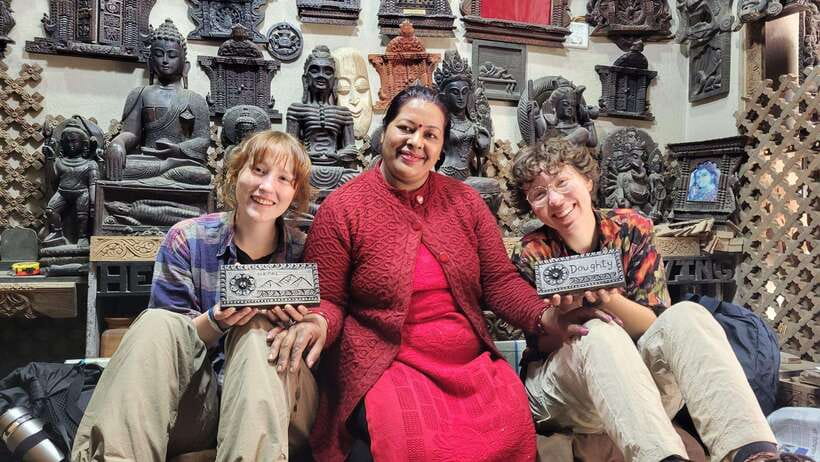
Nepali wood carving is not just a craft lesson here. It is a hands-on way to understand the carved windows, temple struts, and religious designs that shape Kathmandu Valley architecture. You work with a wooden block, learn from local artisan Hera, and leave with an object made by your own hands.
I like the small group of up to four, which gives you room to ask questions and receive corrections. I also like the practical souvenir: your finished piece has more meaning than a shop-bought trinket. The main consideration is that the history section may feel brief if you want a detailed study of Newar art and architecture.
Key points to know before you book
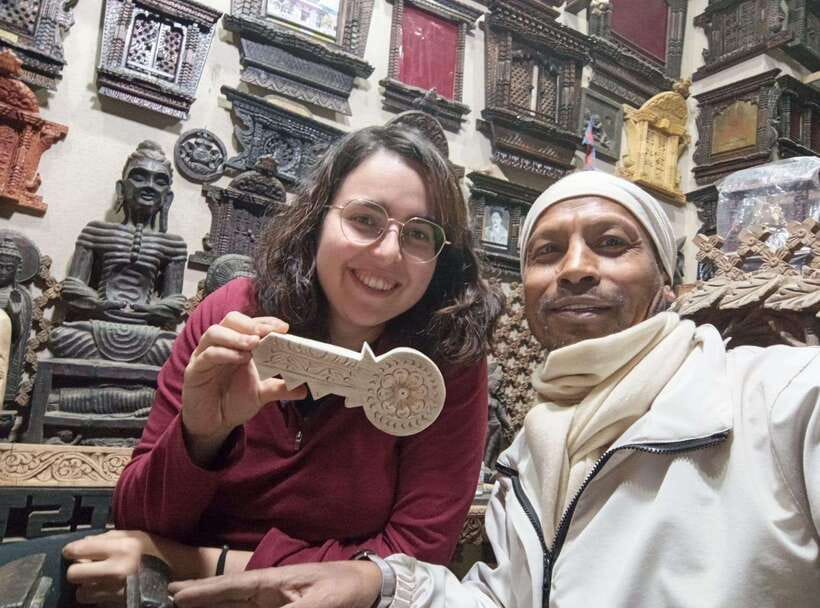
- You carve your own wooden artwork: Practice outlining, chiseling, and fine detailing on a prepared block.
- Hera leads the workshop: His warm, patient instruction has made the class comfortable for beginners and families.
- The group is limited to four people: In the off season, you may receive one-on-one instruction.
- The class connects craft with culture: Learn about lotus flowers, mandalas, deities, mythical creatures, and traditional Newar designs.
- The session lasts three hours: That gives you enough time to learn the tools, practice, and finish a keepsake.
- The meeting details need checking: The information gives a meeting point but not a clear street address, so confirm it before setting out.
Why Kathmandu wood carving matters
Wood carving has shaped Nepal’s public buildings, temples, palaces, and private homes for centuries. The craft reaches back to the Licchavi period, from the fourth to ninth centuries, and became especially refined during the Malla dynasty between the twelfth and eighteenth centuries.
That background changes how you look at Kathmandu. A carved window is not simply decoration. A wooden figure may show a deity, a mythical creature, or a symbol tied to Hindu or Buddhist belief. Patterns can carry religious meaning, and the placement of a carving within a building can matter as much as the carving itself.
The Newar community of the Kathmandu Valley is closely associated with preserving this craft. You can see major examples at the Kasthamandap, whose name means House of Wood, the 55-Window Palace in Bhaktapur, and the famous Peacock Window.
The workshop gives you a small-scale introduction to the same broad tradition. You will not reproduce a palace window in three hours, of course. You will learn how a design is planned and cut, which helps you look more closely at the carvings you see around the valley.
More cooking classes in Kathmandu:
- Half day cooking class in Thamel kathmandu
★ 5.0 · 607 reviews - Kathmandu: Local Women-Led Nepali Cooking & Momo Class
★ 4.9 · 360 reviews - Kathmandu: Local Lead Nepali Cooking & Momo-Making Class
★ 5.0 · 212 reviews
Entering a small Thamel workshop
The class takes place in a workshop setting in Thamel, Kathmandu. The supplied meeting information is not very specific, so confirm the exact meeting point and address before you go. Do not assume that a general Thamel location will be enough when you are trying to find a small studio among the area’s busy lanes.
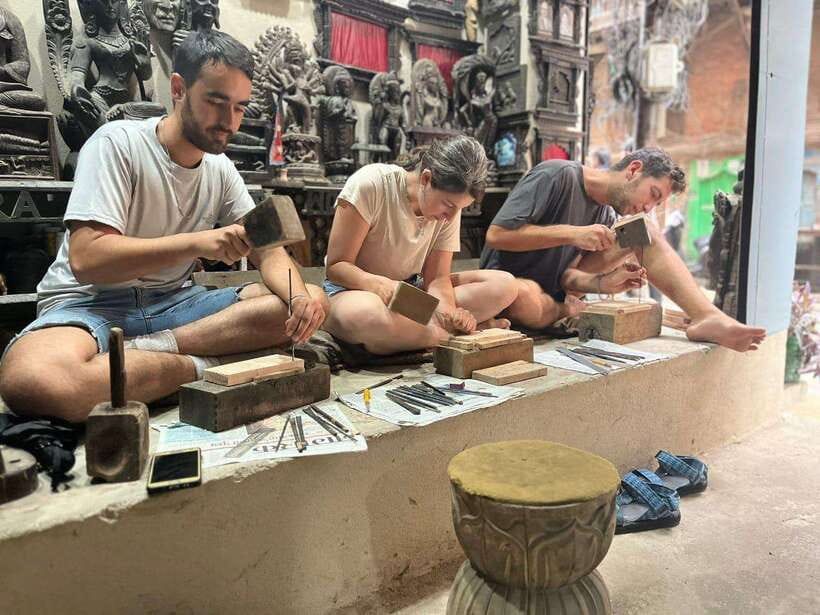
The group limit is four people. That is a useful size for wood carving because you need to see the instructor’s hand position and have space to work safely. It also makes it easier for Hera to correct your technique instead of giving one broad demonstration to a large crowd.
If you book in the off season, you might end up with a one-on-one class. That can make the three hours feel more personal and gives you more freedom to work at your own pace. During a full session, you will share the workshop with only a few other participants.
Wear comfortable clothes. Wood carving is a practical activity, and you will spend time seated or leaning over your work. Smoking is not allowed during the class.
Starting with tools, wood, and symbols
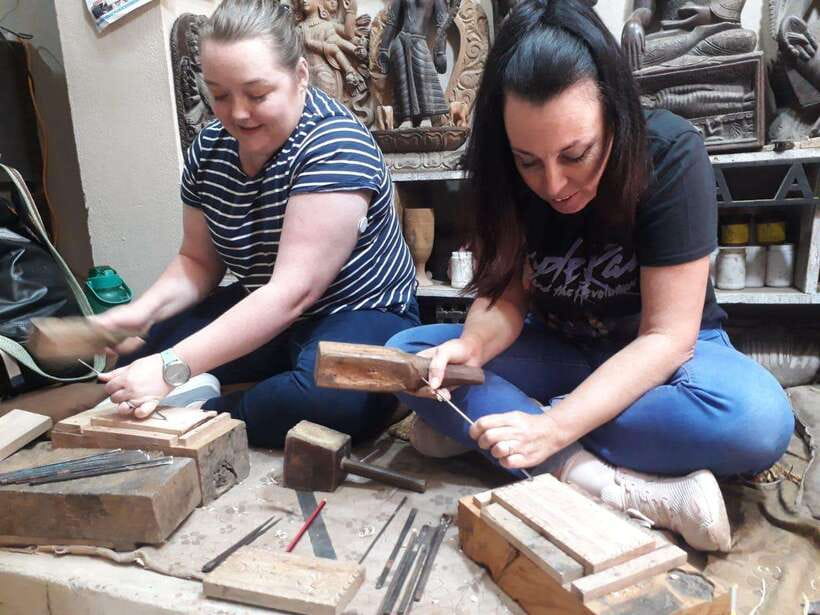
The first part of the class introduces the basic tools and materials. You learn about traditional chisels, hammers, and the types of wood used in Nepali carving, including sal and teak.
This opening matters because the tools control the result. A chisel is not simply pushed into the wood at random. The angle, pressure, and direction affect whether you create a clean line or remove too much material. For a beginner, learning how the tool behaves is just as useful as learning the design.
You also receive an introduction to common motifs. Lotus flowers, mandalas, deities, and mythical creatures appear often in Nepali religious art. The instructor explains their place in Hindu and Buddhist visual traditions, giving your practice design a little more purpose.
The cultural explanation is useful, but keep your expectations measured. The class offers context about the craft, yet it is mainly a practical workshop rather than a full lecture on Kathmandu Valley art. If you want a detailed study of Newar architecture, pair this activity with visits to historic sites in Kathmandu or nearby Bhaktapur.
Drawing the outline before cutting
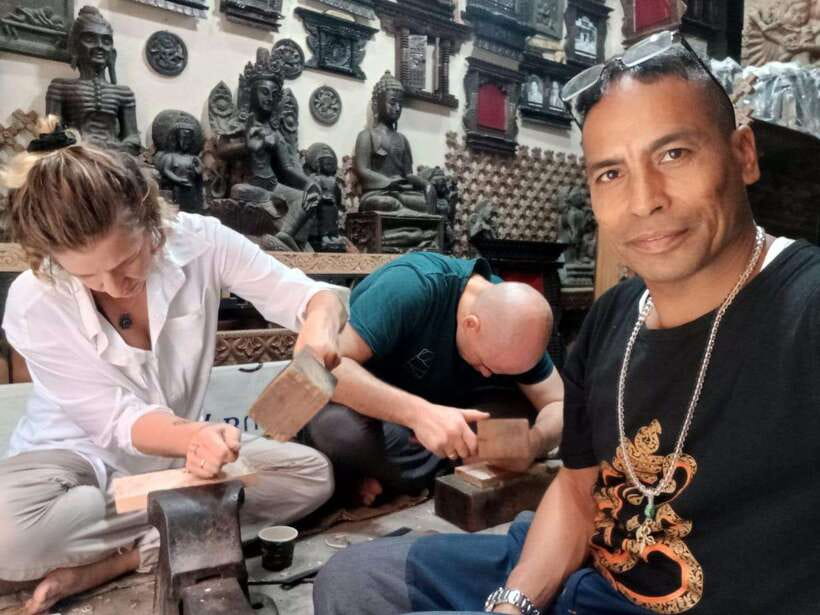
After the introduction, you begin with a pre-cut wooden block and an assigned or selected design. The first task is outlining. This is where you establish the shape and decide which sections will be cut away and which will remain raised.
Outlining can look simple, but it sets the structure for the entire piece. A line that is too shallow may disappear during later work. A line that is too close to another can leave a fragile ridge. Hera’s guidance is most useful here, since a quick correction can prevent a beginner from making a mistake that is difficult to repair.
You do not need previous experience. The class is designed for beginners, and the step-by-step approach makes it possible to learn without already knowing how to handle a chisel.
The pre-cut block is an important practical choice. You can focus on carving and detailing rather than spending much of the session preparing raw timber. It also gives you a realistic chance of completing a small artwork within three hours.
Same city, a completely different sort of day:
- Everest Base Camp Trek – 14 Days
★ 5.0 · 1,499 reviews - Private Kathmandu Sightseeing Tour | UNESCO World Heritage sites
★ 5.0 · 756 reviews - Everest Base Camp Helicopter Tour landing at Everest View Hotel
★ 5.0 · 668 reviews - Everest Base Camp Trekking
★ 5.0 · 485 reviews
Chiseling and shaping your design
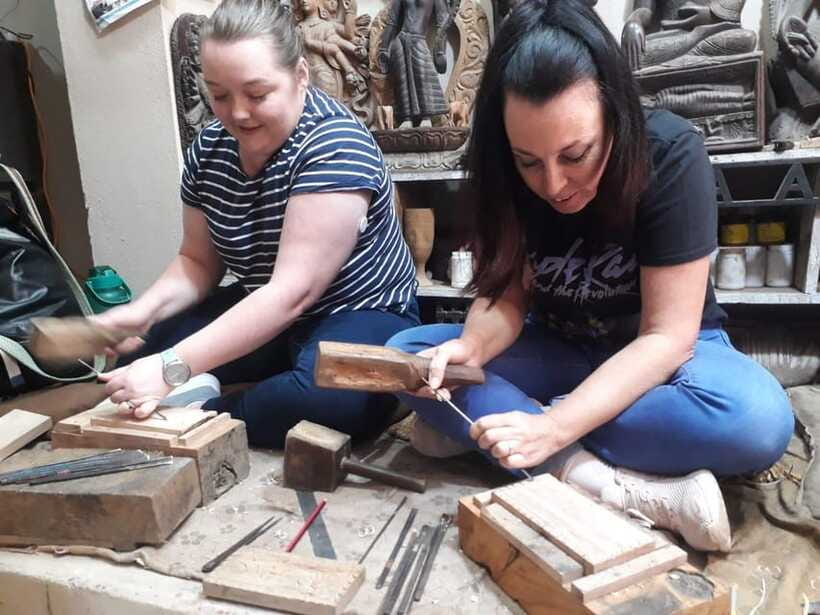
Once the outline is in place, you start removing wood. Chiseling is the most physical part of the class, and it requires patience. You work gradually rather than trying to take away a large piece in one hit.
The instructor demonstrates how to hold the tools and how to control the cut. You then repeat the movement on your own block. Hera has been especially patient and encouraging with beginners, including a family class with a ten-year-old child. That makes this a reasonable choice for a family activity, provided the child can follow tool-safety instructions and stay focused.
You will receive tips and corrections as you work. This is one of the best reasons to choose a small class rather than a large demonstration. Your carving will not look perfect at first, and that is part of the process. The useful result is learning how to correct a line, smooth an edge, and avoid cutting beyond the design.
The pace can vary from person to person. Someone who has done carving or similar handwork may move quickly, while a first-timer may need more time to understand pressure and depth. The session allows plenty of practice, but do not expect to produce a large or highly complex sculpture.
Adding the small details
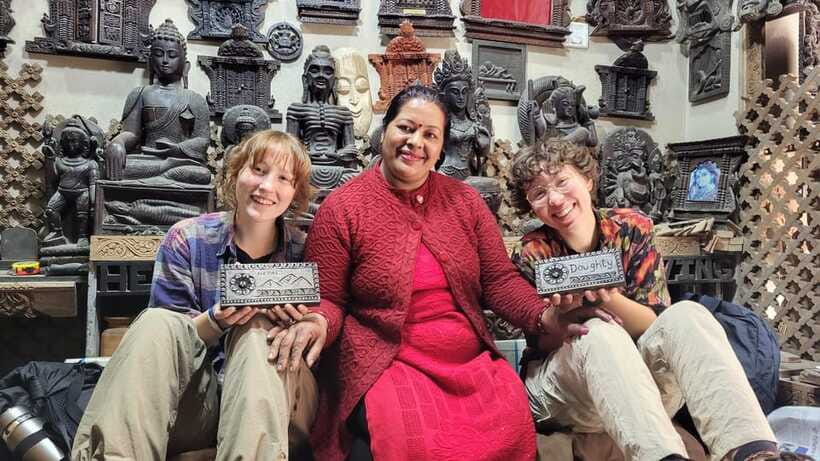
Detailing gives the piece its character. After the main form has been carved, you work on smaller lines and surface features. These may include the edges of a lotus petal, the curves of a symbolic pattern, or the features of a small figure.
This is where the difference between a plain cut block and a decorative Nepali-style object becomes clear. Fine lines catch light and shadow. A few careful marks can make a motif easier to read.
You should take your time at this stage. Beginners often focus on finishing quickly, but a slower hand usually gives better control. Ask Hera to check your work before making a deep cut, especially if you are working near a narrow edge.
The finished object might be a small decorative panel, figurine, or symbolic motif. The exact result depends on the design and your pace. You take your completed wooden piece home, which gives the activity a clear ending and a useful memory of Kathmandu.
Meeting Hera and learning from a local craftsperson
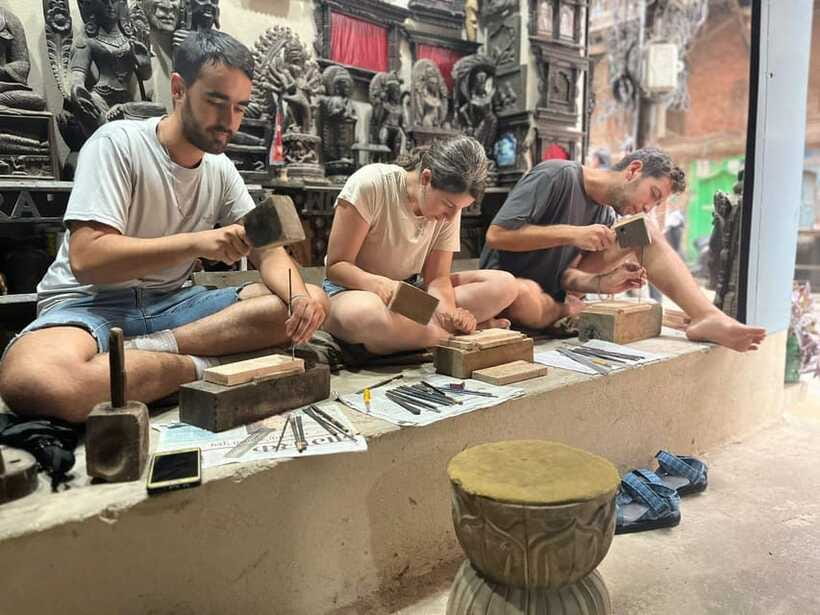
The personal side of the class is a major part of its appeal. Hera teaches the techniques, and his wife may also be present in the workshop. Their warm and humorous manner can make the setting feel less formal, especially if you are nervous about trying a new skill.
You receive direct instruction rather than simply watching a demonstration. That difference matters. A short explanation of chiseling only becomes useful once you hold the tool and try it yourself.
The class is conducted in English. You can ask about the tools, designs, and cultural meaning as you work. Since the group is small, there should be a better chance to ask follow-up questions than in a large scheduled class.
One point to keep in mind is the depth of the historical discussion. If your main goal is to understand the full development of Nepali wood carving, you may want more time with the subject. The workshop gives you a strong introduction, but its greatest value is the chance to practice the craft under local guidance.
What the $42 price gives you
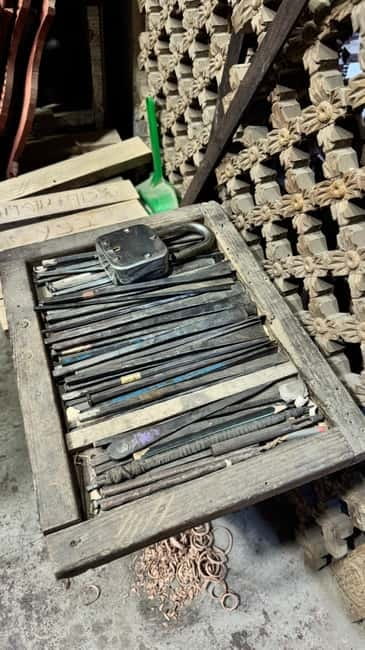
At $42 per person, the price is reasonable if you value instruction and a personal keepsake rather than simply a sightseeing stop. The three-hour duration gives you time to move through the full process: tools, motifs, outlining, chiseling, detailing, and finishing.
The fee includes the necessary tools and materials, guidance from local artisans, your completed wooden artwork, and government taxes and VAT. You do not need to buy supplies separately, which makes the cost easier to judge.
The small group also adds value. A cheaper large class might give you less personal correction, while this format limits participation to four people. If you receive a one-on-one session in the off season, the price looks stronger because the instruction can be tailored closely to your pace.
This is not the right choice if you want the lowest-cost souvenir or a quick activity between major sights. It is better suited to someone who wants to spend three unhurried hours making something and learning why the designs matter.
Who should take this class
I would recommend the workshop to art-minded visitors, curious beginners, and anyone who wants a quieter activity in Kathmandu. You do not need previous carving experience, and the instructor’s patient approach suits people who are trying a chisel for the first time.
Families can also consider it. A ten-year-old has taken part successfully, and the small group makes it easier for the instructor to offer help. Parents should still expect the child to handle a tool carefully and follow instructions.
The class also works well for people who have already visited temples and palaces but want a more active connection with what they saw. After learning to cut a lotus or outline a motif, you may notice the depth and small marks in Kathmandu’s older woodwork more clearly.
You might skip it if you dislike close handwork, want a full-day cultural program, or prefer a guided tour of major monuments. The workshop stays focused on carving and does not replace a heritage tour.
Practical booking advice for Thamel
Set aside the full three hours rather than trying to squeeze the class into a short gap. The schedule includes instruction and practice, and rushing the final detailing stage would weaken one of the best parts of the activity.
Confirm the starting time and exact meeting location before you leave. The available information says to meet at the designated meeting point but does not provide a detailed address. In Thamel, that matters because small lanes and workshop entrances can be easy to miss.
The class has free cancellation up to 24 hours before the start time for a full refund. You can also reserve now and pay later, which helps if your Kathmandu plans are still shifting. Check the available starting times when booking.
No transport is listed as part of the activity, so plan your route to the workshop yourself unless the provider gives you different instructions. Bring comfortable clothes, and leave smoking for elsewhere.
Should you book the Kathmandu wood carving workshop?
Book it if you want a personal souvenir, enjoy learning with your hands, and have three hours to spend with a local artisan. The small group, English instruction, patient teaching, and finished wooden piece give the class real value at $42.
I especially like that you do not simply watch a demonstration. You outline, chisel, and add detail yourself, then carry the result home. The main limitation is the modest amount of historical context, so pair it with a visit to Kathmandu Valley monuments if that subject matters most to you.
For a first-time wood carver, a family with an older child, or anyone tired of looking at heritage sites from the outside, this is a thoughtful addition to a Kathmandu itinerary.
FAQ
How long does the wood carving workshop last?
The workshop lasts three hours.
How much does the activity cost?
The price is $42 per person.
Where does the workshop take place?
It takes place in Thamel, Kathmandu, in the Bagmati Zone. The exact meeting point should be confirmed before the activity because a detailed street address is not provided.
Who teaches the class?
The class is led by local artisan Hera. His wife may also be present in the workshop.
Is the class taught in English?
Yes. The instructor language is English.
How many people can join the group?
The group is limited to four participants.
Do I need previous wood carving experience?
No. The class is suitable for beginners and includes step-by-step practice with outlining, chiseling, and detailing.
Are tools and materials included?
Yes. All necessary tools and materials are provided.
Can I take my finished carving home?
Yes. You create a wooden artwork during the class and take it home as a souvenir.
What should I bring?
Wear comfortable clothes. Smoking is not allowed during the activity.
Just added around Kathmandu
- Traditional Momo Making Class★ 5.0 · 10 reviews
- Wildlife Adventure in Chitwan Nepal★ 4.0 · 4 reviews
- Walking tour of real Kathmandu through back streets.★ 5.0 · 3 reviews
- Kathmandu 2 Nights 3 Days Chitwan Jungle Safari Tour★ 5.0 · 9 reviews
- Kathmandu Street Food Walking Tour – Eat Like a Local★ 5.0 · 3 reviews
- Private Manaslu Circuit Trek at Himalayas★ 5.0 · 3 reviews
- Walking tour of Kathmandu with awesome local guides★ 5.0 · 4 reviews
- Visit Swayambhunath and Bauddhanath Stupa with Guide★ 5.0 · 5 reviews
Workshops, compared.


Knife (Khukuri) Making Workshop- Forge of the Gurkhas
Read our review →
The best Private Nepali Cooking Class in Kathmandu
Read our review →

Browse the lists this tour appears in