
Reviewed · KATHMANDU COOKING CLASSES
Momo, Dhalbhat & Thukpa Cooking Class, Nepal
The best part of this Kathmandu cooking class happens before anyone turns on the stove. Esther Rai takes you through a local vegetable market, where you can meet sellers, choose ingredients, and see the everyday food culture of Lalitpur. Then you return near Patan Durbar Square to prepare momos, dal bhat, and thukpa.
I like the personal scale, with a maximum of 10 people, and I like the setting just a five-minute walk from Patan Durbar Square. Esther began the class during the pandemic to support her family, and her cooking comes from time spent in the kitchen with her mother and sister. The main thing to consider is that some preparation may already be done, so you may not handle every step from start to finish.
Key points to know
- Market first: You shop for vegetables and other ingredients while meeting local sellers.
- Three Nepali staples: You learn about momos, dal bhat, and thukpa, with other dishes possible by request.
- Patan location: The class is near Golden Temple and Patan Durbar Square, making it easy to pair with sightseeing.
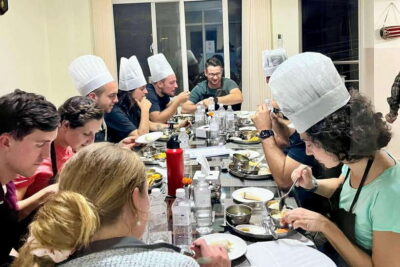
- Small group size: The class accepts no more than 10 people, allowing for a more personal lesson.
- Cook, then eat: The meal you prepare is served after cooking, so the class ends with a full Nepali meal.
- Family-led instruction: Esther Rai teaches with Amos or another helper, bringing a home-style feel to the session.
A market walk before the cooking begins
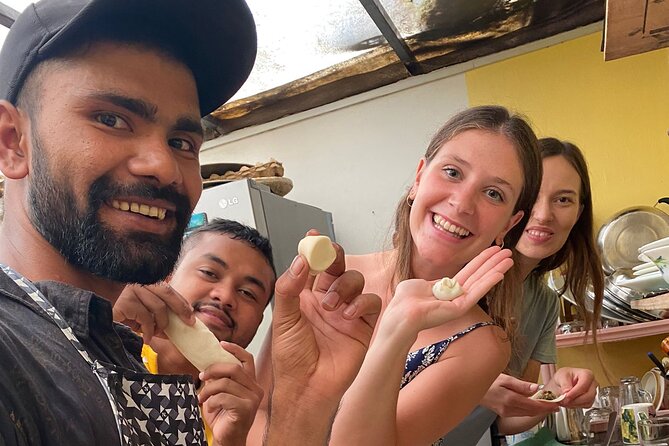
This experience starts at Nagabahal, on Nyadha Galli in Lalitpur. Rather than meeting in a generic cooking studio, you begin at a local market and help buy the ingredients for the meal.
That first stop gives you useful context. You see the vegetables before they are chopped, meet the sellers, and get a sense of how food shopping works in Kathmandu Valley. Esther can explain what goes into the dishes as you make your way through the market, and you have a chance to ask questions before the cooking starts.
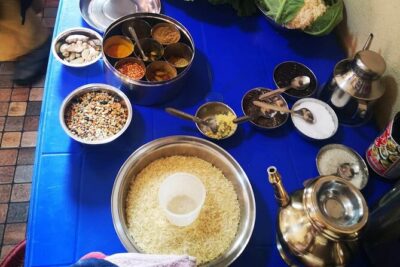
I especially like this order. A cooking class can feel disconnected from daily life if all the ingredients are already measured and waiting in bowls. Here, you get at least a small look at the buying stage, including interaction with local people. The market is also a good place to notice ingredients you may not recognize, especially spices and vegetables used in Nepali kitchens.
Do not expect a long market tour or a full food history lesson. The class lasts about three hours, so the market visit is part of a compact cooking experience rather than a separate excursion. If you want to spend more time browsing, photographing, or shopping, you will need to allow extra time before or after the class.
More cooking classes in Kathmandu:
- Half day cooking class in Thamel kathmandu
★ 5.0 · 607 reviews - Kathmandu: Local Women-Led Nepali Cooking & Momo Class
★ 4.9 · 360 reviews - Kathmandu: Local Lead Nepali Cooking & Momo-Making Class
★ 5.0 · 212 reviews
Patan gives the class a strong sense of place
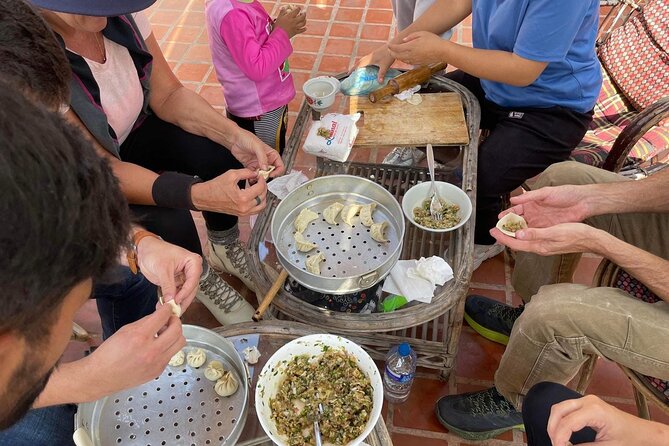
The cooking location is about a five-minute walk from Patan Durbar Square. That is a practical advantage, especially if you are staying in Kathmandu and want to spend time beyond Thamel.
Patan, also called Lalitpur, gives this class a more grounded setting than a lesson placed in a hotel kitchen. The meeting point at Nagabahal is also near the Golden Temple, or Hiranya Varna Mahavihar. The planned route includes the Golden Temple and Patan, so the experience connects food with one of the Kathmandu Valley’s important historic areas.
The Golden Temple stop adds a cultural note to the morning. You can combine the class with a visit to the temple and Patan Durbar Square, but check the timing when booking because the class itself is only about three hours and the exact pace of the market and cooking session may vary.
The location is one of the strongest reasons to choose this class. You are not only learning recipes. You are placing those recipes in the neighborhood where Esther lives and works. That makes the food feel connected to ordinary family life rather than presented as a staged demonstration.
Esther Rai teaches food with a family touch
Esther Rai’s connection to cooking is personal. She grew up spending time in the kitchen with her mother and sister, watching and helping with the work. She later started this cooking program during the COVID-19 period as a way to support her family.
That background matters because the class is built around sharing food, not simply displaying technique. Esther says she feels happy when people enjoy what she cooks, and that warmth comes through in the structure of the experience. You are invited into a food tradition that has been part of her own life.
Amos may also help with the class. One participant described Esther and Amos as a strong teaching team, while another referred to Esther and her friend. The exact helper may vary, but you can expect Esther to be the central host and instructor.
The setting has a home-style character. One account describes the cooking space as a pleasant rooftop, while another describes being welcomed into Esther’s family home. These details suggest a personal Nepali setting rather than a polished restaurant classroom, though the exact arrangement can depend on the day and weather.
That informality is a plus if you want conversation and a direct connection with your hosts. It may be less suitable if you want a formal chef-led course with written recipes, precise timing, and professional equipment. The information provided does not promise a recipe booklet or a restaurant-style kitchen, so ask if those details matter to you.
What you cook: momos, dal bhat, and thukpa
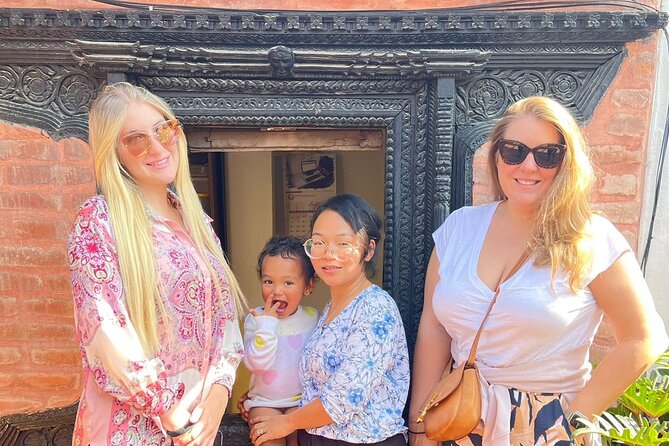
The central menu includes three of Nepal’s most recognizable comfort foods.
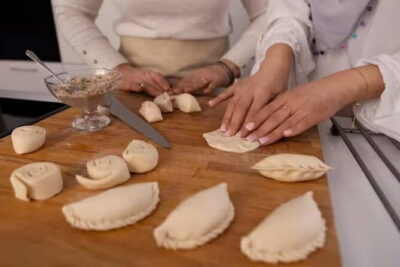
Momos are filled dumplings, and shaping them is usually the most hands-on part of the class. You learn how the dough and filling come together, then practice folding the dumplings before they are cooked. The class is particularly well suited to you if momos are high on your Nepal food list and you want more than simply ordering them at a restaurant.
Dal bhat is a familiar Nepali meal built around lentil soup and rice, usually served with accompanying dishes. In this class, you practice preparing a complete meal rather than a single snack. This is valuable because dal bhat is part of everyday Nepali food culture, not just a special dish made for visitors.
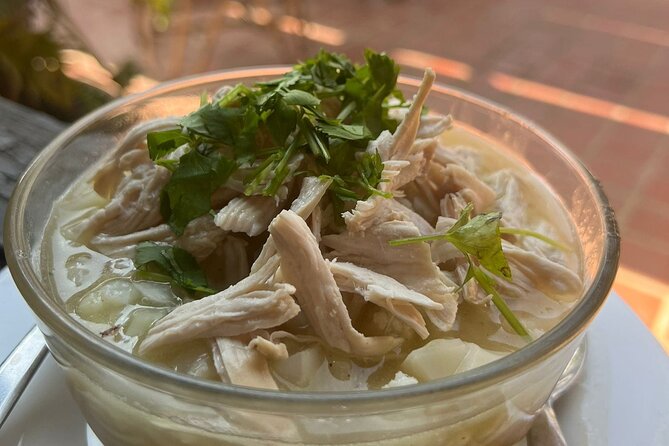
Thukpa is a noodle soup with Tibetan and Himalayan connections. It gives the menu a different texture and style from momos and dal bhat. The class description allows for menu changes based on your request, and one session included chicken curry alongside the meal. Do not assume every class will include chicken curry, but you can ask about available options when arranging the experience.
The menu is a good mix. Momos offer careful shaping, dal bhat gives you a full meal, and thukpa introduces a warm noodle dish. You get variety without trying to cover all of Nepali cooking in one morning.
Same city, a completely different sort of day:
- Everest Base Camp Trek – 14 Days
★ 5.0 · 1,499 reviews - Private Kathmandu Sightseeing Tour | UNESCO World Heritage sites
★ 5.0 · 756 reviews - Everest Base Camp Helicopter Tour landing at Everest View Hotel
★ 5.0 · 668 reviews - Everest Base Camp Trekking
★ 5.0 · 485 reviews
Hands-on work, with one important limitation
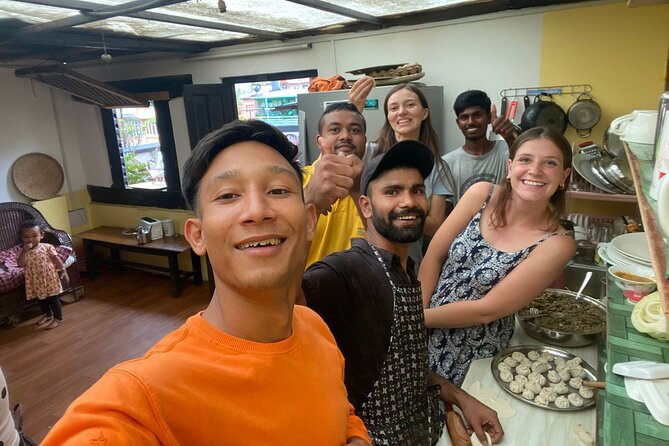
You should expect to practice making the dishes and then eat them once they are cooked. That sounds simple, but the amount of hands-on work can vary.
One person found that many steps had already been completed. That is the main caution I would keep in mind. Preparation may be partly finished to keep the three-hour schedule manageable, especially when several people are attending or when ingredients require advance work.
This does not cancel out the value of the class, but it affects what you should expect. If you want to learn every stage, from washing and cutting to seasoning and cooking, tell Esther at the start. Ask which parts you will handle and which parts have already been prepared.
I would also treat the class as an introduction rather than professional culinary training. You will learn practical methods, taste new spices, and practice recognizable dishes. You should not expect a formal certificate or an advanced course in Nepali cuisine, since neither is included in the information provided.
The class works best when you stay curious and take part. Ask why a spice is used, how the filling is seasoned, and how the dishes fit into home meals. The food gives you a natural opening to talk about customs, family, education, and everyday life in Nepal, topics that have become part of the conversation during the class.
Why the meal at the end matters
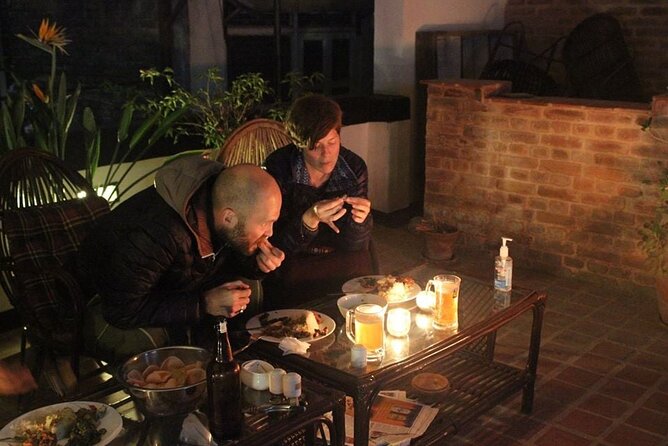
Eating the food after cooking is more than a convenient finish. It lets you judge how the ingredients, seasoning, and methods came together while the steps are still fresh in your mind.
The meal also gives the class a social rhythm. You shop, prepare, cook, and sit down to eat. That sequence feels closer to being invited into someone’s kitchen than to watching a quick demonstration and leaving with a sample.
The food has received especially strong praise, with particular enthusiasm for the dal bhat. One description called it the best dal bhat of the trip, while another said the meal was among the tastiest food they had eaten in Nepal. Those are personal judgments, not guarantees, but they point to the class’s main strength: you are likely to remember the meal as much as the instruction.
The portions and exact serving style are not specified, so do not book this as a substitute for a full restaurant feast unless the provider confirms the details. Still, the format clearly includes eating what you prepare, and the menu is designed as a complete Nepali food experience.
Three hours near Patan, priced at $25
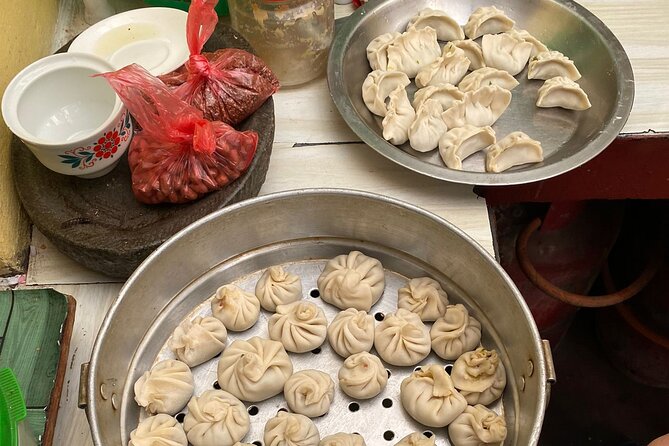
At $25 per person, this is a strong-value activity if you want food, local contact, and a cultural setting in one short outing. The price covers roughly three hours, the market visit, instruction, ingredients, cooking, and the meal you prepare. It also gives you a convenient way to add a meaningful activity near Patan’s main sights.
The value is better for people who plan to visit Patan anyway. You can combine the class with the Golden Temple and Patan Durbar Square, then spend the rest of the day exploring the area. If you are based around Thamel, you will need to allow time to reach Lalitpur, but the class provides a reason to make the trip.
The group limit of 10 is another positive. A smaller group gives you more room to ask questions and practice folding momos, though the experience may feel different with two people than with a full group. The price is low enough to suit budget-minded visitors, but the personal setting is the main value, not luxury equipment or a long formal lesson.
The activity is usually booked about six days ahead. That is not a required advance period, but it is a useful planning clue. If your schedule is tight, book before arriving rather than assuming a convenient morning will remain open.
You receive confirmation at booking, and the ticket is mobile. Public transportation is nearby. The class ends at the same meeting point, which makes it easier to continue sightseeing in Patan afterward.
Weather, timing, and the practical details
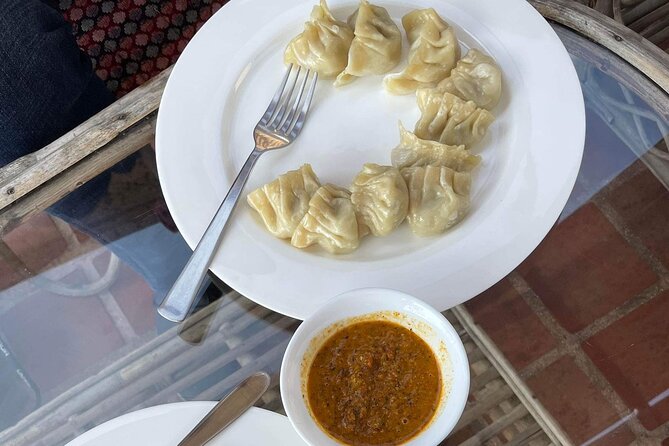
The class requires good weather. That matters because the experience includes a market visit and may use an open or rooftop cooking area. If poor weather causes cancellation, you are offered another date or a full refund.
You can cancel for a full refund up to 24 hours before the start time. Cancellations or changes made within 24 hours are not accepted for a refund, and the cut-off follows local time. Keep that in mind if your Kathmandu plans depend on flights, long bus rides, or mountain weather.
The experience is mobile-ticket friendly and located near public transportation. The meeting point is Nagabahal, Nyadha Galli, Lalitpur 44600, Nepal. Since the area includes historic streets and the class ends where it begins, you may find it easier to arrive with a little extra time rather than trying to rush in at the start.
The provided information does not specify dietary options, allergy procedures, or accessibility details. If you need vegetarian food, avoid meat, or have a serious allergy, contact Esther before booking and confirm what can be prepared. The menu can be adjusted by request, but that does not automatically guarantee every dietary change.
Who will enjoy this cooking class most
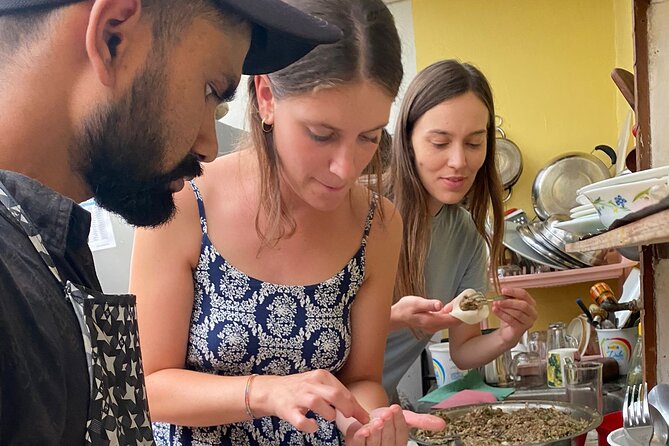
I would choose this experience if you want a personal introduction to Nepali food and prefer meeting a local family to sitting in a formal culinary school. It is a good fit for first-time visitors who want an activity that combines food with a short look at Patan.
It also suits people who already like momos, dal bhat, or thukpa and want to understand how they are prepared. Families and small groups may appreciate the relaxed format, while solo participants can benefit from the small maximum group size and direct contact with the instructors.
You may want a different class if your priority is advanced technique, exact recipes, or complete control over every preparation step. The class is friendly and practical, but some work may already be done, and the three-hour schedule leaves limited time for a slow, detailed lesson.
Should you book the Patan cooking class?
I would book it if you value authentic contact and a good meal more than a polished culinary presentation. Esther Rai’s story, the local market visit, and the location near Patan make this feel connected to real life in Lalitpur.
The strongest reasons to go are the market shopping, the chance to cook three Nepali staples, the small group limit, and the meal at the end. The main reasons to pause are the possibility of pre-prepared ingredients and the lack of stated details about dietary needs or formal recipe materials.
At $25, it offers a lot for a half-day activity. Plan it alongside the Golden Temple and Patan Durbar Square, confirm any menu requests before arrival, and ask how much hands-on preparation you will do. If that matches what you want, this is an easy, flavorful way to spend a morning in Kathmandu Valley.
FAQ
How long does the cooking class last?
The experience lasts approximately three hours.
Where does the class begin?
It begins at Nagabahal, Nyadha Galli, Lalitpur 44600, Nepal.
Where does the activity end?
The activity ends back at the meeting point.
What dishes can I learn to cook?
The main dishes are momos, dal bhat, and thukpa. The menu may also be arranged according to your request.
Does the experience include a market visit?
Yes. You visit a local vegetable market, interact with sellers, and help buy ingredients before cooking.
How many people can join?
The activity has a maximum of 10 participants.
What is the cancellation policy?
You can cancel at least 24 hours before the start time for a full refund. Cancellations or changes made less than 24 hours before the start time are not refunded. If bad weather causes the activity to be canceled, you are offered another date or a full refund.
Just added around Kathmandu
- Traditional Momo Making Class★ 5.0 · 10 reviews
- Wildlife Adventure in Chitwan Nepal★ 4.0 · 4 reviews
- Walking tour of real Kathmandu through back streets.★ 5.0 · 3 reviews
- Kathmandu 2 Nights 3 Days Chitwan Jungle Safari Tour★ 5.0 · 9 reviews
- Kathmandu Street Food Walking Tour – Eat Like a Local★ 5.0 · 3 reviews
- Private Manaslu Circuit Trek at Himalayas★ 5.0 · 3 reviews
- Walking tour of Kathmandu with awesome local guides★ 5.0 · 4 reviews
- Visit Swayambhunath and Bauddhanath Stupa with Guide★ 5.0 · 5 reviews
Kathmandu Cooking Classes, compared.
The best Private Nepali Cooking Class in Kathmandu
Read our review →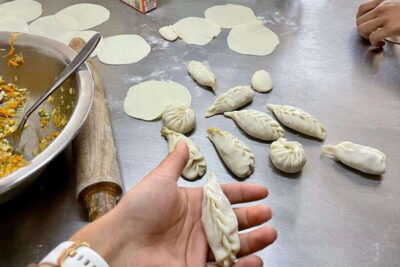
Browse the lists this tour appears in