
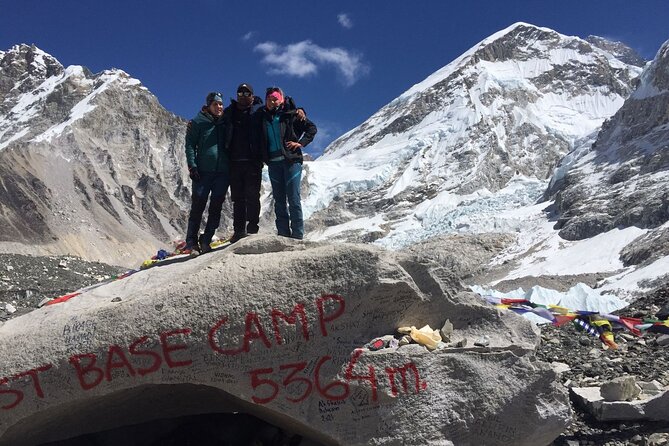
Reviewed · EVEREST BASE CAMP TREKS FROM KATHMANDU
Everest Base Camp Trek with Helicopter Return – 10 Days
The clever part of this Everest trek is the finish: after walking all the way to Base Camp and climbing Kala Patthar, you fly back to Kathmandu by helicopter instead of retracing the same trail to Lukla. That saves several hard walking days and gives you a memorable final look at the Khumbu peaks.
I like the small maximum group of 15 and the fact that meals, tea-house lodging, porters, permits, gear, and domestic flights are bundled into one price. I also like the built-in acclimatization day at Namche, which is vital at this altitude. The main concern is the tight 10-day schedule. You need a moderate fitness level, and bad weather can affect the Lukla flight or helicopter return.
Key points to know before booking
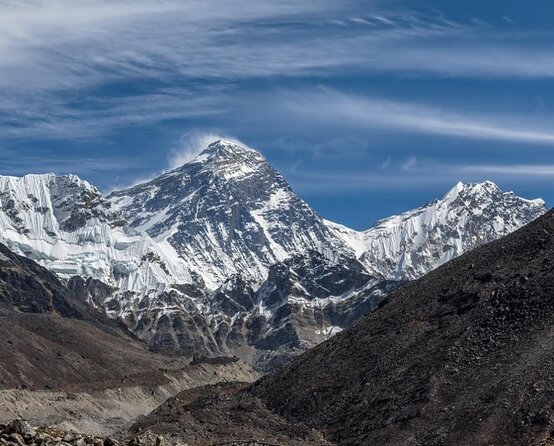
- Helicopter return from Gorakshep: You reach Base Camp, climb Kala Patthar, then return to Kathmandu by shared helicopter.
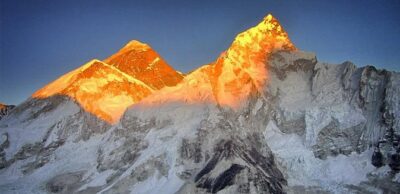
- Four major Himalayan peaks: The route gives you views connected with Everest, Lhotse, Makalu, and Cho Oyu.
- Namche acclimatization day: You hike to Everest View Hotel rather than simply sitting in the lodge.
- Nearly all trek costs are bundled: Tea-house rooms, three daily meals on trek, permits, porters, a guide, flights, and selected gear are included.
- Guides and porters matter here: Guides named on past departures include Dipak, Ram, Ramesh Sapkota, Rabi, and Santos.
- A demanding high-altitude plan: The itinerary reaches Everest Base Camp on Day 8 and Kala Patthar on Day 9, so stamina and sensible pacing are important.
Why the helicopter return changes the Everest Base Camp trek
A standard Everest Base Camp route usually requires you to walk back down the valley after reaching the goal. This trip removes that repetition. You still get the full approach through Sherpa villages, suspension bridges, monasteries, glacier views, and high mountain passes of the route, but you do not spend several more days returning to Lukla on foot.
That is the main reason to consider the $3,400 price. The helicopter flight is a costly part of the arrangement, but it also gives you back time. You can fit the trek into 10 days, including arrival and departure in Kathmandu, rather than committing to a longer round trip.
The return is listed as a group-sharing helicopter flight from the Gorakshep and Kala Patthar area. That means you should not expect a private aircraft reserved just for your party. The flight also depends on weather and operating conditions. If clouds or poor weather interfere, the schedule may need to change.
More Everest Base Camp treks:
- Everest Base Camp Trek – 14 Days
★ 5.0 · 1,499 reviews - Everest Base Camp Trekking
★ 5.0 · 485 reviews - Everest Base Camp Trekking – 13 Day
★ 5.0 · 365 reviews
Days 1 and 2: Kathmandu, Lukla, and the first walk
Your first day is deliberately light. You are met at the airport and transferred to your Kathmandu hotel, with the rest of the day free for rest or a look around the capital. Lunch and dinner in Kathmandu are not included, so budget separately for those meals.
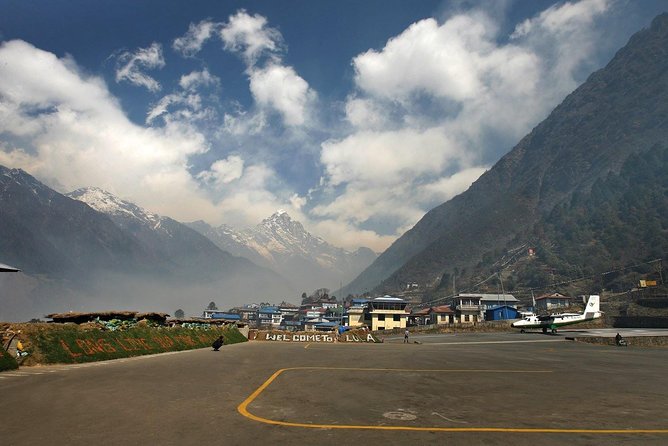
Day 2 begins early with the flight from Kathmandu to Lukla. The flight itself takes about 30 minutes, then you meet the trekking crew and start walking toward Phakding. The trail passes through green surroundings and offers views toward Kusum Kanguru.
Phakding is a useful first stop because the walking day is short compared with what follows. It lets you begin moving at altitude without immediately tackling a long climb. Still, the day begins early and includes airport transfers, waiting, flying, meeting the crew, and hiking, so you may feel tired before reaching the lodge.
Lukla is the usual entry point for treks in the Everest region. From here, the route enters Sagarmatha National Park, a protected area and UNESCO World Heritage Site. The plane schedule can be affected by weather, so keep your first day flexible rather than planning a tight connection after the trek.
Day 3: Namche Bazaar and the Hillary suspension bridge
The walk from Phakding to Namche is one of the first big tests. You follow the Dudh Koshi River, pass through pine forest, and cross the Hillary suspension bridge. The route then climbs toward Namche Bazaar, the Sherpa capital and the main gateway to the Everest region.
Namche is not simply a place to sleep. It is an important supply and meeting point for the valley, and it has a strong connection to Sherpa culture. The Sherpa Museum adds context, though its admission fee is not included.
The schedule describes this as a long day, with up to 12 hours associated with the stop. That timing should make you take the physical demands seriously. The climb to Namche is not a gentle stroll, and the altitude begins to make every uphill section feel longer.
Day 4: Acclimatization above Namche
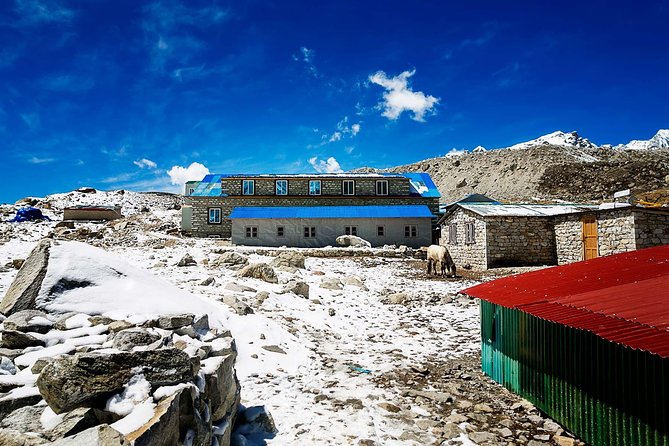
The Namche acclimatization day is one of the most useful parts of the plan. Instead of gaining height immediately, you spend the day hiking toward the Everest View Hotel and Syangboche, then return to Namche.
This approach gives you two benefits. You remain active, which is better than spending the entire day indoors, and you gain a higher viewpoint before sleeping again at Namche. The hike is also an early chance to see how your body responds to thinner air.
The Everest View Hotel is included for its mountain outlook, not because the tour includes a hotel stay there. You should expect a viewpoint walk and time to take in the peaks, then a return to Namche. This day may look easy on paper, but it is a crucial buffer in a fast itinerary.
More Everest helicopter tours:
- Everest Base Camp Helicopter Tour landing at Everest View Hotel
★ 5.0 · 668 reviews - Everest Base Camp Helicopter Tour landing at Hotel Everest View
★ 5.0 · 218 reviews - Everest Base Camp Trek with Helicopter Return from Gorakshep to Lukla
★ 5.0 · 161 reviews - Everest Base Camp helicopter tour with landing
★ 5.0 · 61 reviews
Day 5: Tengboche and its hilltop monastery
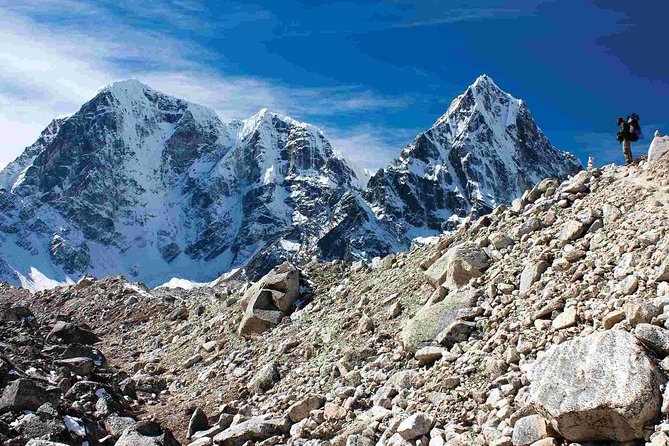
After breakfast, the trail continues through Kayangjuma and Sanasa, with sections beside the Dudh Koshi. You cross the river near Punki Tenga, then face a rougher climb toward Tengboche.
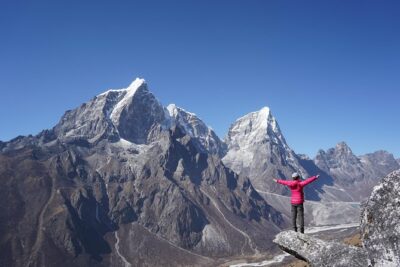
Tengboche is one of the most meaningful stops on the route because it has the largest monastery in the Khumbu region. The setting also brings you farther into the high mountain country, with the route framed by peaks and steep valley walls.
The day includes both smoother trail and a serious climb. I would not treat the morning as a warm-up for an easy afternoon. The ascent after Punki Tenga can be tiring, especially after the previous day’s climb to Namche and acclimatization walk.
Day 6: Pangboche, the Imja Valley, and Dingboche
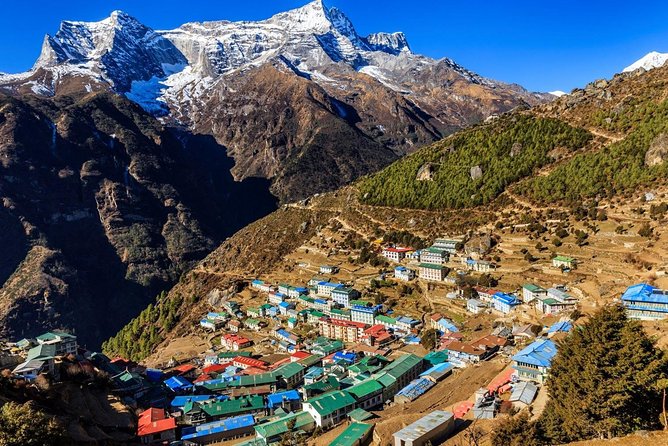
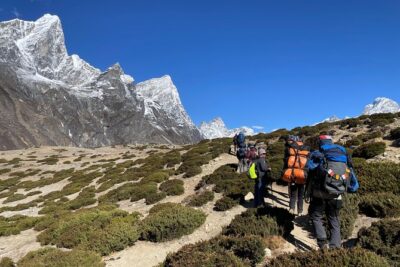
The trail passes chortens, Mani walls, and small villages before crossing the Imja Khola. You continue through Pangboche at about 3,900 meters, then enter the Imja Valley on the way to Dingboche.
These details matter because the route gradually changes from forested river valleys to a more open, high-altitude setting. Buddhist markers, prayer walls, and village architecture become part of the walk, giving the journey more meaning than a simple mountain ascent.
Dingboche is another acclimatization point, although the schedule does not provide a separate full rest day there. You should pay attention to your guide’s pacing and to how you feel. Headaches, unusual tiredness, and other altitude concerns should be reported early rather than hidden to keep up with the group.
Day 7: Duglha, Chola Lake, and the approach to Lobuche
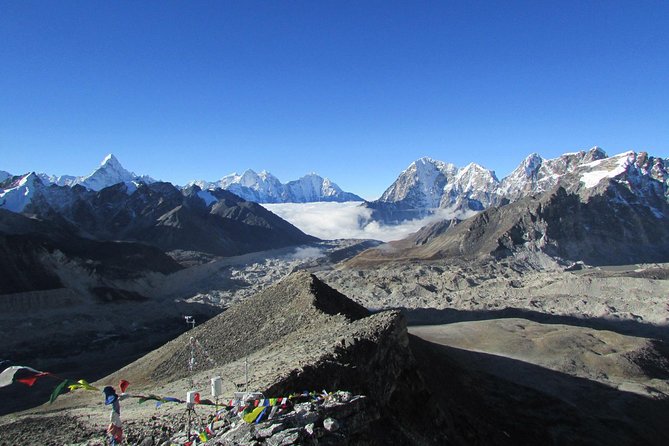
The route climbs through the Khumbu Khola Valley toward Duglha. Along the way, you pass Dusa and Phulung Karpo, then reach Chola Lake before crossing a small bridge and continuing uphill.
This is a high, demanding section with repeated climbs. Lobuche Peak lies close to the Khumbu Glacier and has east and west summits, adding another dramatic mountain reference to the route.
The practical point is simple: by Day 7, you are not just hiking at altitude, you are sleeping and moving in an exposed high mountain zone. The views become more severe and open, but the air is thinner and the walking pace naturally slows. Keep your daypack light and make good use of the porter service.
Day 8: Everest Base Camp and the night at Gorakshep
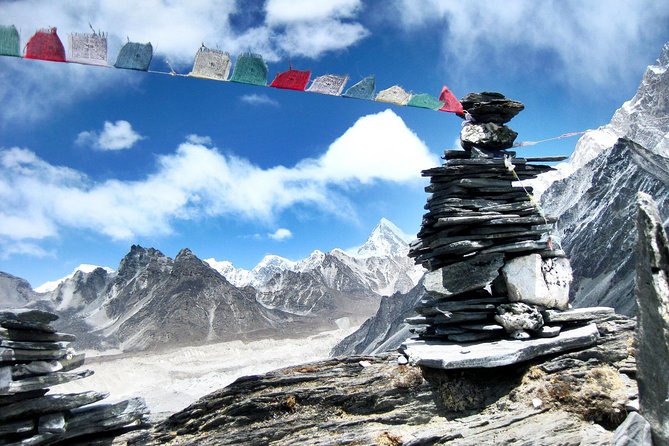
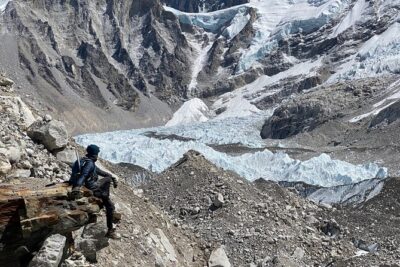
The walk to Everest Base Camp includes many ups and downs. After roughly three hours of steady hiking, you reach the Base Camp area and see the Khumbu Glacier and icefall.
You spend about 30 minutes at the Base Camp stop before returning to Gorakshep. The itinerary describes Gorakshep as the last stop for the trek, and it is where you spend the night before the Kala Patthar climb.
Base Camp itself may not look like the postcard image you expect. It is the starting area for Everest expeditions, but the glacier, icefall, and surrounding peaks are the real visual reward. The achievement comes from reaching it on foot after days of gradual ascent.
This is also one of the hardest days. You have already gained substantial altitude, and the trail is uneven. The return to Gorakshep is not an optional extra walk. It is part of the day, so save energy for the way back.
Day 9: Kala Patthar and the flight back to Kathmandu
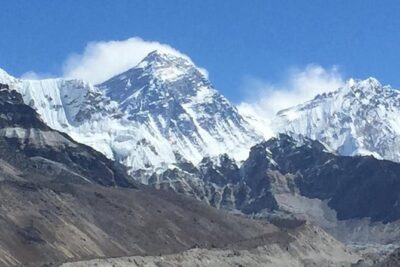
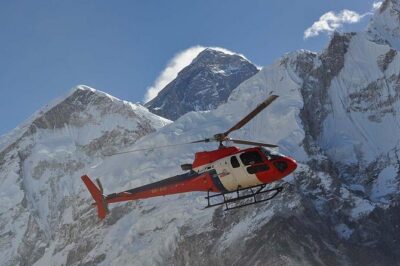
Kala Patthar is the visual high point of the trip. You climb for panoramic views of the Khumbu mountains, including Everest, then board the shared helicopter back toward Kathmandu.
The schedule allows around 30 minutes at Kala Patthar. That may sound brief, but at this elevation, the climb itself is the main effort. The viewpoint gives you a broader mountain panorama than Base Camp, where the glacier and route conditions can limit the view toward Everest.
The helicopter flight is both a reward and a practical shortcut. From the air, you get a final perspective on the valleys and peaks you crossed on foot. You also avoid the long return through Lobuche, Dingboche, Tengboche, Namche, and Lukla.
The timing can be affected by weather. That is especially important on this day because the helicopter is not a minor transfer. It is the link between the high-altitude trek and your return to Kathmandu. Build a little flexibility into any onward plans.
Day 10: Airport transfer and departure
After breakfast, you are transferred to the international airport for your flight home or onward connection. Airport pickup and drop-off by private vehicle are included according to the schedule.
Because the trip is only about 10 days, you have little spare time if weather delays the Lukla flight or helicopter return. The operator provides free cancellation up to 24 hours before the experience begins, and poor-weather cancellations can lead to a different date or a full refund. That policy is useful, but it does not remove the need to keep your wider Nepal plans flexible.
What the $3,400 price includes
The package covers more than a guide and a bed. It includes Kathmandu accommodation with breakfast, airport transfers, the Kathmandu to Lukla flight, the shared helicopter flight from Gorakshep to Kathmandu, tea-house or lodge accommodation during the trek, and breakfast, lunch, and dinner while trekking.
It also includes an English-speaking guide, necessary porters, transportation and insurance for the trekking crew, Everest permits, and the TIMS card. One porter is assigned for every two hikers.
The gear allowance is useful if you do not want to buy or carry everything yourself. A duffle bag, down jacket, sleeping bag, walking pole, trekking map, and trip achievement certificate are listed as included. Government taxes, VAT, office service charges, landing fees, and facility fees are also covered.
You still need money for Kathmandu lunches and dinners, visa fees, drinks, hot showers, internet, phone calls, laundry, battery charging, and bar bills. Tea, coffee, hot chocolate, bottled water, soft drinks, beer, and boiled water are not included. Tips for the guide and porters are expected but not mandatory, so plan for them as part of the real cost.
For a 10-day Everest trip with a helicopter return, the package can make financial sense for someone who values time and convenience. It is not a budget trek, and the shared helicopter flight is a major part of the cost. The value is strongest if you want the full walking approach but do not want to spend additional days walking back to Lukla.
Guides, porters, and the group size
The group limit is 15 people, which is small enough for a guide to keep an eye on the pace and for the group to move without the feel of a large expedition. Your exact guide is not guaranteed in the information provided, but named guides connected with past departures include Dipak, Ram, Ramesh Sapkota, Rabi, and Santos.
The strongest practical feature is the porter system. One porter carries the duffle bags of two hikers, while you carry a smaller daypack. At high altitude, that difference can make the route far more manageable.
Good communication before arrival is important on a trek like this. The provider has handled arrangements for people who booked as little as two weeks before departure, but the tight schedule still makes early planning sensible, especially for flights, visa preparation, and personal gear.
Who should book this Everest trek?
I would recommend this trip to someone who wants the classic Lukla to Everest Base Camp route but has only 10 days. It suits hikers who want a guided structure, included meals, porter help, and the excitement of a helicopter return.
It is also a good fit if you dislike retracing a route. The walk through Namche, Tengboche, Dingboche, Lobuche, and Gorakshep gives you the main cultural and mountain stops, while the helicopter removes the return trek.
I would be more cautious if this is your first serious high-altitude hike or if you dislike early starts, basic tea-house lodging, and changing plans caused by weather. The itinerary is compact, and reaching Base Camp is not a casual sightseeing outing. You need moderate physical fitness and a willingness to follow a steady pace.
Should you book it?
Book this trek if you want the full approach to Everest Base Camp, need a short schedule, and see the helicopter return as worth the higher price. The included permits, meals, porters, gear, airport transfers, and lodging reduce the number of details you must arrange yourself.
Think twice if you want a slow acclimatization plan, a private helicopter, or a low-cost trek. For the right hiker, the best feature is the balance: you walk into the Everest region village by village, reach Base Camp and Kala Patthar, then trade several days of return hiking for one unforgettable flight.
FAQ
How long does the Everest Base Camp trek with helicopter return take?
The experience lasts approximately 10 days, including arrival in Kathmandu, the trek from Lukla to Everest Base Camp, the helicopter return, and departure from Nepal.
What is the tour price?
The listed price is $3,400 per person.
Is the helicopter flight private?
No. The flight from the Gorakshep area to Kathmandu is provided on a group-sharing basis.
What is included in the helicopter route?
The package includes the flight from Gorakshep to Kathmandu by shared helicopter, along with the Kathmandu to Lukla flight by plane.
Are meals included?
Breakfast, lunch, and dinner are included during the trek. Breakfast is included with the Kathmandu accommodation, but lunch and dinner in Kathmandu are not included.
Is accommodation included?
Yes. The package includes Kathmandu accommodation with breakfast and tea-house or lodge accommodation during the trek.
What equipment is provided?
A duffle bag, down jacket, sleeping bag, walking pole, and trekking map are included. A trip achievement certificate is also provided.
What happens if bad weather cancels the experience?
If poor weather causes a cancellation, you are offered a different date or a full refund. Free cancellation is also available if you cancel at least 24 hours before the experience start time.
More day hikes and treks in Kathmandu
- Nagarkot Sunrise View and Day Hiking from Kathmandu
★ 5.0 · 471 reviews - Annapurna Circuit Trek with Tilicho Lake
★ 5.0 · 368 reviews - Everest Base Camp Trek -14 Days
★ 5.0 · 321 reviews - Annapurna base camp trek 5 Days
★ 5.0 · 252 reviews
Just added around Kathmandu
- Traditional Momo Making Class★ 5.0 · 10 reviews
- Wildlife Adventure in Chitwan Nepal★ 4.0 · 4 reviews
- Walking tour of real Kathmandu through back streets.★ 5.0 · 3 reviews
- Kathmandu 2 Nights 3 Days Chitwan Jungle Safari Tour★ 5.0 · 9 reviews
- Kathmandu Street Food Walking Tour – Eat Like a Local★ 5.0 · 3 reviews
- Private Manaslu Circuit Trek at Himalayas★ 5.0 · 3 reviews
- Walking tour of Kathmandu with awesome local guides★ 5.0 · 4 reviews
- Regular Yoga for all levels of practitioners in Kathmandu★ 5.0 · 4 reviews
Everest Base Camp Treks from Kathmandu, compared.
Everest Base Camp Trek with Helicopter Return from Gorakshep to Lukla
Read our review →Browse the lists this tour appears in