
Reviewed · EVEREST BASE CAMP TREKS FROM KATHMANDU
Everest Base Camp Trek with Helicopter Return from Gorakshep to Lukla
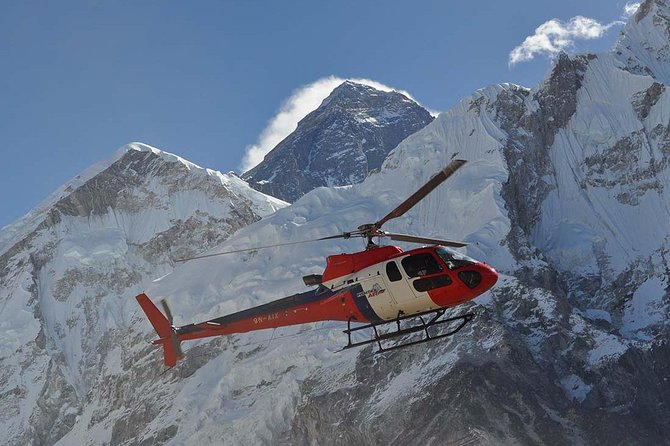
The best feature here is the helicopter return from Gorakshep to Lukla. After days of walking toward Everest, you trade the long descent for a short flight over the Khumbu. I like the careful acclimatization stops in Namche Bazaar and Dingboche, and I like that porters, permits, meals, filtered water, and staff insurance are built into the price. The catch is the altitude: this is a hard trek, not a scenic stroll.
I also like the small maximum group of 14 and the strong guide team behind the trip. Guides named Raj, Ram, Madan, Saman, and Rajendra have led past departures, with porters such as Bishal, Girija, Pesal, Krishna, Probin, Jit, and Sher helping on the trail. Your exact team will vary, but personal support is a central part of the plan. Weather can disrupt both flights, so keep your schedule flexible.
Key points to know before you book
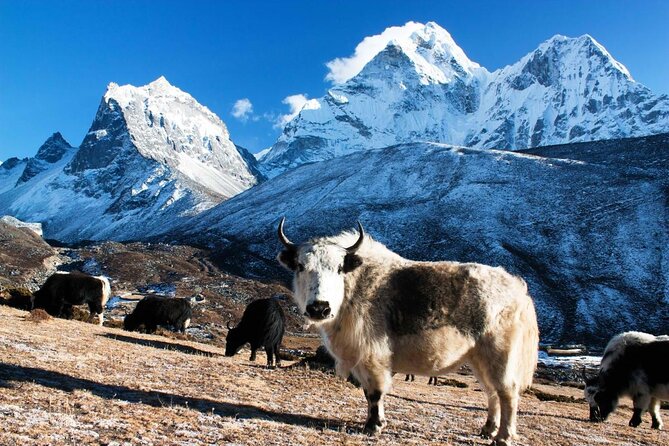
- Gorakshep to Lukla by helicopter: The shared flight takes about 20 minutes and removes the long walk back down the trail.
- Two acclimatization stops: You spend time in Namche Bazaar and Dingboche, with walks to Everest View Point and Nangkartshang Peak.
- Everest Base Camp at 5,365 meters: The route reaches the famous base camp before the climb to Kala Patthar at 5,555 meters.
- A full support package: Guides, porters, permits, meals, lodging, domestic flights, filtered water, and a first-aid kit are included.
- Small-group format: The maximum is 14 people, and at least two people must book together.
- A serious physical challenge: You need moderate fitness, comfort with long walking days, and a travel insurance policy covering emergency rescue and evacuation.
Why the helicopter return changes the Everest trek
Most Everest Base Camp programs make you walk back toward Lukla after reaching the high point of the route. This plan changes that rhythm. You still do the hard work of walking uphill through the Khumbu, but after Gorakshep, you board a shared helicopter for Lukla.
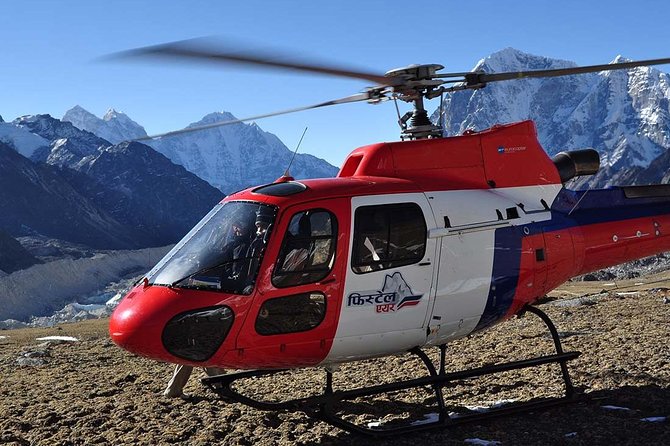
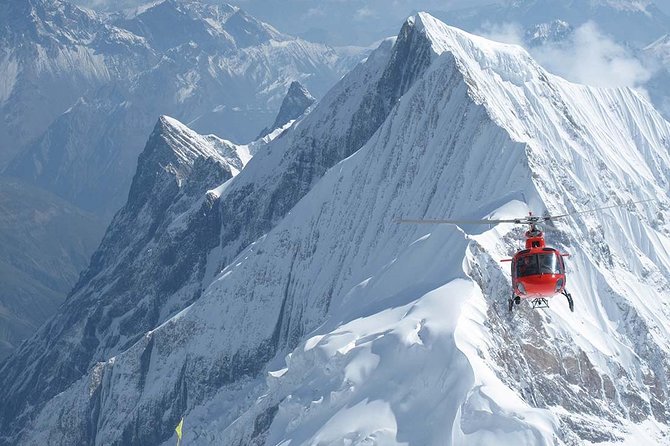
That matters for two reasons. First, it saves several days of descending on tired legs. Second, it gives you a new view of the valleys, ridges, and river corridors you passed on foot. The flight is listed as about 20 minutes, so it is a quick but memorable finish to the high-altitude section.
The helicopter is shared, not private. That keeps the price lower than a dedicated charter, but it also means flight timing and seating depend on operating conditions and the group arrangement. Poor weather can affect the plan, and the operator may offer another date or a full refund if the activity is canceled for that reason.
At $3,000 per person, this is not a budget trek. Still, the price covers many costs that can add up quickly in Nepal: Kathmandu hotels, domestic airfare, park and TIMS permits, guide and porter wages, staff insurance, food, a shared helicopter, and ground transfers. I see the value in the package if you want one company to manage the moving parts rather than arrange each piece yourself.
More Everest Base Camp treks:
- Everest Base Camp Trek – 14 Days
★ 5.0 · 1,499 reviews - Everest Base Camp Trekking
★ 5.0 · 485 reviews - Everest Base Camp Trekking – 13 Day
★ 5.0 · 365 reviews
Day 1: Arrival in Kathmandu and a useful briefing
Your first day begins at Tribhuvan International Airport. An official meets you and takes you to your hotel in a private tourist vehicle. You then meet your guide and attend the pre-trip briefing.
This is more than a paperwork day. Use it to check your clothing, boots, daypack, and personal medicine before leaving the city. The operator provides a duffel bag, trekking map, and sun hat, but personal trekking equipment is your responsibility.
You receive two nights in a three-star Kathmandu hotel, with breakfast included. Lunch and dinner in Kathmandu are not included, giving you freedom to choose your own meals, but you should budget for them.
Day 2: Lukla to Phakding begins the walking route
The mountain section starts with an early morning flight from Kathmandu to Lukla. The flight is listed at about 35 minutes and lands at Tenzing and Hillary Airport, at roughly 2,804 meters.
Lukla is the trailhead for this route. You meet the wider support team, organize your bags, and walk toward Phakding. This opening stage is useful because it lets your body begin adjusting before the route reaches the higher villages.
The trek includes guesthouse accommodation, with attached toilets listed in Lukla, Phakding, and Namche. Facilities farther up can be more basic, so do not expect city-hotel comfort throughout the trip.
Day 3: Suspension bridges and the climb to Namche Bazaar
The walk from Phakding to Namche takes about six hours. The trail follows the Dudh Koshi and crosses the river several times on suspension bridges decorated with prayer flags.
This is one of the most enjoyable sections for me because the route gives you a clear sense of entering the high valleys. The bridges add a little drama, while the path through forested areas offers a softer start before the climb becomes more demanding.
Namche Bazaar is the main trading center on the route and your first major altitude stop. You should expect this day to feel harder than the distance suggests. The route gains height, and your breathing needs time to catch up.
More Everest helicopter tours:
- Everest Base Camp Helicopter Tour landing at Everest View Hotel
★ 5.0 · 668 reviews - Everest Base Camp Helicopter Tour landing at Hotel Everest View
★ 5.0 · 218 reviews - Everest Base Camp helicopter tour with landing
★ 5.0 · 61 reviews - Everest Base Camp Helicopter Tour with Hotel Everest View Landing
★ 5.0 · 52 reviews
Day 4: Acclimatization around Namche Bazaar
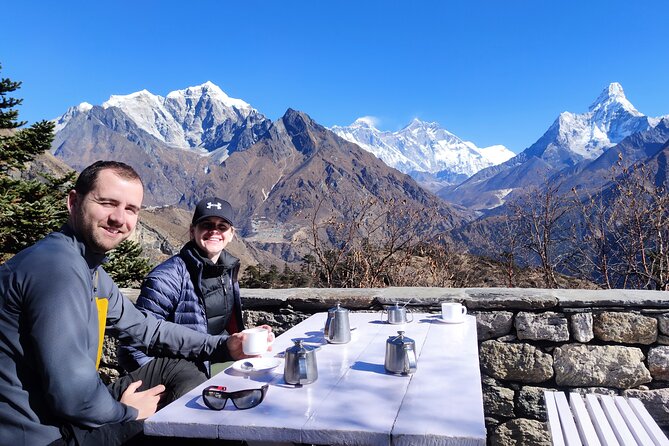
You do not simply sit in the lodge all day. The plan includes a short walk around Namche and a visit to Everest View Point, with mountain views and a sunrise walk listed among the highlights.
This rest day is one of the most important parts of the program. You gain altitude gradually, then spend time walking at a higher level before sleeping again in Namche. That pattern helps you adjust better than racing straight toward Base Camp.
The day is described as about 24 minutes for the listed stop, but the actual acclimatization schedule includes time around Namche. Ask your guide about the exact walking plan when you arrive, since the goal is adjustment rather than covering distance.
Day 5: Tengboche and its famous monastery
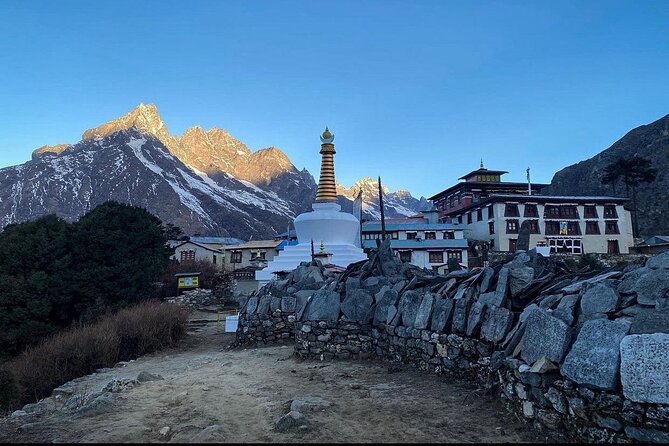
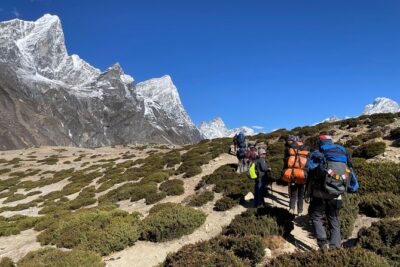
The trail follows the Dudh Koshi toward Tengboche, at about 3,860 meters. The route includes more mountain views and another climb through the Khumbu.
Tengboche is best known for its monastery. The itinerary allows time to visit the interior, where you can see religious artwork and learn more about the spiritual life of the region. This adds depth to the trek. You are not only counting altitude markers and summit views.
The day can feel long, and the higher elevation makes even steady walking more tiring. Take the guide’s pace seriously. A slower day here is better than arriving exhausted and losing strength for the route ahead.
Day 6: Pangboche and the approach to Dingboche
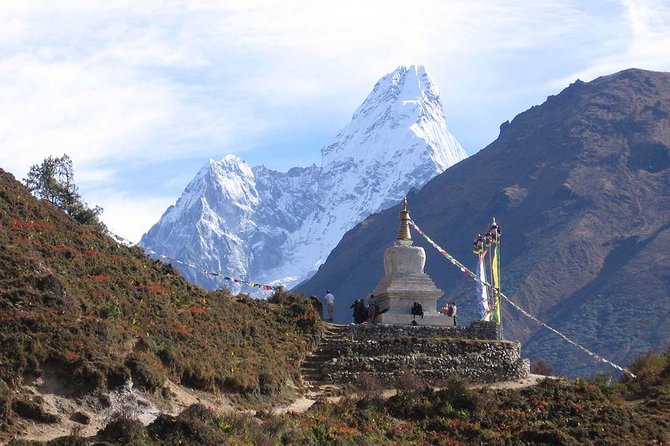
From Tengboche, the path drops to Debuche before crossing the Imja Khola on another suspension bridge. You then climb toward Pangboche, passing mani stones and continuing to Dingboche.
The mani stones are carved with Buddhist prayers. They are a reminder that the route is used by local communities as well as hikers heading toward Everest. Give yourself time to notice these details instead of treating the trail as a simple uphill line.
Dingboche sits much higher than Namche, so this is another point where the schedule earns its keep. Your guide carries an oxygen saturation meter and a first-aid kit, but those tools do not replace good judgment. Tell the guide promptly if you feel unwell.
Day 7: Nangkartshang Peak provides a second altitude test
The Dingboche acclimatization day includes a climb to Nangkartshang Peak. You do not make forward progress toward Base Camp, but you do reach a higher viewpoint above the village.
This is a smart use of a rest day. You work your legs, gain altitude during the day, and return to Dingboche to sleep. The peak is especially useful for wide mountain views, though the climb can feel demanding because you are already well above 4,000 meters.
Do not judge your fitness by speed here. The point is to move steadily, conserve energy, and return ready for the next section.
Day 8: Lobuche beside the Khumbu Glacier
The route continues toward Lobuche along the lateral moraine of the Khumbu Glacier. You also pass stone memorials for climbers who died on nearby summits.
This is a sobering part of the walk. The memorials give the high mountains a human scale and remind you that Everest is not simply a backdrop for photographs. The trail becomes more rugged, and the cold and altitude can make a moderate distance feel like a full day’s work.
Lobuche is one of the higher overnight stops. Food and accommodation are included, along with breakfast, lunch, and dinner throughout the trekking portion, but meal choices and lodging comfort may be more limited than in Kathmandu.
Day 9: Everest Base Camp at 5,365 meters
This is the main goal. From Lobuche, you walk beside and around the Khumbu Glacier toward Everest Base Camp, reaching about 5,365 meters.
The day is difficult because the route is high and the surface can be rough. You are not climbing Everest itself, and Base Camp does not provide a simple viewpoint of the mountain’s summit from every angle. Its importance comes from the setting, the glacier, and the fact that you have walked there from Lukla.
Spring may bring mountaineering activity at Base Camp, according to the itinerary. Conditions and access can vary by season, so your guide will manage the practical details.
You return to Gorakshep after the Base Camp visit. This is a long day, and you should keep your expectations realistic. Reaching the site is a major achievement, but you may have little energy left for lingering.
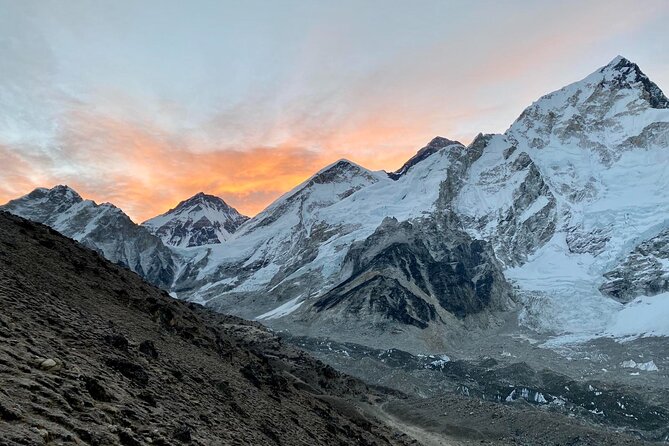
Day 10: Kala Patthar at 5,555 meters
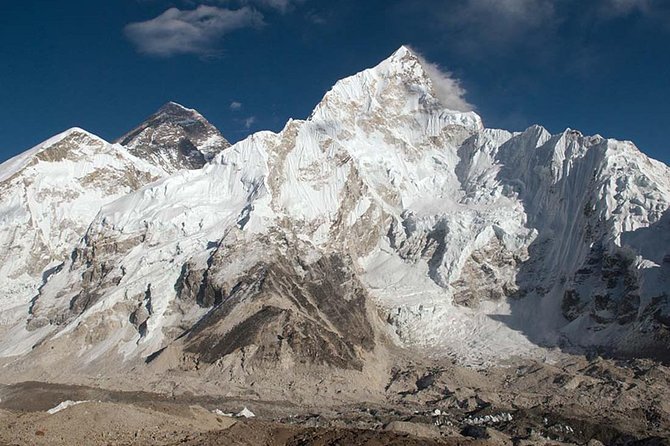
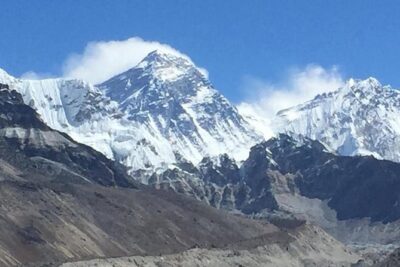
The climb to Kala Patthar is listed as one of the hardest and most rewarding days. At about 5,555 meters, it is higher than Base Camp and offers the best major viewpoint in this itinerary for Everest and the surrounding peaks.
The ascent is short in distance but serious in effort. Thin air slows every step. The reward is a broad mountain view, especially in the early morning light, when the peaks can look sharply defined.
This day also shows why acclimatization matters. You have already slept at altitude and made several adjustment walks. Even so, the climb can be taxing. Pack only what you need, drink regularly, and follow your guide’s instructions.
Day 11: The helicopter flight from Gorakshep to Lukla
After the high-point walks, the shared helicopter carries you from Gorakshep to Lukla in about 20 minutes. This is the signature feature of the trip and a practical way to avoid retracing the entire route on foot.
The itinerary also describes a scenic flight back to Kathmandu, but the main program details specify the helicopter from Gorakshep to Lukla. Confirm the exact flight sequence and overnight plan with the operator before departure, especially since mountain aviation can change with weather.
This is also where the schedule’s value becomes clearest. The return flight saves tired legs and gives you a fast view of the valleys you crossed slowly on foot.
Day 12: Return through Kathmandu airport
The final day is set aside for departure from Tribhuvan International Airport. Airport transfers are included, so the operator takes you from the hotel to the airport in a private tourist vehicle.
Keep some flexibility in your international flight planning. The package depends on domestic mountain flights and a helicopter sector, both of which require suitable weather. The supplied details do not state a recommended buffer, so ask the company how it handles delays before booking your international ticket.
What the $3,000 price includes
The strongest part of the package is the amount of support already arranged. You receive:
- Airport, hotel, and airport transfers
- Two nights in a three-star Kathmandu hotel with breakfast
- Guesthouse accommodation during the trek
- A licensed English-speaking guide trained in first aid
- One porter for every two guests
- Staff food, lodging, wages, insurance, equipment, and medicine
- Everest National Park and TIMS permits
- Kathmandu to Lukla and return airfare
- A shared helicopter from Gorakshep to Lukla
- All standard trekking meals
- Filtered trail water using a Katadyn Pocket Water Filter
- Seasonal fruit
- A first-aid kit with an oxygen saturation meter
- A duffel bag, map, and sun hat
- Government taxes and administrative expenses
- A farewell dinner
You still pay for international airfare, Nepal’s entry visa, Kathmandu lunches and dinners, alcoholic and other drinks, personal gear, travel insurance, and tips. Tipping is expected, so include it in your real budget.
Travel insurance must cover emergency rescue and evacuation. At this altitude, that is not an optional extra in my view. The tour does not include it for you.
Who should choose this Everest itinerary?
I would choose this trip if you want the classic Everest route but do not want to spend several extra days walking downhill. It suits people who value strong logistics, a local guide, porter support, and a small group more than independent travel.
The program requires at least two people to book and accepts a maximum of 14. That gives you a social setting without the scale of a large tour bus. The guides and porters are a major part of the experience. Names connected with past departures include Raj, Ram, Madan, Rajendra, Bishal, Girija, Pesal, Krishna, Probin, Saman, Jit, and Sher, though your assigned team may be different.
I would not book it if you want a relaxed holiday, private helicopter service, or a hotel-style stay each night. You need moderate physical fitness, patience with long walking days, and a willingness to accept basic mountain lodging and changing flight plans.
You can cancel for a full refund up to six full days before the start time. A cancellation two to six days ahead receives 50 percent, while cancellation less than two full days ahead receives no refund. Weather-related cancellation may lead to another date or a full refund.
Should you book the Everest Base Camp trek with helicopter return?
Yes, if the $3,000 price fits your budget and you want the full walking approach to Everest with a faster return. The careful acclimatization days, included porters, park permits, meals, filtered water, and medical kit make the package easier to manage than arranging the route piece by piece.
The main decision is not the scenery. The mountains, glacier, bridges, monastery, memorials, Base Camp, and Kala Patthar are all strong reasons to go. The real question is how you feel about altitude, cold, long walking days, basic lodges, and possible flight delays.
Book this one for organized support and the unusual Gorakshep to Lukla flight. Skip it if you prefer an independent trek or cannot leave room for weather changes.
FAQ
How long does the Everest Base Camp trek with helicopter return take?
The program lasts approximately 12 days, including arrival in Kathmandu, the trek, the helicopter return to Lukla, and departure from Kathmandu.
How high does the trek go?
Everest Base Camp is at approximately 5,365 meters. The itinerary also includes Kala Patthar, which reaches about 5,555 meters.
Is the helicopter flight private?
No. The flight from Gorakshep to Lukla is a shared helicopter ride.
What is the maximum group size?
The maximum group size is 14 people. At least two people must book for the activity to operate.
Are meals included?
Breakfast, lunch, and dinner are included during the trekking section, along with a farewell dinner. Lunch and dinner in Kathmandu are not included.
Is travel insurance included?
No. You must arrange travel insurance that covers emergency rescue and evacuation.
What happens if bad weather cancels the experience?
If poor weather causes cancellation, you can be offered a different date or a full refund. Mountain flights may also require schedule flexibility.
More day hikes and treks in Kathmandu
- Nagarkot Sunrise View and Day Hiking from Kathmandu
★ 5.0 · 471 reviews - Annapurna Circuit Trek with Tilicho Lake
★ 5.0 · 368 reviews - Everest Base Camp Trek -14 Days
★ 5.0 · 321 reviews - Annapurna base camp trek 5 Days
★ 5.0 · 252 reviews
Just added around Kathmandu
- Traditional Momo Making Class★ 5.0 · 10 reviews
- Wildlife Adventure in Chitwan Nepal★ 4.0 · 4 reviews
- Walking tour of real Kathmandu through back streets.★ 5.0 · 3 reviews
- Kathmandu 2 Nights 3 Days Chitwan Jungle Safari Tour★ 5.0 · 9 reviews
- Kathmandu Street Food Walking Tour – Eat Like a Local★ 5.0 · 3 reviews
- Private Manaslu Circuit Trek at Himalayas★ 5.0 · 3 reviews
- Walking tour of Kathmandu with awesome local guides★ 5.0 · 4 reviews
- Visit Swayambhunath and Bauddhanath Stupa with Guide★ 5.0 · 5 reviews
Everest Base Camp Treks from Kathmandu, compared.
Browse the lists this tour appears in