
Reviewed · EVEREST BASE CAMP TREKS FROM KATHMANDU
Everest Base Camp trek with Helicopter return 9 days
The clever part of this nine-day Everest Base Camp trek is the return by helicopter. You walk into the high Khumbu rather than simply flying over it, then skip the long descent once you have seen Kala Patthar and Everest Base Camp. That saves several days without removing the hardest and most rewarding part of the route.
I like the built-in acclimatization day at Namche Bazaar and the practical safety checks, including an oximeter used twice daily. I also like that the price covers permits, meals, a guide, porter support, ground transport, and the helicopter flight. The main drawback is the pace: reaching Gorak Shep and Kala Patthar in this timetable means long, demanding days at high altitude.
Key points to know before booking
- Nine days with seven full mountain days: This is a short, focused version of the classic Everest route.
- Helicopter from Gorak Shep to Lukla: You avoid the long downhill walk, though weather can affect mountain flights.
- Namche acclimatization day included: You rest at altitude while visiting Khumjung and the Everest View Hotel.
- Private trip for your own group: You are not placed in a large shared tour group.
- Meals and support are included: Eight breakfasts, eight lunches, eight dinners, one porter for every two people, and an experienced guide are covered.
- Kala Patthar is the high point: The trail reaches about 5,644 meters, or 18,519 feet, above sea level.
Why the helicopter return changes the Everest trek
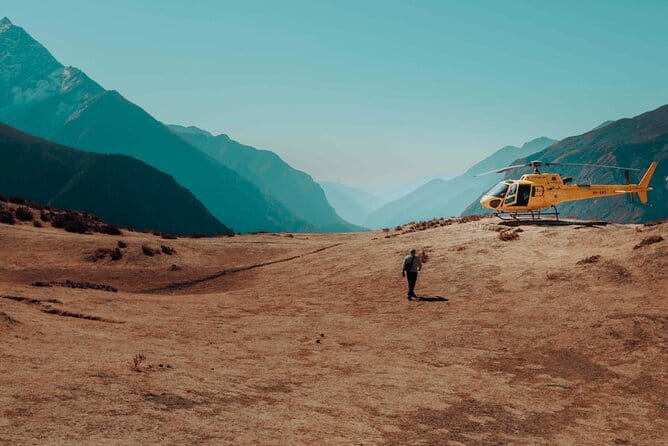
The classic walk to Everest Base Camp usually requires a long return through the same valleys. This version keeps the approach on foot, then uses a helicopter after the high point. For anyone with limited holiday time, that is a sensible trade.
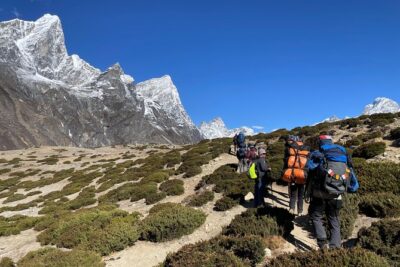
You still experience the important changes in the Khumbu. The route moves from forest near Lukla and Phakding to the busy trading town of Namche, then into a colder, more open world above Dingboche. You cross suspension bridges, pass Buddhist villages and monasteries, walk beside the Khumbu Glacier, and sleep near the highest point of the trek.
The helicopter does not make the trek easy. You still climb gradually to Kala Patthar, and the itinerary includes an eight-hour day before the final summit viewpoint. The shorter return simply removes the repeated downhill walking, which many people find tiring on the knees and less interesting after reaching Base Camp.
The tour costs $3,888 per person, so it is not a budget trek. The value comes from the private setup, a guide, porter support, permits, meals, airport transfers, the Lukla flights, and the helicopter leg. You are paying for time saved and a simpler return, not only for the walking itself.
More Everest Base Camp treks:
- Everest Base Camp Trek – 14 Days
★ 5.0 · 1,499 reviews - Everest Base Camp Trekking
★ 5.0 · 485 reviews - Everest Base Camp Trekking – 13 Day
★ 5.0 · 365 reviews
Day 1: A soft landing in Kathmandu
An airport representative meets you at the international terminal, takes you to the hotel in a private car, and helps with your luggage and check-in. After some rest, you meet the core team.
This first day is useful because a Lukla departure normally starts early. You want your bags organized, your trekking clothes accessible, and your questions answered before leaving Kathmandu. The tour includes airport transport, but lunch and dinner in Kathmandu are your responsibility.
The supplied details do not name the hotel, so ask before booking. You should also confirm where the pre-trek briefing takes place and how much luggage your porter will carry.
Day 2: Lukla and the first walk to Phakding
The morning flight from Kathmandu to Lukla is short and offers mountain views. You arrive at Tenzing Hillary Airport, meet the porters, and begin walking toward Phakding. The day’s walking time is listed at about four hours.
Lukla is the gateway to the Khumbu, and arriving there makes the trek feel real at once. The trail begins in a lower, greener setting before the route starts gaining height. Phakding is a sensible first stop because it keeps the first walking day moderate.
The flight is also one of the trip’s practical weak points. Mountain weather can disrupt flights, and this itinerary leaves little spare time. Ask the operator how flight delays are handled and how the helicopter return is managed if conditions change.
Day 3: Six hours through the forests to Namche Bazaar
From Phakding, the trail passes through rhododendron and magnolia forest toward Toktok, at about 2,760 meters. You continue through Bengkar and cross two bridges on the way to Monjo before reaching the entrance area for Sagarmatha National Park and continuing toward Namche Bazaar.
The walk takes about six hours. It is a clear step up from the first day, with more climbing and more time on the trail. Namche is the Khumbu’s main mountain town, set in a dramatic bowl of hills and packed with lodges, shops, and places to eat.
This is where the altitude begins to matter. Do not treat the route as a race. A steady pace, regular water breaks, and careful attention to how you feel are more useful than arriving early.
The tour includes permits and government fees, so you do not need to arrange the trekking paperwork yourself. Drinks, snacks, desserts, and personal purchases are not included.
More Everest helicopter tours:
- Everest Base Camp Helicopter Tour landing at Everest View Hotel
★ 5.0 · 668 reviews - Everest Base Camp Helicopter Tour landing at Hotel Everest View
★ 5.0 · 218 reviews - Everest Base Camp Trek with Helicopter Return from Gorakshep to Lukla
★ 5.0 · 161 reviews - Everest Base Camp helicopter tour with landing
★ 5.0 · 61 reviews
Day 4: Acclimatizing around Namche and Khumjung
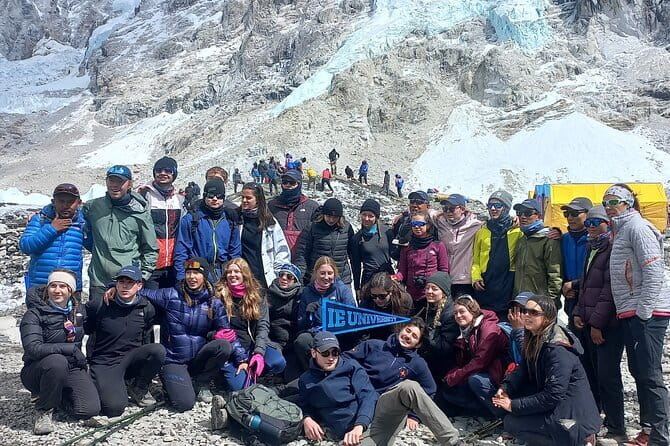
The itinerary uses this day for altitude adjustment, which is one of its best features. You visit Khumjung and walk toward the Syangboche airstrip and the Everest View Hotel, with about five hours of activity.
This is not a wasted day. You gain height during the excursion, see more of the villages above Namche, and return to sleep at the same elevation. That pattern gives your body time to adjust before the route becomes more remote.
The Everest View Hotel is included as a viewpoint stop in the itinerary, but meals and admission details are not separately specified. Ask your guide what is covered at the stop. The walk is also a good chance to check boots, layers, and daypack weight before the longer days ahead.
Day 5: Kyangjuma and the long route toward Tengboche
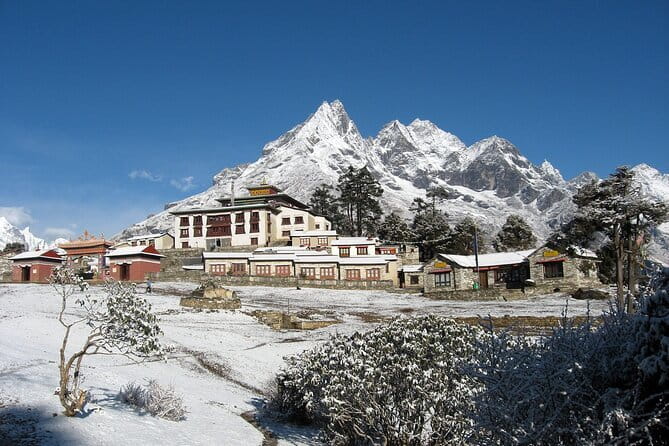
The trail leaves Namche and climbs through the green foothills toward Kyangjuma, at about 3,550 meters. The walking time is listed at five hours. You see mountain views along the route, then continue through the Khumbu villages toward the Tengboche area.
The description places Kyangjuma as the main stop for this day, while the following day begins at Tengboche. That means the exact overnight arrangement should be confirmed, since trekking plans in this region can use nearby villages in slightly different ways.
This section gives you a useful transition. The villages become more spread out, the air feels thinner, and the trail gains and loses height rather than climbing in one clean line. You should expect some tiring undulations even when the day’s distance looks reasonable.
Day 6: Tengboche, Deboche, and an early mountain sunrise
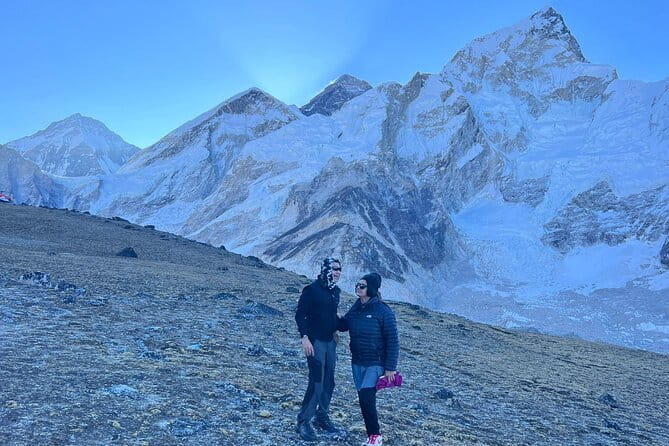
The day begins with an early sunrise view from the Tengboche area. After breakfast, you descend through rhododendron forest to Deboche, at about 3,320 meters. The walk takes roughly five hours.
Tengboche is important for its monastery and its broad mountain setting. The early start is worthwhile because morning light often gives the clearest mountain views, though clouds can still change the scene quickly.
You may see musk deer, blue sheep, or mountain birds along this stretch, but wildlife sightings are never guaranteed. The trail through the forest is more sheltered than the upper route, and the descent to Deboche provides a change from constant uphill walking.
The itinerary description does not spell out every overnight location after this point. Ask for the final lodge plan, especially if you want to know where showers, phone charging, and sleeping arrangements will be available.
Day 7: Dingboche toward the Khumbu Glacier
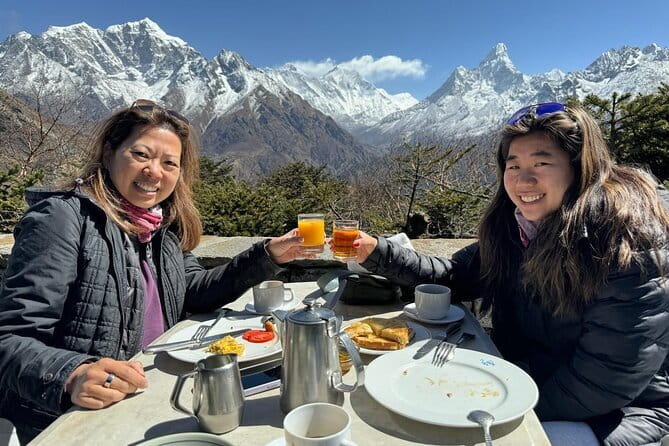
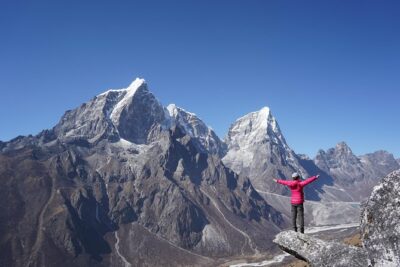
This is one of the more serious days. The route leaves Dingboche and climbs along a ridge, with views toward Cholatse and Tawache. You then continue toward the Khumbu Glacier, with about six hours of walking.
Above Dingboche, the trail becomes more remote and steeper. That detail matters more than the distance on paper. At this height, a modest climb can take real effort, and the cold, wind, and thinner air add to the work.
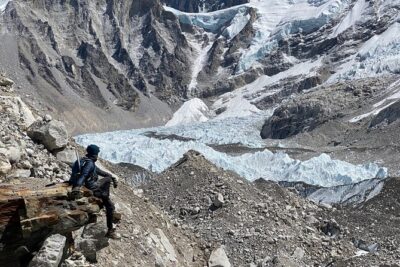
The glacier section is one of the defining parts of the trek. You see the rough ice and rock of the Khumbu system rather than only distant mountain peaks. Take your time here and follow the guide’s pace. The guide carries a first-aid kit and checks pulse, oxygen saturation, and heart rate twice a day with an oximeter, but those checks are support, not a substitute for travel insurance or medical care.
Day 8: Lobuche, Gorak Shep, and Everest Base Camp
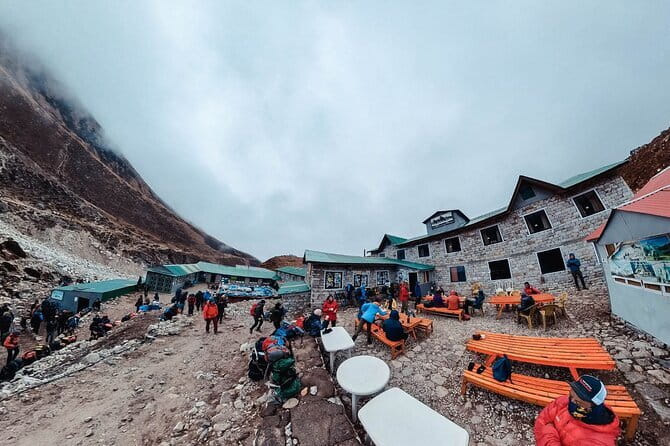
Day eight is the big walking day, listed at about eight hours. You leave Lobuche and follow the broad valley toward Gorak Shep. The path becomes rockier and steeper as you gain height.
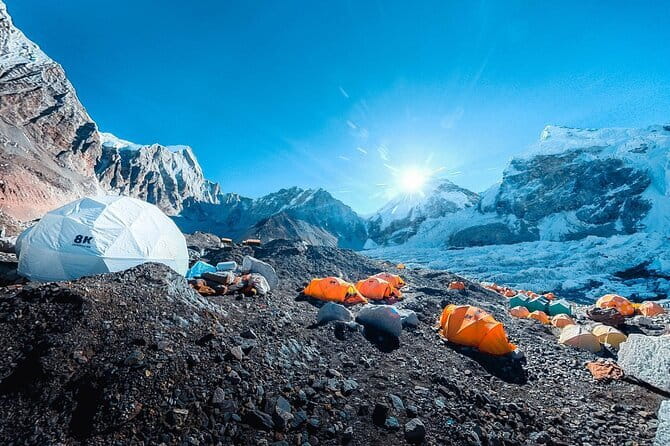
From Gorak Shep, you walk toward Everest Base Camp and return along the route. The itinerary places this day around the Khumbu Glacier and the Base Camp area, so expect a long, demanding outing with little spare energy by the end.
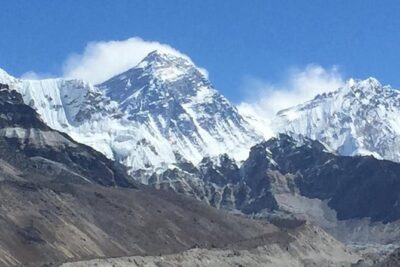
The Base Camp itself is not a simple viewpoint. The area is shaped by the season and climbing activity, and the glacier and surrounding peaks are the main visual reward. You should also remember that the famous summit view is usually better from Kala Patthar than from Base Camp itself.
The high altitude makes this a day for caution. If you feel unwell, tell your guide immediately. The tour is described as moderate in difficulty, but moderate does not mean casual. You need a reasonable level of fitness and the ability to walk for several hours on uneven ground.
Day 9: Sunrise at Kala Patthar and the flight out
The final morning begins with the climb from Gorak Shep to Kala Patthar, listed at about 5,644 meters. The trail is well used and easy to follow, but the altitude makes the ascent strenuous. The early sunlight gives the mountains their best chance to glow before clouds build.
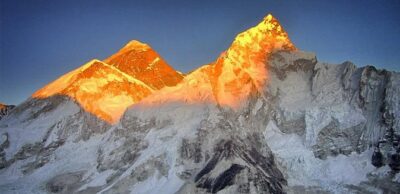
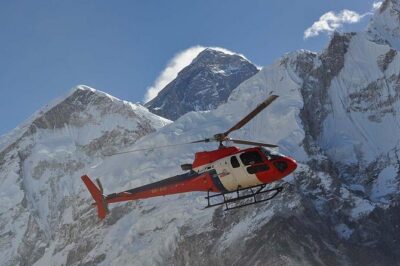
Kala Patthar is the visual high point of the trip. From here, you get the broad mountain view many people hope for when they choose the Everest route. After the walk, the plan is to take a helicopter from Gorak Shep to Lukla.
The supplied schedule calls this a six-hour day, but it also includes the helicopter transfer. Confirm the exact flight sequence with the operator. The included transportation lists Kathmandu to Lukla and Kathmandu flights, as well as the helicopter from Gorak Shep to Lukla, so you should clarify whether the return from Lukla to Kathmandu is by scheduled aircraft or another arrangement on your date.
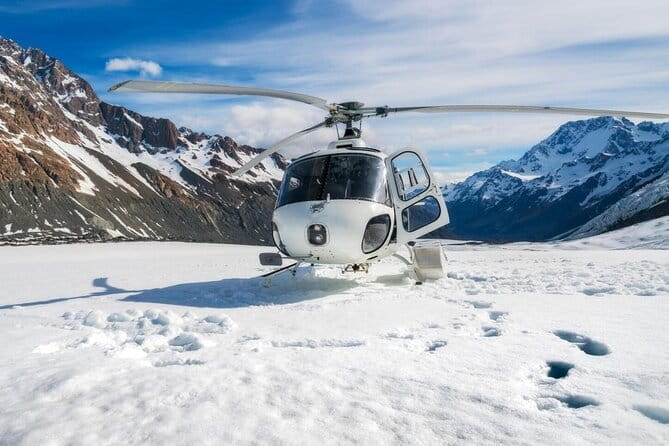
The helicopter ride saves the long descent and gives you an aerial look at the valleys you have just walked through. It is also weather dependent. If clouds or wind interfere, the timing may change, so keep your international departure separate from the end of the trek and allow a sensible buffer.
What the $3,888 price covers
The package includes private ground transport to and from the airport, the Kathmandu to Lukla flight, the return flight arrangement listed in the package, and the helicopter from Gorak Shep to Lukla. You also receive an experienced guide, guide expenses, permits, government fees, a trip completion certificate, and an oximeter-supported first-aid setup.
Food coverage is unusually clear: eight breakfasts, eight lunches, and eight dinners are included. One porter is provided for every two people, which lets you walk with a lighter daypack while keeping some personal items with you.
The cost does not cover a Nepal visa, international flights, travel and medical insurance, Kathmandu lunches and dinners, drinks, sweets, personal expenses, or tips. Tea house hot showers and charging usually cost about $2 to $5, according to the supplied information. Budget extra for those comforts, plus chocolate or other high-energy snacks.
Tipping is expected for the guide, porter, and driver. The exact amount is not provided, so ask the operator for current local guidance before you go.
Guide support, private groups, and service level
This is a private activity, so only your own group takes part. That matters on a high-altitude trek because the walking pace, rest stops, and decisions about health can be handled within your group rather than around a large tour schedule.
The operator’s team has included guides named Raj and Ramesh on Everest trips, while Sital and Ganesh are also associated with other Nepal trekking itineraries. Your assigned guide is not specified, so ask for the name and experience of your actual guide before departure.
The strongest practical feature is the level of included support. Airport staff help with luggage, porters carry shared loads, and the guide’s food, lodging, transport, salary, and insurance are covered. Those details reduce the small hassles that can distract from the trek.
Still, you should carry your own travel insurance with high-altitude trekking and emergency evacuation coverage. The package includes guide insurance and a first-aid kit, not your personal medical policy.
Who should choose this trek
I would choose this trip if you want Everest Base Camp but cannot spare the time for a traditional return walk. It suits people who are comfortable with long days, steep trails above Dingboche, basic tea house conditions, and an early morning climb to Kala Patthar.
It is also a good fit if you prefer a private group and want meals, permits, airport transfers, guide costs, and porter support arranged in one package. Families may find the private format useful, though every participant still needs the stated moderate fitness level.
I would hesitate if you want a relaxed high-altitude holiday, a low-cost trek, or a fixed schedule with no flight risk. The helicopter saves time, but it does not remove the altitude, and Lukla and mountain helicopter flights can be affected by weather.
The cancellation terms are simple: cancel at least 24 hours before the start time for a full refund. Inside 24 hours, the payment is not refunded, and changes are not accepted.
Should you book the Everest Base Camp helicopter return trek?
Book it if your priority is to walk the classic approach, see Everest Base Camp and Kala Patthar, then return quickly instead of retracing the full route. The Namche acclimatization day, private format, included meals, porter support, and helicopter make the high price easier to justify.
Before paying, confirm the assigned guide, hotel and tea house plan, luggage limits, the exact Lukla to Kathmandu return arrangement, and the backup plan for bad weather. If those points are clear and you are ready for long days above 4,000 meters, this is an efficient way to experience the Everest region in nine days.
FAQ
How long is the Everest Base Camp helicopter return trek?
The experience lasts approximately nine days. The itinerary includes seven full days in the mountains and a helicopter return after reaching the Everest area.
What fitness level is required?
The trek is described as moderate and requires a moderate level of physical fitness. The route includes long walking days, with the longest listed at about eight hours, plus steeper and more remote trails above Dingboche.
Is the helicopter flight included?
Yes. The package includes a helicopter flight from Gorak Shep to Lukla. It also lists the Kathmandu to Lukla and return flight arrangements, which you should confirm for your travel date.
Are meals included?
Yes. The package includes eight breakfasts, eight lunches, and eight dinners. Food in Kathmandu for lunch and dinner, drinks, sweets, and personal snacks are not included.
Is a porter provided?
Yes. One porter is included for every two people. Porter salary, food, lodging, transportation, and insurance are covered as part of the support package.
Are permits included?
Yes. The package includes the required trekking permits, government fees, taxes, and official costs.
What happens if I cancel?
You receive a full refund if you cancel at least 24 hours before the experience start time. Cancellations or changes made within 24 hours are not accepted for a refund.
More day hikes and treks in Kathmandu
- Nagarkot Sunrise View and Day Hiking from Kathmandu
★ 5.0 · 471 reviews - Annapurna Circuit Trek with Tilicho Lake
★ 5.0 · 368 reviews - Everest Base Camp Trek -14 Days
★ 5.0 · 321 reviews - Annapurna base camp trek 5 Days
★ 5.0 · 252 reviews
Just added around Kathmandu
- Traditional Momo Making Class★ 5.0 · 10 reviews
- Wildlife Adventure in Chitwan Nepal★ 4.0 · 4 reviews
- Walking tour of real Kathmandu through back streets.★ 5.0 · 3 reviews
- Kathmandu 2 Nights 3 Days Chitwan Jungle Safari Tour★ 5.0 · 9 reviews
- Kathmandu Street Food Walking Tour – Eat Like a Local★ 5.0 · 3 reviews
- Private Manaslu Circuit Trek at Himalayas★ 5.0 · 3 reviews
- Walking tour of Kathmandu with awesome local guides★ 5.0 · 4 reviews
- Visit Swayambhunath and Bauddhanath Stupa with Guide★ 5.0 · 5 reviews
Everest Base Camp Treks from Kathmandu, compared.
Everest Base Camp Trek with Helicopter Return from Gorakshep to Lukla
Read our review →Browse the lists this tour appears in