
Reviewed · LANGTANG VALLEY TREKS FROM KATHMANDU
From Kathmandu: 5-Day Gosaikunda Lake Trek
Gosaikunda is the prize here: a sacred, frozen-in-winter lake high in Langtang National Park, reached on a brisk five-day route from Kathmandu. You’ll climb from Dhunche through forest and high mountain country, then spend time around Gosaikunda and nearby lakes at 4,380 meters.
I like the compact design of this trek. You get Himalayan scenery, rhododendron and pine forests, local guesthouses, and a taste of Nepali mountain culture without committing to a two-week route. I also like the practical support: guides such as Raj, Terence, and Ohm have helped hikers manage the steep trail, while sleeping bags, down jackets, poles, permits, and bus transport can be arranged.
The catch is the pace. Day two climbs hard to Laurebina, and day three takes you high above 4,000 meters before returning to the same guesthouse. The bus ride from Kathmandu to Dhunche takes about five to six hours, so this is a short trek by calendar, not an easy stroll.
Key points to know before you book
- Gosaikunda reaches 4,380 meters: The lake is the main reward, but the altitude makes this a serious mountain trek.
- Dhunche is the trailhead: You begin with a long scenic bus ride from Kathmandu before walking to Deurali.
- Laurebina brings the hardest climb: The route rises steeply through Chandanbari toward a guesthouse at 3,910 meters.
- Three high lakes appear on day three: Gosaikunda, Bhairav Kunda, Chandra Kunda, and Saraswati Kunda form the heart of the trek.
- Small groups keep things manageable: The group is limited to 14 people, with English, Hindi, and Icelandic guiding available.
- The $179 price can be strong value: The package covers transport, lodging, permits, and gear, but check whether you choose the budget or full-board option.
Why Gosaikunda works as a five-day trek
Many Himalayan routes require a large block of vacation time. This one does not. You leave Kathmandu, reach the trail at Dhunche, spend two nights gaining height, visit Gosaikunda, and return by the same general route.
That compact plan is useful if you have only a few days in Nepal or want a mountain trek before or after a longer trip. You still get a real high-altitude experience, not just a roadside viewpoint. The tradeoff is that the schedule leaves little room for slow walking or an extra rest day.
The route runs through Langtang National Park, where you can see changing plant life as you gain height. The lower trail passes through forests and mountain settlements, while the upper section becomes more open and exposed. Along the way, your guide can point out local flora and fauna and explain the cultural importance of the lakes.
Clear weather makes a major difference. The trek is offered throughout the year, but the best views come when the sky is open and the central Himalayan ranges are visible. Cloud, rain, or snow can change the experience quickly, so bring patience as well as enthusiasm.
More Langtang Valley treks:
- Langtang Valley Trek
★ 5.0 · 140 reviews - Private 8 – Day Langtang Trekking
★ 5.0 · 29 reviews - Kathmandu: 6-Day Limitless Langtang Trek
★ 5.0 · 21 reviews
Day one: Kathmandu to Dhunche, then Deurali
Your morning starts with hotel pickup in Kathmandu. The bus ride to Dhunche takes roughly five to six hours, depending on road conditions and the pace of the journey. That is a long first leg, but it gives you a useful look at Nepal outside the capital.
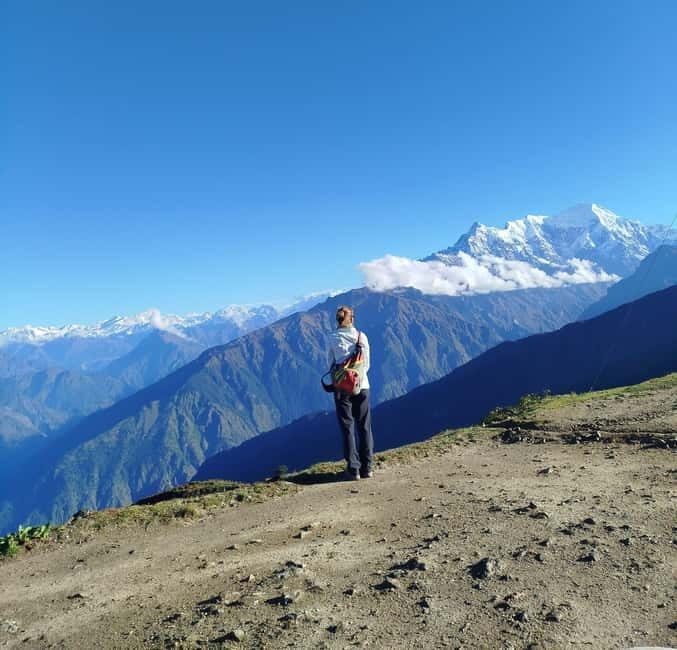
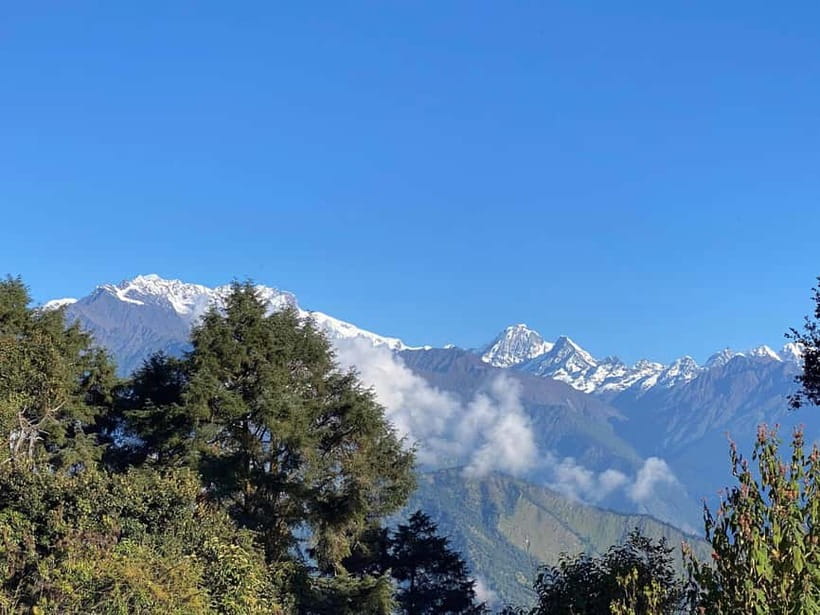
From the bus, you can expect views of green hills, terraced fields, and distant snowy peaks. Manaslu, Ganesh, and Langtang may appear along the way when the weather cooperates. The changing scenery helps explain why this route is more than a simple transfer to a trailhead.
Dhunche is where the walking begins. After a short break, you hike for about two hours to Deurali, at 2,790 meters. This first walk is relatively short, but it gets your legs moving after the bus ride and starts the gradual move into higher country.
You spend the night in a mountain guesthouse. Accommodation is basic, and you should expect a trekking stop rather than hotel comforts. Four nights of mountain guesthouse lodging are included, which keeps the cost down and puts you close to the trail.
Day two: The steep climb to Laurebina
Day two is the first major test. After breakfast and a briefing from your guide, you climb toward Laurebina through Chandanbari. The route is steep, so you will want to keep a steady pace rather than race uphill.
Laurebina sits at about 3,910 meters. That height matters. Even fit hikers can feel the thin air, especially after gaining more than 1,000 meters in a day. Your guide should help set a sensible pace and explain what lies ahead.
This is where a good guide adds real value. Raj has been praised for clear communication about the route and daily plans. Terence has focused on safety and adapting the schedule when needed, while Ohm has kept the mood light with facts, encouragement, and video clips. The provider assigns guides, so you may not receive one particular person, but those names show the kind of support available.
The overnight guesthouse at Laurebina is strategically placed for the lake visit. You are already high, so day three can focus on the out-and-back walk to Gosaikunda rather than adding another long ascent from a lower village.
Day three: Gosaikunda at 4,380 meters
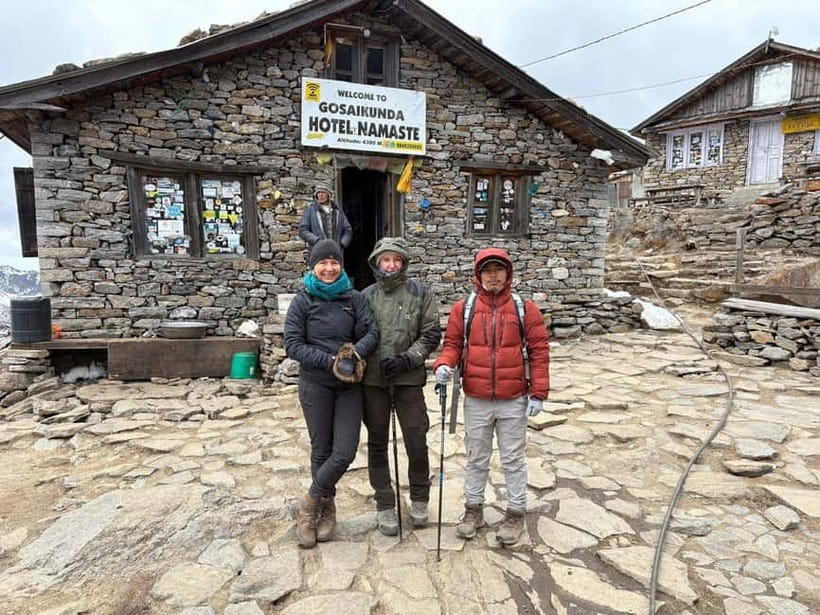
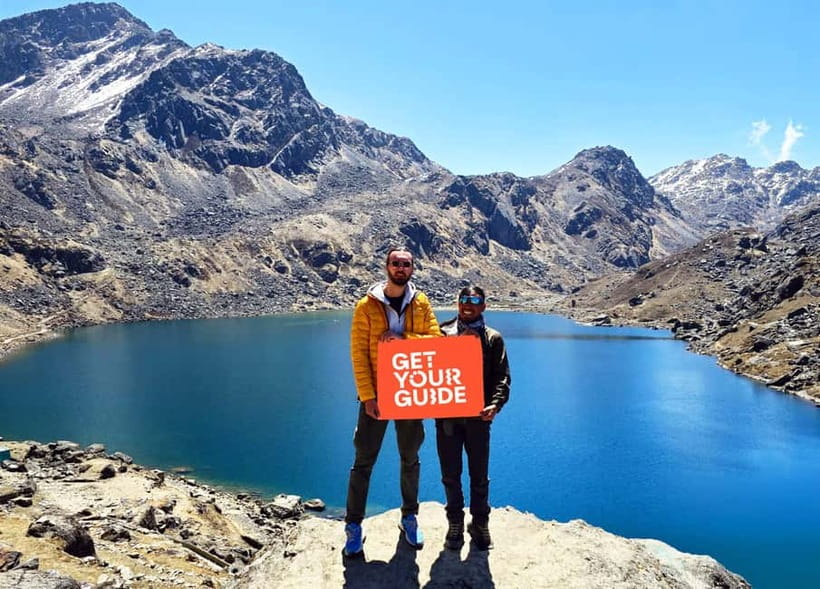
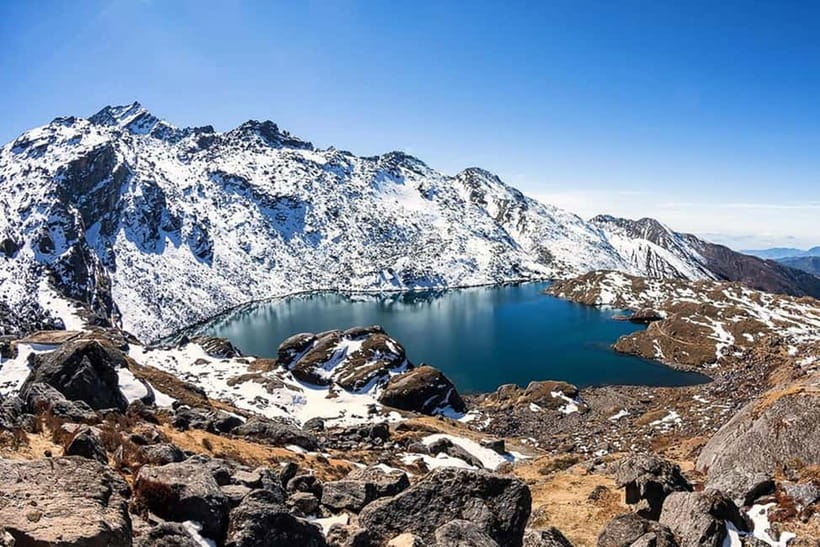
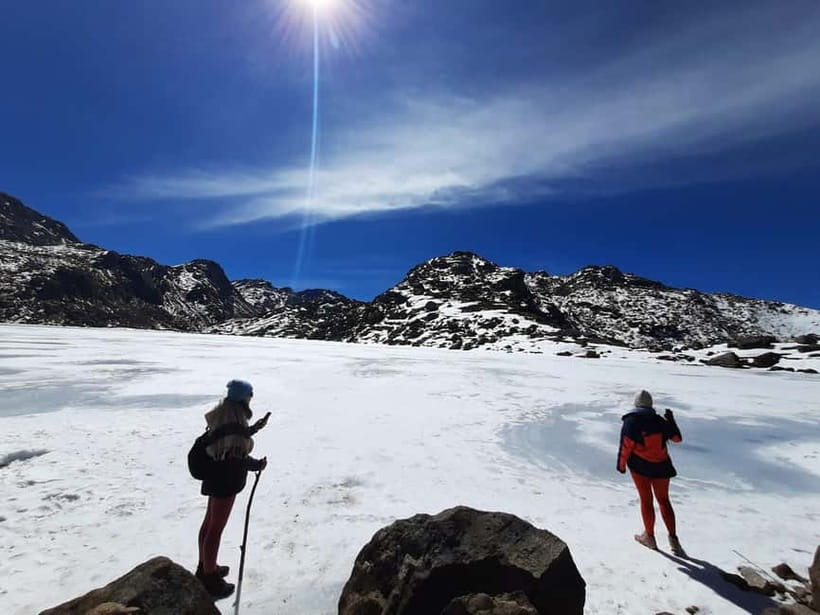
This is the central day of the trek. From Laurebina, you walk to Gosaikunda, an alpine freshwater lake at 4,380 meters inside Langtang National Park. The lake remains frozen in winter, and its meltwater feeds the Trishuli River.
Gosaikunda has religious importance in Nepal, so your visit is not only about mountain scenery. The setting combines high-altitude nature with local belief and pilgrimage traditions. Your guide can help connect what you see to the culture of the region.
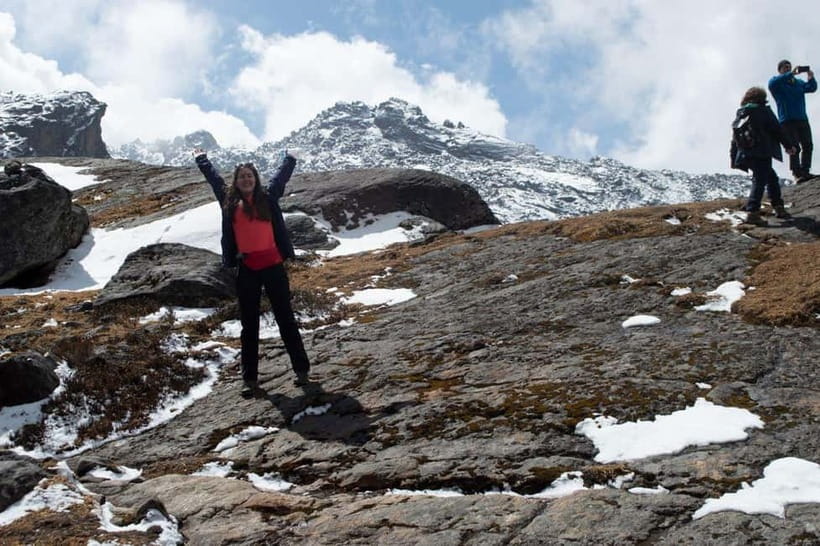
The route also includes nearby lakes named Bhairav Kunda, Chandra Kunda, and Saraswati Kunda. Their presence gives the day more variety than a single destination hike. The Langtang range forms the backdrop when visibility is good, with broad Himalayan views that reward the difficult climb.
This day is also the point where you need to pay attention to your body. Headache, unusual fatigue, nausea, or dizziness should not be brushed aside at this altitude. The tour includes a guide and first-aid support if needed, but medical judgment begins with telling your guide promptly when you feel unwell.
After time around the lakes, you return to Laurebina for the night. The out-and-back format is practical because your room and main gear stay at the guesthouse. It also means you do not need to carry everything to a new overnight stop on the highest day.
More day hikes and treks in Kathmandu:
- Everest Base Camp Trek – 14 Days
★ 5.0 · 1,499 reviews - Everest Base Camp Trekking
★ 5.0 · 485 reviews - Nagarkot Sunrise View and Day Hiking from Kathmandu
★ 5.0 · 471 reviews - Annapurna Circuit Trek with Tilicho Lake
★ 5.0 · 368 reviews
Day four: Forests and the return to Dhunche
The descent to Dhunche changes the mood of the trek. Instead of pushing higher, you gradually lose height through rhododendron, pine, and bamboo forests. The vegetation becomes a welcome contrast to the bare high-country setting around the lake.
The trail leads back toward Deurali, then continues through another forest section. You also cross a river before reaching Dhunche. The route is downhill overall, but descending is not effortless. Steep sections can be hard on knees and ankles, especially after the high-altitude outing.
You spend the fourth night in Dhunche. This gives you a proper break before the return bus and keeps the final day simple. It also means the trek does not end with a long hike followed immediately by a long drive.
Day five: Returning to Kathmandu
After breakfast, you take the bus back to Kathmandu. The return trip follows the same general road corridor, with the hills, terraces, and distant peaks appearing from a different perspective.
The bus is included, which is important when judging the price. You do not need to arrange separate transport to Dhunche or negotiate your way back after the trek. On arrival at the Kathmandu bus station, a transfer takes you to your hotel.
This final day is mostly transport, not sightseeing on foot. If you have a flight the same evening, leave plenty of margin and confirm the timing with the operator. The stated drive from Dhunche takes about five to six hours, and road journeys in the hills can be tiring.
What the $179 price really covers
At $179 per person, this trip can offer good value, especially for a short guided trek from Kathmandu. The package includes hotel pickup and drop-off, bus transport between Kathmandu and Dhunche, four nights in mountain guesthouses, a licensed guide, trekking permits, and a TIMS card.
You can also borrow a down jacket, sleeping bag, and trekking poles. Those items matter more than they may sound. A sleeping bag reduces the amount of cold-weather equipment you need to buy, while poles are useful on both the steep climb and the long descent.
The package includes full-board meals for the all-inclusive option: four breakfasts, five lunches, and four dinners. The budget option does not include meals, so check which version you are selecting before comparing the headline price with other treks.
A porter is available as an add-on. The supplied duffel bag is included with the porter option. If you carry your own gear, pack carefully and keep the load light. The high-altitude day is much more pleasant when you are not hauling unnecessary clothing and equipment.
The price also includes government tax, service charges, water purification tablets as needed, a company T-shirt, and first-aid support if required. Travel insurance is not included, and it is recommended. Personal expenses are also yours to cover, so bring cash for anything outside the package.
Guides, group size, and comfort on the trail
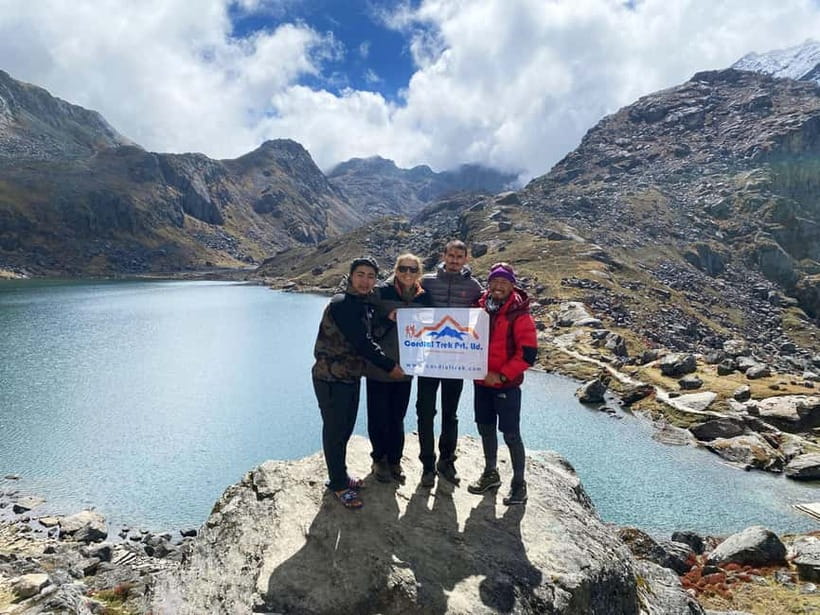
The group is limited to 14 people, a useful middle ground. You are not in a huge procession, but you may still meet people from different countries and hiking backgrounds. The available guiding languages are English, Hindi, and Icelandic.
The guide is especially important on this route because the trail climbs quickly. Ohm has been noted for keeping people engaged with local facts, cheerful encouragement, and simple video work. Raj has been praised for explaining the route and communicating plans clearly. Terence, also referred to as Terens, has put strong attention on safety and flexibility.
Do not treat those individual names as a guarantee that one specific guide will lead your departure. Still, they give you a useful idea of the guiding style to expect: practical, social, and attentive to the group.
Accommodation is in mountain guesthouses. One couple had private rooms throughout their trek, but room arrangements can depend on availability and the group setup, so ask before booking if privacy matters to you. The basic setting is part of the appeal, but it also means you should not expect city-style facilities.
What to pack for the 4,380-meter lake
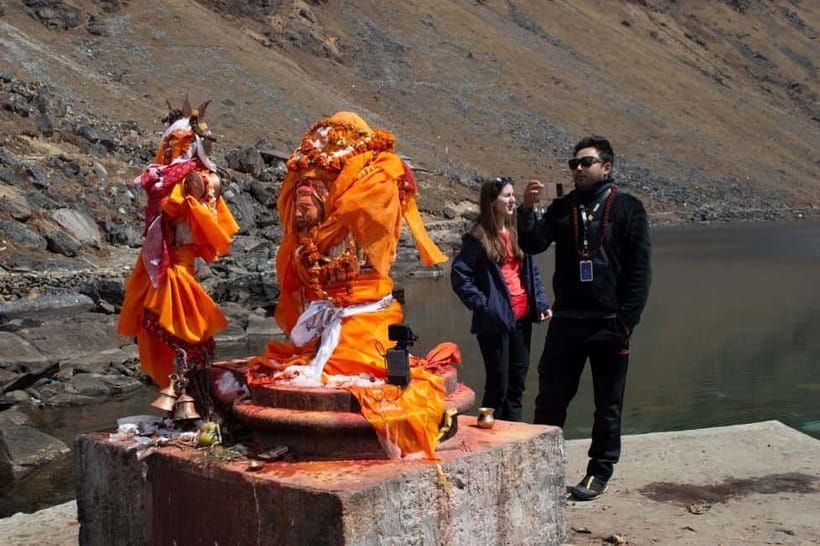
Bring your passport, camera, and cash. You should also have clothing that can handle changing temperatures, though the operator can lend a down jacket and sleeping bag. Trekking poles are available to borrow, which is useful if you do not want to bring your own.
Your passport copy and a recent passport-sized photograph must be provided at least one day before departure so the trekking permits can be processed. Do not leave this until the last minute.
Alcohol and drugs are not allowed. Baby carriages are not suitable for the route, and walking barefoot is prohibited. Children under 10, people with mobility impairments, and people over 140 kilograms are not considered suitable for this activity.
I would also keep a small day pack ready for water, layers, personal medicine, sunscreen, and a camera. Water purification tablets are supplied as needed, but you should still follow your guide’s advice about safe drinking water.
Who should choose this trek?
This trip suits you if you want a genuine Himalayan walk but have only five days. It is a good match for an active adult who can handle steep trails, long walking days, and a high overnight stay.
It also works well if you value organization. Pickup, buses, permits, guesthouses, guiding, and optional equipment are arranged in one package. That removes several tasks from your plate, especially if this is your first trek in Nepal.
I would think twice if you want a relaxed holiday, dislike long bus rides, or have never walked at altitude. The schedule is short because it is concentrated. You gain height quickly, and the walk to Gosaikunda reaches 4,380 meters.
The quiet setting is another reason to choose it. One departure was described as especially peaceful, with time to feel close to nature. That appeal depends on conditions and group size, but the route is clearly aimed at mountain scenery and quiet trail time rather than nightlife or luxury.
Should you book the Gosaikunda trek?
Book it if you want a short, organized route to a sacred Himalayan lake and you are ready for a demanding climb. The strongest reasons are the high mountain views, the national park setting, the nearby lakes, and the amount of practical support included for $179.
Before paying, confirm two points: which meal plan you are choosing and whether you want to add a porter. Also make sure you can handle the steep climb to Laurebina and the 4,380-meter lake visit.
For an active visitor with limited time in Nepal, this is a sensible choice. For anyone seeking an easy walk or a soft bed every night, it is the wrong fit.
FAQ
How long is the Gosaikunda Lake trek?
The trek lasts five days, including bus travel from Kathmandu to Dhunche and back. You walk from Dhunche to Deurali, Laurebina, Gosaikunda, and then return to Dhunche.
How high is Gosaikunda Lake?
Gosaikunda Lake sits at 4,380 meters. Laurebina, the overnight stop before the lake visit, is at about 3,910 meters.
Is transportation from Kathmandu included?
Yes. Bus transportation between Kathmandu and Dhunche is included, along with hotel pickup and transfer back to your hotel after arriving in Kathmandu.
Are meals included?
Meals are included with the full-board option: four breakfasts, five lunches, and four dinners. Meals are not included with the budget option.
Is trekking equipment provided?
You can borrow a down jacket, sleeping bag, and trekking poles. A duffel bag is included when you choose the porter option.
Do I need to provide documents before the trek?
Yes. You must provide a copy of your passport and a recent passport-sized photograph at least one day before departure so the trekking permits can be issued.
Can I cancel the booking?
You can cancel up to 24 hours before the activity for a full refund. The reserve-now, pay-later option lets you book without paying on the day of reservation.
More five-day trips in Kathmandu
- Annapurna base camp trek 5 Days
★ 5.0 · 252 reviews - Kathmandu to Annapurna Base Camp (ABC) 5-Day Trek
★ 5.0 · 102 reviews - 5 Day Private Guided Trekking in Annapurna Base Camp
★ 5.0 · 25 reviews - 5-Day Sunrise Tour in Kathmandu Near Everest
★ 5.0 · 12 reviews
Just added around Kathmandu
- Traditional Momo Making Class★ 5.0 · 10 reviews
- Wildlife Adventure in Chitwan Nepal★ 4.0 · 4 reviews
- Walking tour of real Kathmandu through back streets.★ 5.0 · 3 reviews
- Kathmandu 2 Nights 3 Days Chitwan Jungle Safari Tour★ 5.0 · 9 reviews
- Kathmandu Street Food Walking Tour – Eat Like a Local★ 5.0 · 3 reviews
- Walking tour of Kathmandu with awesome local guides★ 5.0 · 4 reviews
- Private Manaslu Circuit Trek at Himalayas★ 5.0 · 3 reviews
- Visit Swayambhunath and Bauddhanath Stupa with Guide★ 5.0 · 5 reviews
Langtang Valley Treks from Kathmandu, compared.
Browse the lists this tour appears in