
Reviewed · LANGTANG VALLEY TREKS FROM KATHMANDU
Langtang Valley Trek
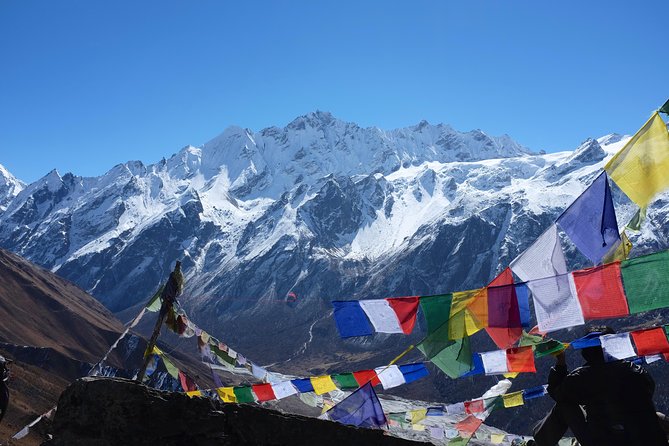
Langtang gives you a serious Himalayan trek without the long approach needed for Everest. In eight days, you ride north from Kathmandu, walk through forests and traditional villages, and reach Kyanjin Gompa beneath Langtang Lirung, a 7,246-meter peak. I like the compact route and the chance to spend a full day at altitude, but the local bus ride and basic teahouses will test your patience.
I especially like the choice of Kyanjin Ri or Tsergo Ri on the high point of the trip. I also like that a porter is included for every two people, which lets you walk with a lighter pack. The main concern is altitude: Langtang Village sits at 3,430 meters, and the optional viewpoints climb above 4,700 meters.
Key points to know before booking
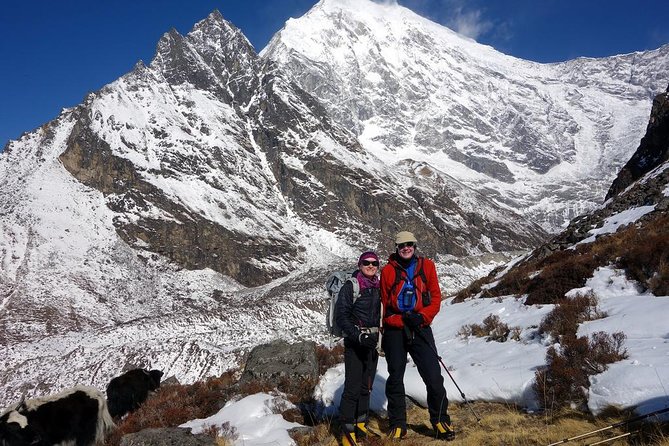
- Kyanjin Gompa is the goal: Reach this high valley settlement on Day 4, then use Day 5 for a mountain viewpoint.
- You ride a local bus: The trip from Kathmandu to Syabrubesi takes about seven hours, depending on traffic.
- The high point is optional: Kyanjin Ri takes about three hours round trip, while Tsergo Ri takes seven or eight hours.
- A porter is included: One porter is provided for every two participants.
- Teahouse comfort is basic: The accommodation covers the essentials, but it is not a hotel-style trek.
- The group is capped at 12: This keeps the walking party relatively small and makes guide support more personal.
Why Langtang works so well in eight days
Langtang Valley is one of Nepal’s most accessible high mountain treks from Kathmandu. You do not spend several days simply reaching the start of the walking route. After a long bus ride to Syabrubesi, the trail begins the next morning and quickly moves into river valleys, forests, farmland, and mountain villages.
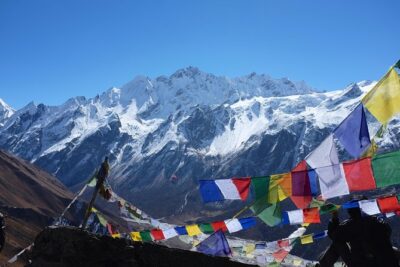
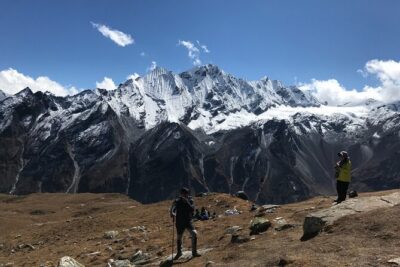
The scenery changes in a satisfying way. Lower sections bring thick stands of rhododendron, oak, maple, and alder. Higher up, the trees thin, the valley opens, and snowy peaks begin to dominate the view. Langtang Lirung is the main attraction, but you also get views toward Langshisha and other high summits around Kyanjin.
I like the balance here. You get a genuine mountain trek, not a scenic walk near the capital, but the route is short enough to fit into a limited Nepal schedule. You also spend two nights at Kyanjin Gompa, which matters because it gives you time to adjust before attempting a high viewpoint.
The tradeoff is that the route returns by the same trail. You will not see a new valley every day on the way back. Still, the return walk feels different when you are descending, and the forest, river, and villages deserve a second look.
More Langtang Valley treks:
- Langtang Valley Trek
★ 5.0 · 140 reviews - Private 8 – Day Langtang Trekking
★ 5.0 · 29 reviews - Kathmandu: 6-Day Limitless Langtang Trek
★ 5.0 · 21 reviews
Day 1: Seven hours by local bus to Syabrubesi
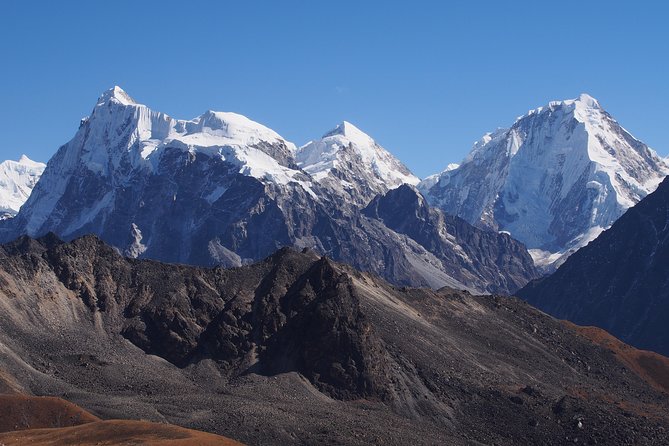
The first day is mainly about reaching the trailhead. You leave Kathmandu at around 6:45 am and ride a local bus toward Syabrubesi. The journey takes roughly seven hours, though traffic can change that estimate.
This is not a polished tourist transfer. A local bus gives you a closer look at the countryside and ordinary travel in Nepal, but it may also be crowded, slow, and tiring. Bring water, keep your day bag close, and expect the road journey to take most of the day.
Syabrubesi is the starting point for the trek. There is no major walking section on Day 1, so you can use the evening to organize your pack, meet the guide and porter team, and prepare for an early start.
Day 2: Forest trails and the climb to Lama Hotel
The first walking day covers a moderate route to Lama Hotel at about 2,500 meters. The trail uses riverbank paths, forest tracks, suspension bridges, and steady inclines.
This is a good introduction to the pace of the trek. You are not immediately pushed toward a high pass, but the walking is still real exercise. The route is well defined, though some uphill sections will feel harder if you are carrying too much.
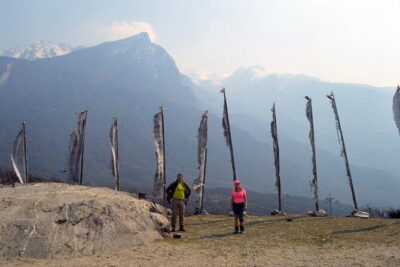
The forest is one of the pleasures of this lower section. Depending on the season and conditions, you might see rhododendron, oak, maple, and alder, along with signs of the area’s wildlife. The national park is home to animals including wild boar, Himalayan black bears, ghoral, grey langur monkeys, leopards, musk deer, and red pandas. Seeing wildlife is never guaranteed, but the forest itself gives the day plenty of character.
A porter carries the main load for two people, so you should only need a small day pack while walking. That is a major practical benefit on a route with repeated uphill stretches.
Day 3: Reaching Langtang Village at 3,430 meters
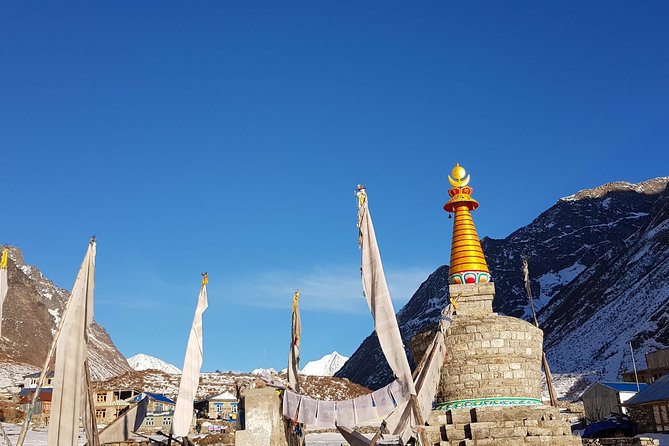
Day 3 is longer, with about six and a half hours of walking toward Langtang Village. The trail continues through forest and along the river, then opens into grassy meadows and more exposed mountain views.
The change in scenery is the point of this day. You begin to see Langtang Lirung more clearly, and pine forest replaces some of the denser lower woodland. The valley feels broader, but the altitude becomes more serious.
At 3,430 meters, Langtang Village is high enough for you to pay close attention to how you feel. Headaches, unusual tiredness, dizziness, or nausea should not be brushed aside. Tell your guide early if something feels wrong. The guide’s job is not just to keep the group moving, but to help judge when a slower pace or a change of plan is sensible.
The walking schedule is fairly ambitious for a short trek because the route gains altitude quickly. If you have little mountain experience, your best strategy is to walk slowly, drink regularly, and avoid racing ahead. The group size of up to 12 helps the guide keep an eye on different walking speeds.
More day hikes and treks in Kathmandu:
- Everest Base Camp Trek – 14 Days
★ 5.0 · 1,499 reviews - Everest Base Camp Trekking
★ 5.0 · 485 reviews - Nagarkot Sunrise View and Day Hiking from Kathmandu
★ 5.0 · 471 reviews - Annapurna Circuit Trek with Tilicho Lake
★ 5.0 · 368 reviews
Day 4: Farmland, bridges, and Kyanjin Gompa
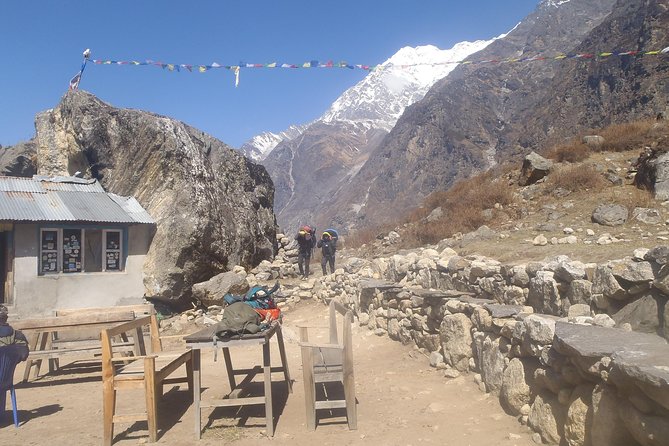
The route to Kyanjin Gompa takes about five hours. You leave the forest behind in places and walk through farmland, across bridges, and up gentle slopes surrounded by increasingly dramatic peaks.
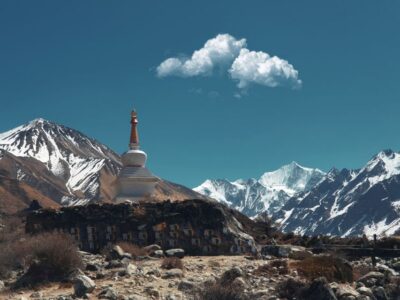
Kyanjin Gompa is the emotional center of the trip. The settlement is known for its monastery and its position among high mountains. Views toward Langshisha and Langtang Lirung make the final approach feel worthwhile, even though the day itself is not the hardest walking day.
The accommodation is in a teahouse, which means simple rooms and basic facilities rather than resort comfort. One of the useful truths about this trip is that you are paying for access to a remote mountain valley, not luxury. A warm meal, a bed, and a place to dry out matter more here than decorative details.
You spend the night at Kyanjin Gompa, allowing your body more time to adjust. That second night is important. It also means you are not forced to arrive, take a quick photo, and immediately begin a long descent.
Day 5: Choose Kyanjin Ri or Tsergo Ri
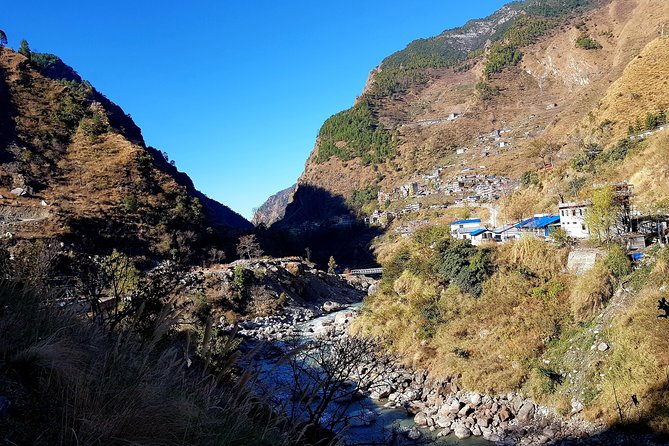
This is the most flexible day. You can make a shorter climb to Kyanjin Ri, at about 4,773 meters, or take on the longer route to Tsergo Ri, at about 4,984 meters.
Kyanjin Ri takes roughly three hours round trip. It is the sensible choice if you want a high viewpoint without turning the day into a major endurance test. Tsergo Ri takes about seven or eight hours and demands much more stamina, especially at altitude.
I like that the decision is made according to the group’s ability and conditions rather than fixed into one difficult schedule. A shorter day can still give you excellent views and leaves more time to enjoy Kyanjin Gompa. The longer option suits strong hikers who want a more demanding summit day.
Do not treat either climb as a casual add-on. The elevation is high, and the air is thin. Your guide can help assess the conditions, but you should also be honest about your energy and any symptoms of altitude sickness. A previous trip with a 13-year-old included serious altitude problems, and guide Madan reportedly helped the child for hours during difficult sections. That detail points to the importance of having a guide who takes altitude concerns seriously, but it is not a reason to ignore your own limits.
Days 6 and 7: Returning through forest to Syabrubesi
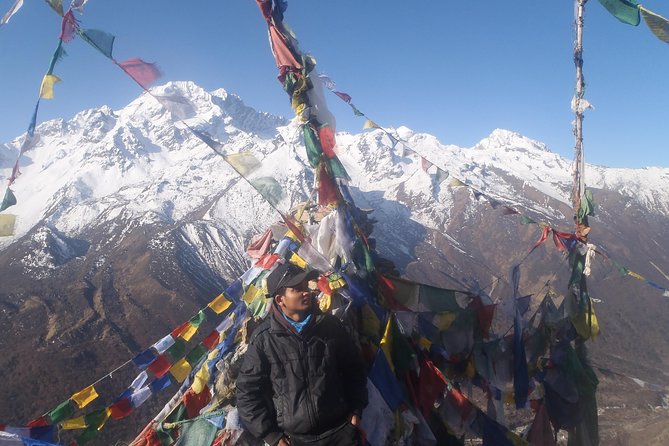
Day 6 retraces the route to Lama Hotel in about six hours. The trail follows riverbanks and forest paths, with long descents replacing the earlier climbs.
The return section can be easier on your breathing but harder on your knees. Trekking poles may help, though they are not listed as part of the included equipment. You will again pass through pine forest and may see large beehives attached to trees. Keep your pace controlled, especially on uneven downhill sections.
Day 7 continues down to Syabrubesi. The route includes both gentle and steeper descents on established trekking paths. Once you reach Syabrubesi, the walking portion is finished, and you can prepare for the bus ride back to Kathmandu.
These two days are less dramatic than the approach to Kyanjin, but they are not wasted time. Descending through the forest gives you a different view of the valley, and a slower pace lets you notice details you may have missed while climbing.
Day 8: Back to Kathmandu and a well-earned rest
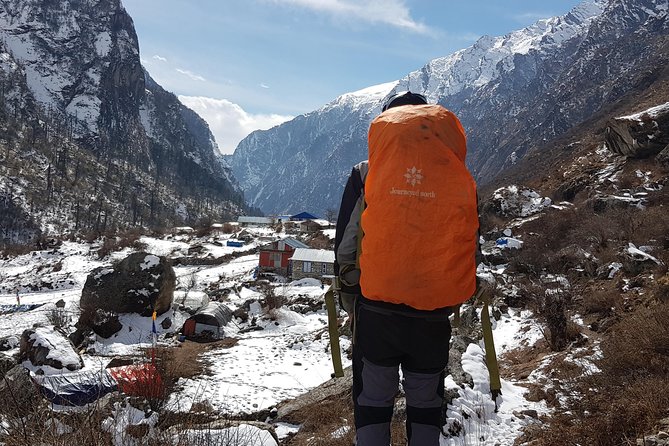
The final day uses the local bus again for the return to Kathmandu. The trip takes much of the day, depending on traffic and road conditions.
The plan allows you to end with a hot shower and an evening in Thamel. That small detail matters after a week of walking and basic teahouse accommodation. You can rest your legs, find a massage, and enjoy a more comfortable meal before continuing your Nepal trip.
Because the bus is local, keep your expectations practical. This is transportation that gets you between the capital and the trailhead, not a private sightseeing transfer. The countryside views are part of the experience, but the ride can be long.
What the $560 price really covers
At $560 per person, the package includes the main costs you need for an organized trek:
- Bus transportation to and from Syabrubesi
- Teahouse accommodation
- Breakfast for seven days
- Lunch for eight days
- Dinner for seven days
- One porter for every two participants
- Fees and taxes
That is a solid package for someone who wants support without arranging each part independently. The porter is especially valuable. Carrying less can make the difference between enjoying the forest climbs and spending the whole day focused on your pack.
You still need to budget for drinks, including tea, coffee, and bottled water, plus tips. Those expenses are not included. The accommodation is functional rather than luxurious, so book this for the route, mountain views, and support team, not for comfortable rooms.
The maximum group size is 12. That is small enough for a manageable walking group, while still allowing the operator to spread costs across several participants. Solo or couple bookings may not create a private departure, so confirm how the group will be formed before booking.
Guides, porters, and the human side of the trek
The strongest part of the service appears to be the staff. Guides named in customer feedback include Purna, Madan, and Pralhad, with porters such as Ram, Rupak, Naresh, and Kesab also receiving warm praise on different departures. You should confirm your assigned team before departure, since these names do not guarantee who will lead your particular trek.
The useful qualities to look for are patience, communication, flexibility, and attention to altitude. One couple received help with preparation before walking, including a pre-trip meeting, a packing list, and access to rental equipment. Those details can remove much of the guesswork for first-time trekkers.
The route also suits families and parent-child pairs, but moderate fitness is required. A guide may help in a difficult moment, yet no guide can replace sensible pacing and proper preparation.
Who should book this trek?
I would recommend it to you if you want a compact Himalayan route with real altitude, village life, forests, and a high mountain day. It works particularly well if you have eight days available and do not want the longer commitment of a major Everest route.
It is also a good fit if you prefer an organized package. Transport, food, teahouses, and porter support are already arranged, and the group limit is reasonable.
I would hesitate if you want private vehicles, high-end rooms, or a relaxed walking schedule. The bus rides are long, the accommodation is basic, and the climb from Langtang Village to Kyanjin Gompa brings a quick rise in altitude. You should also think carefully if you have no experience with sustained uphill walking.
Cancellation terms are strict close to departure. You can receive a full refund by canceling at least six full days before the start time, a 50 percent refund when canceling two to six full days before, and no refund within two days. The cut-off uses local time.
Should you book the Langtang Valley Trek?
Book it if your priority is mountain scenery and a well-supported route at a moderate price. The views around Kyanjin Gompa, the choice between Kyanjin Ri and Tsergo Ri, and the included porter support give this trek real value.
Skip it if you need polished transport or hotel comfort. Langtang asks you to accept a long local bus ride, simple teahouses, and serious altitude in exchange for a close look at one of Nepal’s most accessible high valleys. For the right hiker, that is a fair trade.
FAQ
How long is the Langtang Valley Trek?
The trek lasts approximately eight days, including bus transportation between Kathmandu and Syabrubesi.
What time does the experience start?
The stated start time is 6:45 am.
Is transportation from Kathmandu included?
Yes. The package includes a local bus to Syabrubesi and a local bus back to Kathmandu.
Where do I stay during the trek?
Accommodation is provided in teahouses along the route, including stays at places such as Lama Hotel, Langtang Village, and Kyanjin Gompa.
Is a porter included?
Yes. One porter is included for every two participants.
What are the high viewpoint options at Kyanjin Gompa?
You can choose Kyanjin Ri, at about 4,773 meters with a roughly three-hour return walk, or Tsergo Ri, at about 4,984 meters with a seven to eight-hour return walk.
What is included in the meals?
The package includes seven breakfasts, eight lunches, and seven dinners. Drinks such as tea, coffee, and bottled water are not included.
Just added around Kathmandu
- Traditional Momo Making Class★ 5.0 · 10 reviews
- Wildlife Adventure in Chitwan Nepal★ 4.0 · 4 reviews
- Walking tour of real Kathmandu through back streets.★ 5.0 · 3 reviews
- Kathmandu 2 Nights 3 Days Chitwan Jungle Safari Tour★ 5.0 · 9 reviews
- Kathmandu Street Food Walking Tour – Eat Like a Local★ 5.0 · 3 reviews
- Private Manaslu Circuit Trek at Himalayas★ 5.0 · 3 reviews
- Walking tour of Kathmandu with awesome local guides★ 5.0 · 4 reviews
- Visit Swayambhunath and Bauddhanath Stupa with Guide★ 5.0 · 5 reviews
Langtang Valley Treks from Kathmandu, compared.
Browse the lists this tour appears in