
Reviewed · LANGTANG VALLEY TREKS FROM KATHMANDU
Private 8 – Day Langtang Trekking
Langtang offers a fine mountain trek without a long flight or a long approach from Kathmandu. In eight days, you travel by road to Syabrubesi, walk through Langtang National Park, and reach Kyanjin Gompa, the valley’s best-known religious site. The trail brings forests, stone villages, prayer flags, glaciers, and high mountain views in a compact package.
I like the private format, since your guide can adjust the pace and help when the trail gets tough. I also like the full day at Kyanjin, which gives you time for Kyanjin Ri at 4,884 meters instead of rushing straight back downhill.
The main catch is the road journey and the simple mountain lodging. The first and last drives take about six hours, and the trek includes several long walking days with steep sections. This is not a soft sightseeing tour, even though it is shorter and less demanding than many major Himalayan treks.
Key points to know before you book
- Kyanjin Ri reaches 4,884 meters: The highest planned point gives you a serious altitude experience and wide views over the Langtang Valley.
- Eight days includes transport from Kathmandu: You do not need to arrange separate buses, permits, porters, or lodge bookings.
- A private guide leads the group: The operator assigns one government-authorized guide, with porters and their expenses included.
- Seven nights of meals and lodge stays are covered: Breakfast, lunch, and dinner are included during the trek, but not in Kathmandu.
- The walk passes through Tamang and Tibetan-influenced settlements: Cultural interest is part of the route, not an add-on.
- You retrace much of the trail on the way back: The return is easier in places, but the scenery is familiar rather than entirely new.
Why Langtang works well for a short Nepal trek
Langtang is one of the nearest major trekking areas to Kathmandu. That matters if you have limited time, do not want another domestic flight, or prefer to spend your money on walking rather than extra transport.
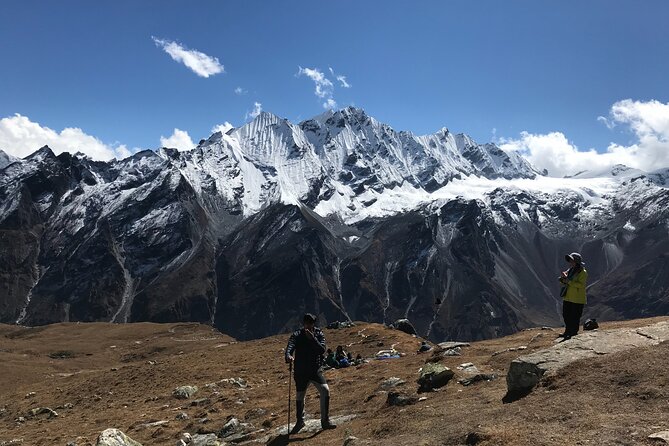
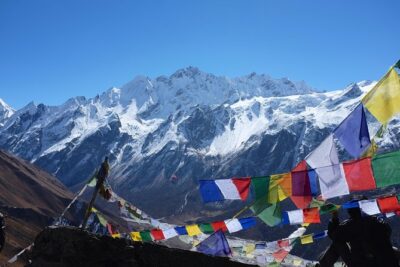
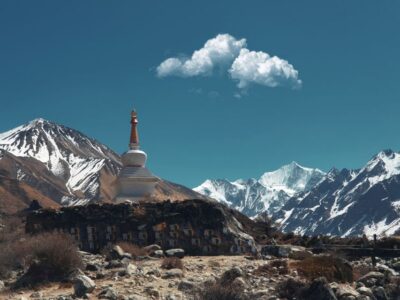
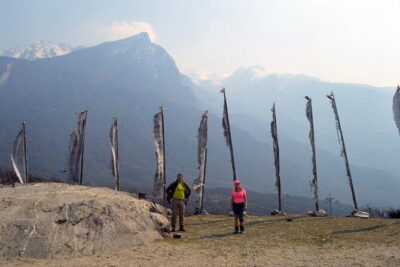
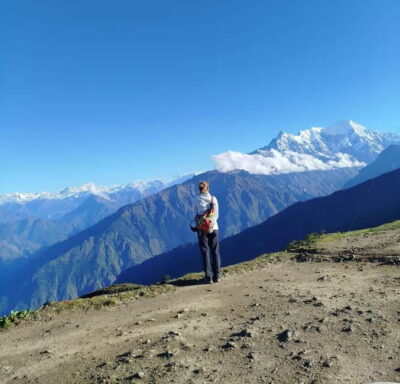
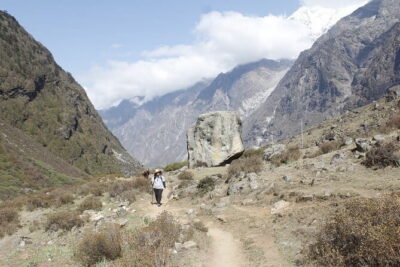
The route follows the valley north from Syabrubesi. Early days pass through dense subtropical and rhododendron forest. Higher up, the trees thin and the views open toward the Langtang range. Tamang villages, stone walls, prayer flags, and old Tibetan cultural influences give the walk a human side.
The main payoff is Kyanjin Gompa. The village sits high in the valley and serves as the base for the best mountain views on this schedule. You also have time to explore nearby trails instead of arriving, eating, and immediately turning around.
The trek is private, but that does not mean luxurious. You sleep in local lodges, eat the included trek meals, and carry or have porters carry your equipment. The private setup is most useful for pacing, communication, and small decisions on the trail.
More Langtang Valley treks:
- Langtang Valley Trek
★ 5.0 · 140 reviews - Kathmandu: 6-Day Limitless Langtang Trek
★ 5.0 · 21 reviews - Langtang Valley Trek
★ 5.0 · 20 reviews
Day 1: Kathmandu to Syabrubesi by road
The day begins at 7:15 a.m. at Nepal Alternative Treks and Expeditions in Nagarjun, Kathmandu. From there, you travel by bus toward Syabrubesi, with the drive taking about six hours.
The road passes hills, green forests, terraced fields, and small settlements. It is a useful introduction to rural Nepal, but you should expect a full road day rather than a quick transfer. Road conditions can affect the timing, and the ride may feel tiring before you even start walking.
Syabrubesi is the trailhead for the trek. The first night here positions you well for the next morning and avoids trying to combine the long drive with a full walking day.
The included transport is a real benefit. You do not need to negotiate a separate vehicle or work out how to connect Kathmandu with the trail. The tradeoff is that the included public overland transfer may be less comfortable than a private car.
Day 2: Forest trails inside Langtang National Park
After breakfast, you walk toward Lama Hotel. The route spends much of the day in dense subtropical forest, with about five hours of walking.
Bamboo is a notable stop along the way and a familiar rest point on the route. The forest gives this first walking day a shaded, enclosed feel. You may not get the biggest mountain views yet, but the trail has a strong sense of entering a protected mountain area.
This is a good day to settle into the walking rhythm. You will be on uneven ground and moving uphill for much of the route, so a steady pace matters more than speed. Your guide can help set that pace, which is one of the strongest reasons to choose a private departure.
Lama Hotel is a practical overnight stop. The name suggests a single hotel, but the route uses mountain lodge accommodation. Facilities are basic, and tea, coffee, boiled water, laundry, phone bills, and bar purchases are not included.
Day 3: Lama Hotel to Langtang village
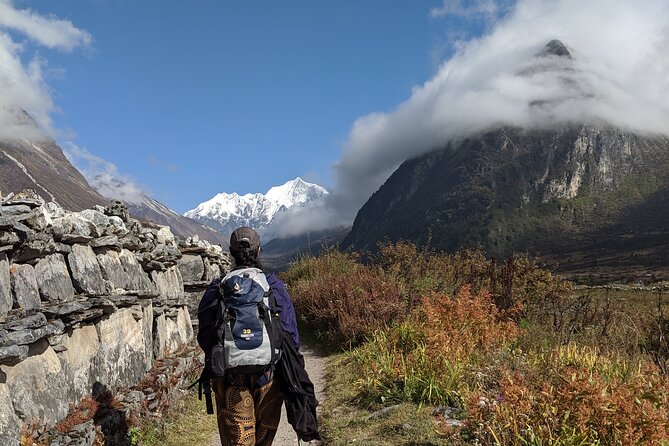
The route becomes steeper and harder as you leave Lama Hotel for Langtang village. The walking time is about five hours, with forest still present for much of the day.
The climb gradually changes the feel of the trek. You are moving away from the lower woodland and toward the high valley, where village life, stone construction, and mountain scenery become more prominent. Langtang village is one of the key cultural and scenic points on the route.
This is also a day when you will notice the effect of altitude more than during the lower sections. The official schedule includes daily oxygen saturation checks, which gives your guide a practical way to monitor how you are responding. It does not replace medical care, but it is a useful safeguard.
The company includes emergency rescue assistance, but you should still carry appropriate travel insurance. Insurance is specifically excluded from the price, and trekking at altitude always deserves that extra protection.
More day hikes and treks in Kathmandu:
- Everest Base Camp Trek – 14 Days
★ 5.0 · 1,499 reviews - Everest Base Camp Trekking
★ 5.0 · 485 reviews - Nagarkot Sunrise View and Day Hiking from Kathmandu
★ 5.0 · 471 reviews - Annapurna Circuit Trek with Tilicho Lake
★ 5.0 · 368 reviews
Day 4: Langtang village to Kyanjin Gompa
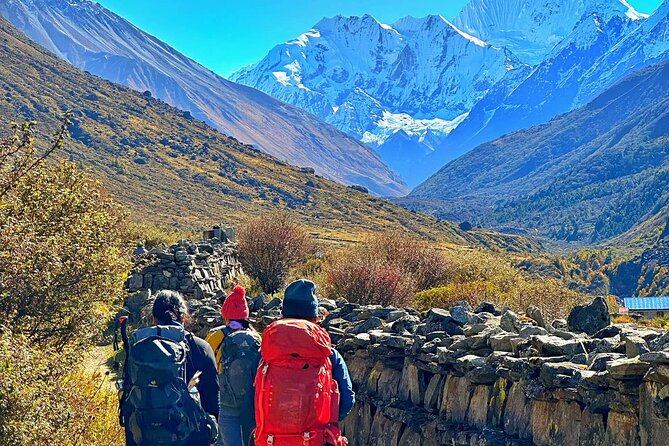
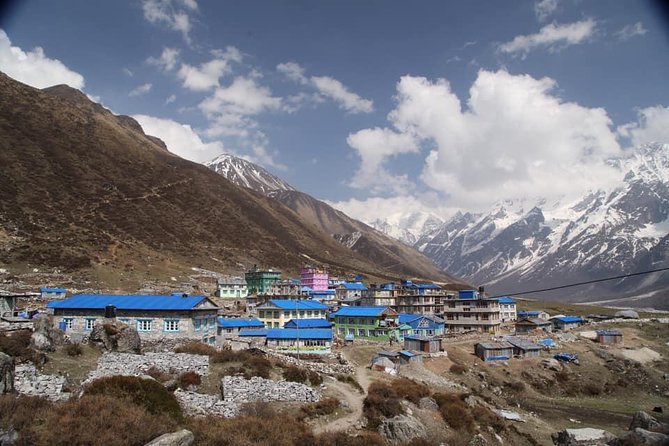
The walk to Kyanjin Gompa takes about three hours, making it one of the shorter trekking days. You pass through small settlements with stone walls and prayer flags as the valley opens around you.
This short day is well placed. Reaching Kyanjin earlier gives you time to settle into the lodge, explore the village, and look at the surrounding peaks without needing to rush. Kyanjin Gompa is the major destination of the trek and the religious center of the upper valley.
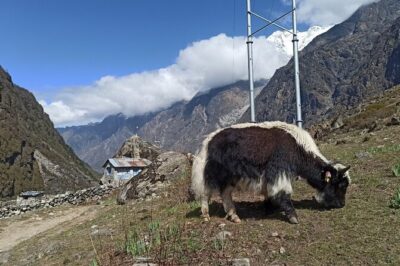
The valley is known as the Valley of Glaciers, and the higher setting gives you the mountain scenery you came for. The experience is not only about ticking off a monastery. The combination of old religious traditions, high trails, stone buildings, and broad mountain views gives Kyanjin its special character.
You should still treat this as an altitude day. A short walking time does not make the elevation trivial. Keep the afternoon calm and follow the guide’s advice before attempting the next day’s higher walk.
Day 5: Kyanjin Ri at 4,884 meters
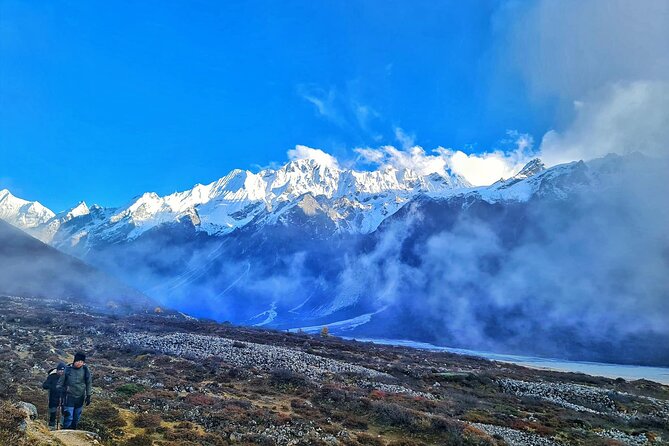
The fifth day is reserved for exploring Kyanjin and the surrounding valley. The main optional challenge is the hike to Kyanjin Ri, listed at 4,884 meters.
This is the day that gives the eight-day schedule its best balance. You have already reached Kyanjin, and you are not forced to make the high climb while carrying trekking luggage. You can focus on the ascent, the views, and returning safely to the lodge.
Kyanjin Ri is not a casual village stroll. The elevation is substantial, and the climb can feel demanding even if the walking time is listed at about four hours. Your guide’s judgment matters here. A private guide can adapt the timing to your condition instead of moving a large group on a fixed schedule.
You can also explore Kyanjin Gompa and the nearby valley if you decide that the summit attempt is not right for you. The itinerary allows a full day in the area, so the experience does not depend entirely on reaching the highest point.
The included trekking map, daily oxygen saturation checks, and emergency rescue assistance add useful support, though they do not remove the need for sensible preparation. Bring layers, sturdy footwear, and a willingness to turn back if your body is not responding well.
Day 6: Returning through the forest to Lama Hotel
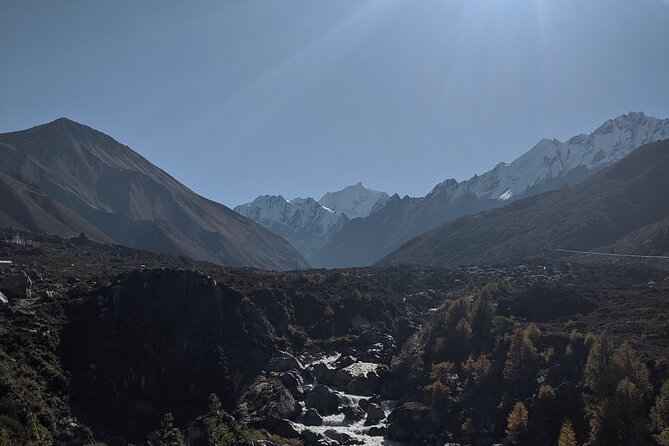
After breakfast, you retrace the route to Lama Hotel. The walking time is about six hours, but the downhill direction usually makes this section feel easier than the climb upward.
The forest looks different on the way back because you now know the route. Descending through rhododendron forest gives the day a quieter rhythm, although downhill walking can be hard on knees and ankles.
This is one of the tour’s practical compromises. You do not get a loop route, so part of the return repeats the trail. In exchange, the schedule keeps the trip focused on Langtang Valley and avoids adding several extra days for a different exit.
Day 7: Lama Hotel to Syabrubesi
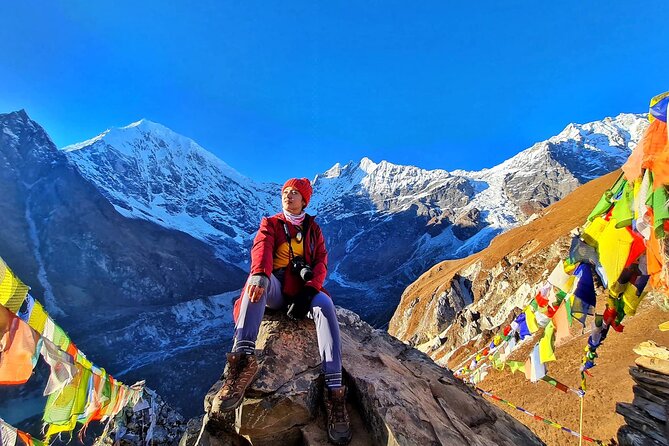
The final walking day takes about five hours and leads back to Syabrubesi. The route continues through dense forest, with a steady descent toward the roadhead.
Finishing the walking portion here is satisfying, but do not underestimate the day. After the high point and the long return from Lama Hotel, tired legs can make a familiar trail feel longer than expected.
An overnight in Syabrubesi also keeps the schedule sensible. You are not trying to finish the trek and immediately sit through the full drive to Kathmandu. That separation makes the final transfer more manageable.
Day 8: Syabrubesi back to Kathmandu
After breakfast, you board the bus for Kathmandu. The drive takes about six hours and follows the Pashang Lhamu Highway, passing terraced fields and small settlements before continuing along the Trishuli area.
As on the first day, the road journey is part of the experience and part of the price. It is not the fastest way to finish, but it lets the tour operate without an extra domestic flight. You return to the original meeting point, where the activity ends.
The timing can be affected by road conditions, so avoid arranging an important international connection immediately after the trek. The supplied schedule gives approximate durations, not a guarantee of an exact arrival hour.
What the $584.22 price really covers
At $584.22 per person, the price is strong for a private eight-day trek if you use the included services. The package covers overland transportation, a government-authorized guide, porters, lodge accommodation, permits, the Langtang National Park fee, a trekking map, daily oxygen saturation checks, a duffle bag, a completion certificate, and emergency rescue assistance.
Food is also largely covered during the trekking portion. You receive seven breakfasts, seven dinners, and eight lunches. That removes a major source of daily expense and makes the price easier to compare with tours that advertise a lower base rate but add meals and permits later.
You still need to budget for Kathmandu accommodation and meals, travel insurance, drinks, boiled water, laundry, phone use, bar bills, and tips for the guide and porters. Those exclusions are normal for a trek of this kind, but you should know about them before comparing prices.
The biggest value comes from the private support. If you want a fixed group departure with less flexibility, you may find cheaper options. If you want your own guide, porters, included permits, and a prepared route, this package is reasonably priced.
Guides, porters, and the personal side of the trek
The operator assigns one authorized trekking guide and porters, with their expenses included. The guide is responsible for route management, practical support, and daily checks, while porters handle the agreed trekking loads.
Names connected with the company’s Langtang departures include Dhan, Tek, Ritika, Kumar, Laxman, Jangbu, Amar, and others. Past arrangements have included female guide Ritika, and the company has also organized trips with guides such as Dhan and Kumar. Your assigned guide may differ, so treat these names as examples rather than a guarantee.
The personal service is useful before and after the walk as well. Tej, the company owner, has handled itinerary planning and direct communication for private groups. That can help if you want to adjust the pace or discuss your ability before departure.
You should still ask exactly how much luggage each porter will carry and what personal bag you need to keep with you. The supplied information confirms porter support and a duffle bag, but it does not state a luggage limit.
Who should book this Langtang trek
I would recommend this trek to you if you want a genuine Himalayan walking route but have only eight days. It fits people who value a private guide, local lodge stays, included meals, and a high point without committing to a much longer expedition.
It also suits families and mixed-ability private groups better than a fixed large departure. The company has arranged Langtang trips for families, including a mother and adult child, and guides have adapted trips to different abilities.
You should think twice if you dislike long bus rides, basic accommodation, repeated trails, or steep walking at altitude. This is also not the right choice if you want hotel comfort or a fully vehicle-based tour.
Book at least 24 hours before the start time if you need the free cancellation option. A cancellation within 24 hours is not refundable, and poor weather or failure to reach the required minimum number of participants can lead to a date change, another experience, or a full refund.
Should you book it?
Book this Langtang trek if your priorities are mountain scenery, cultural villages, and practical value rather than luxury. The route reaches Kyanjin Gompa, gives you a full day for Kyanjin Ri, and includes the costly basics that can make independent planning awkward.
I would choose it for a first Nepal trek when time is limited, especially if you prefer the reassurance of a private guide and porters. I would skip it only if six-hour road transfers and simple lodges sound worse than the mountains sound appealing.
FAQ
How long is the Langtang Trek?
The experience lasts approximately eight days, including road transport between Kathmandu and Syabrubesi.
Where does the trek start?
The activity starts at Nepal Alternative Treks and Expeditions, House, Raniban Marg 136/205, Nagarjun, Kathmandu. The stated start time is 7:15 a.m.
Is transportation from Kathmandu included?
Yes. Overland transportation described in the schedule is included, including the journeys between Kathmandu and Syabrubesi.
Is this a private tour?
Yes. Only your group participates in the activity, with one government-authorized trekking guide and porters provided.
Are meals included?
Breakfast and dinner are included for seven days, and lunch is included for all eight days. Meals in Kathmandu are not included.
Is accommodation included?
Yes. Lodge accommodation during the trek is included. Hotel accommodation in Kathmandu is not included.
Does the price include permits and park fees?
Yes. The Langtang National Park fee and necessary permits, including TIMS, are included.
Can I cancel for a full refund?
You can receive a full refund if you cancel at least 24 hours before the experience start time. Cancellations made less than 24 hours in advance are not refundable.
Just added around Kathmandu
- Traditional Momo Making Class★ 5.0 · 10 reviews
- Wildlife Adventure in Chitwan Nepal★ 4.0 · 4 reviews
- Walking tour of real Kathmandu through back streets.★ 5.0 · 3 reviews
- Kathmandu 2 Nights 3 Days Chitwan Jungle Safari Tour★ 5.0 · 9 reviews
- Kathmandu Street Food Walking Tour – Eat Like a Local★ 5.0 · 3 reviews
- Private Manaslu Circuit Trek at Himalayas★ 5.0 · 3 reviews
- Walking tour of Kathmandu with awesome local guides★ 5.0 · 4 reviews
- Visit Swayambhunath and Bauddhanath Stupa with Guide★ 5.0 · 5 reviews
Langtang Valley Treks from Kathmandu, compared.
Browse the lists this tour appears in