
Reviewed · KATHMANDU COOKING CLASSES
Best Nepali Cooking Class in Thamel with Local Market Trip
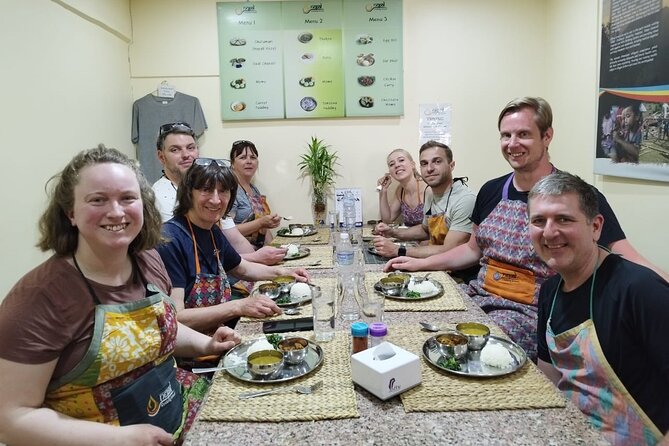
Nepali food makes the best kind of souvenir: one you can cook again. This three-hour class in Thamel takes you to a local market, introduces the spices and ingredients used in Nepali kitchens, then puts you to work preparing a meal with local cooks.
I like two things here. The $30 price includes the food, market shopping, snacks, and meal, so you are paying for an activity and lunch or dinner, not just a demonstration. I also like the small maximum of eight people, which gives the class a better chance of feeling hands-on.
The main consideration is space. One participant found the kitchen comfortable for four people but crowded beyond that, and said the session felt more like assembling ingredients than a full cooking school. If you want a formal lesson with lots of individual instruction, keep that in mind.
Key points to know before booking
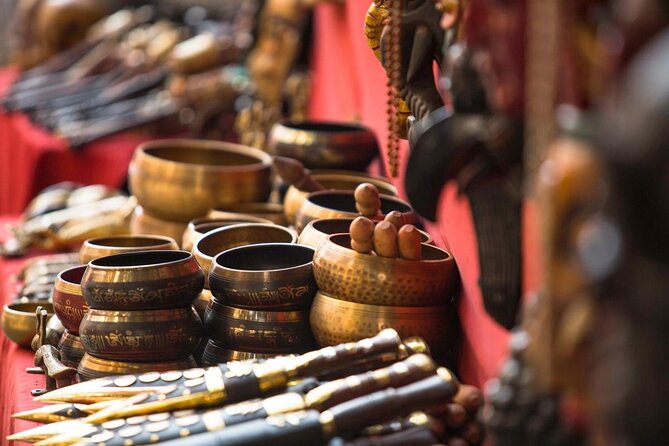
- Market shopping is part of the experience: You help gather fresh ingredients rather than cooking from a prepared box.
- The class is capped at eight people: The small group can encourage participation, though the kitchen may feel tight.
- Your meal is included: Food, snacks, and the meal prepared during the class are covered in the price.
- Vegetarian and vegan requests are accepted: Make your preference known when booking.
- You receive recipes to take home: The class gives you a practical way to repeat the dishes after Nepal.
- Plan on roughly three hours: The experience includes an introduction, market activity, cooking, and eating.
Starting with Nepali ingredients in Thamel
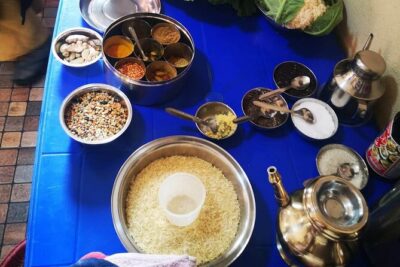
The class begins with an introduction to local ingredients, spices, and cooking methods. This first part is important because Nepali food can seem simple on the plate, yet its flavor depends on how ingredients are combined and cooked.
The advertised itinerary allows about 30 minutes for the initial market and ingredient portion. You may visit a local market or grocery shop, select the items needed for the menu, and get a first look at the everyday food trade in Kathmandu.
I like this approach better than walking straight into a kitchen stocked with anonymous ingredients. At the market, you can connect the finished meal with the produce, spices, and basic supplies used to prepare it. You also get a small window into ordinary Nepali life, rather than seeing only the tourist side of Thamel.
The available information does not name the cooks or specify a fixed menu. That means you should think of this as a flexible introduction to Nepali home-style cooking, not a set restaurant-style tasting with a published list of dishes.
More cooking classes in Kathmandu:
- Half day cooking class in Thamel kathmandu
★ 5.0 · 607 reviews - Kathmandu: Local Women-Led Nepali Cooking & Momo Class
★ 4.9 · 360 reviews - Kathmandu: Local Lead Nepali Cooking & Momo-Making Class
★ 5.0 · 212 reviews
What the local market adds
A market visit gives the class a sense of place. You are not simply learning a recipe in isolation. You are seeing where some of the ingredients come from and how local cooks think about shopping for a meal.
The market portion may be brief, so do not expect a long guided food tour. Its value is practical: it introduces the ingredients before you prepare them. If you enjoy asking questions, this is the moment to ask about unfamiliar spices, produce, or cooking methods.
I would keep your expectations focused. This is not advertised as a market history tour, and the itinerary only assigns about 30 minutes to this part. The market works as the opening chapter of the cooking class, not as a separate sightseeing excursion.
A small kitchen and a hands-on lesson
After shopping, you move into the cooking session. The goal is to prepare a variety of local dishes with help from Nepali cooks, then eat what you have made.
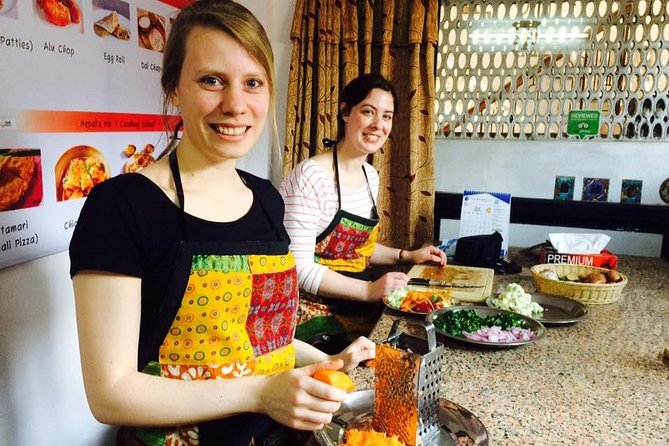
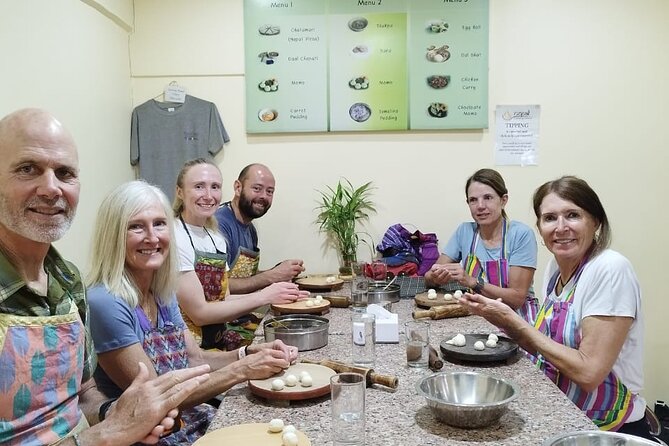
The class is described as hands-on, and that matters. You are not only sitting at a table while someone cooks in front of you. You should expect to handle ingredients and take part in preparing the food. One participant specifically noted that everyone was involved, which is good news if you want an active class.
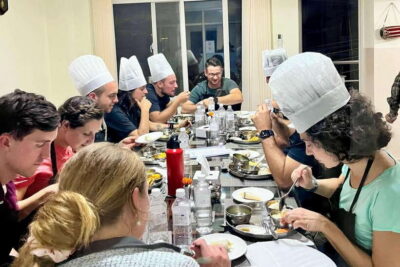
The group limit is eight people. That is a sensible size for a practical food lesson, but the room itself may be the bigger factor. One account found the kitchen small and said four people already made it feel full. A larger group could mean less counter space and more waiting while ingredients are assembled.
That space issue also explains the mixed description of the class. Some people may find the pace friendly and informal. Others may want more detailed instruction on every step. If you are a serious home cook hoping to master several techniques, ask yourself how much personal attention you need.
For most people, the informal format is part of the appeal. You can cook, eat, meet local staff, and share the activity with people who also enjoy food. The atmosphere is likely better suited to participation and conversation than to a polished culinary demonstration.
The meal is part of the value
The strongest practical feature is that you eat the food prepared during the class. The price includes all food according to the menu, market shopping for ingredients, snacks, and a meal. The booking information lists breakfast, lunch, and dinner among the included food categories, so the exact meal timing depends on when your session is scheduled.
At $30 per person, that is a fair package for Kathmandu. You are getting a roughly three-hour activity, the market visit, instruction, ingredients, and food to eat afterward. You also avoid paying separately for a meal during that part of your day.
Come hungry. One participant noted that there was plenty of food, and the experience is built around eating your creations after cooking. It is not a small tasting where you leave looking for lunch.
The value is even better if you use the recipes later. A meal at a restaurant gives you a pleasant memory, but a recipe can bring the experience back into your own kitchen. You can also use the class to decide which Nepali dishes you want to seek out at restaurants during the rest of your stay.
More market and shopping tours in Kathmandu:
- Kathmandu Secret Food Crawl & Local Market Tour
★ 4.7 · 54 reviews - Kathmandu Food Crawl & Market Tour
★ 5.0 · 26 reviews - Oldest Local Market Walking Tour with Living Goddess Kumari
★ 5.0 · 8 reviews - Oldest Local Market Walking Tour With Living Goddess Kumari
★ 5.0 · 8 reviews
Vegetarian and vegan options
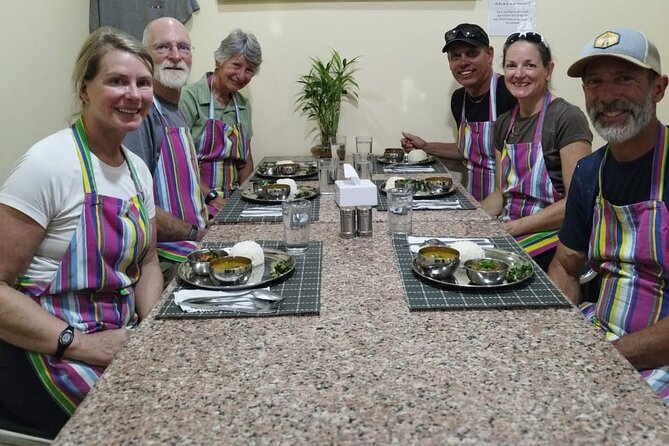
Vegetarian and vegan food is available on request. You should make that request when booking rather than waiting until the class begins, since the ingredients are bought for the menu.
This is useful for anyone with a plant-based diet, but the available information does not describe the exact substitutions or dishes. The safe advice is simple: state your needs clearly and early, then confirm that the class can prepare the requested menu.
The same principle applies to other food restrictions, although only vegetarian and vegan options are specifically confirmed here. Do not assume that every dietary requirement can be handled unless the provider confirms it.
A friendly social activity in Kathmandu
Cooking classes work well when you want more than monuments and guided sightseeing. This one gives you a reason to talk with local cooks and meet other people around a shared task.
The informal tone appears to be one of the class’s strengths. One participant described the staff as friendly and the experience as a good way to meet local people and others who enjoy local food. That makes this a practical choice for solo visitors, couples, and small groups who want a social activity without committing to a full-day excursion.
The group can include up to eight people, so you should not expect a private lesson unless your own party fills the available places. The small-group format still keeps the experience more personal than a large cooking demonstration.
The activity also offers a change of pace from Kathmandu’s temples, traffic, and crowded streets. You spend part of the morning or afternoon focused on ingredients, cooking, and a shared meal. That simple rhythm can be a welcome break.
What may disappoint serious cooking students
The wording cooking school may suggest a structured culinary course. Based on the available details, it is better to view this as a cultural cooking experience with instruction.
One participant felt the session involved putting ingredients together more than learning in a formal school setting. That is the clearest warning for anyone looking for technical training, detailed knife work, or a carefully timed lesson with individual stations.
You may still learn plenty, especially if you ask questions and take notes. But the experience seems designed to be friendly and accessible rather than rigorous. The small kitchen may also limit how much everyone can do at once.
I would choose this class for the food, the market connection, and the social setting. I would not choose it as a professional cooking workshop. Those are different products, and this one appears to favor a relaxed introduction to local food.
Who will get the most from this class
This experience suits you if you:
- Want to connect food with daily life in Kathmandu
- Enjoy cooking with other people
- Prefer a small group to a large organized activity
- Want a meal included in the price
- Like the idea of shopping for ingredients before cooking
- Need a vegetarian or vegan option and can request it ahead of time
- Want recipes to take home and use later
It may suit families and older children if they can participate safely in a small kitchen, though the supplied information does not set a minimum age. Most people can take part, and the activity is near public transportation.
You may want a different class if you need private transportation, a private group, a large teaching kitchen, or advanced culinary instruction. Private transportation is not included, so you will need to make your own way there unless pickup arrangements are separately available. Pickup is offered in the tour features, but the included details do not explain its cost or coverage, so confirm that point before booking.
Timing, group size, and the $30 price
The experience lasts about three hours. That gives you enough time for the introduction, market shopping, cooking, and eating, but not enough for a long market tour plus an extensive technical course.
The average booking time is 13 days ahead. That is a useful sign that you should not leave it until the last morning if your schedule is tight, especially because the group is limited to eight people. The booking confirmation is provided at the time of purchase.
At $30, I see good value if you consider the whole package. The price covers ingredients, food, snacks, the meal, market shopping, instruction, and recipes. You also get a culturally grounded activity instead of paying only for a restaurant meal.
The value drops if you want a highly structured class or need a lot of room to work. In that case, the price is still reasonable, but the format may not match your priorities.
Free cancellation is available if you cancel at least 24 hours before the start time. Cancellations made within 24 hours are not refunded, and changes within that period are not accepted. The cutoff uses local Kathmandu time.
Is the Thamel cooking class worth booking?
I would book this class if you want a friendly, affordable introduction to Nepali food with a market stop and a full meal. The strongest reasons are the hands-on format, the included ingredients and food, the small maximum group, and the chance to carry recipes home.
I would approach it as a relaxed cooking activity, not a formal culinary school. The small kitchen may feel crowded, and the lesson may move quickly through preparation rather than teaching every technique in detail.
For most food-loving visitors, that tradeoff works. You get to shop, cook, eat, meet local people, and leave with something more useful than a photograph. Just request a vegetarian or vegan menu ahead of time, confirm pickup details if you need them, and book before your Kathmandu schedule fills up.
FAQ
How long does the Nepali cooking class last?
The experience lasts approximately three hours.
Where does the cooking class take place?
The experience takes place in Kathmandu, Nepal, in the Thamel area.
Is a market visit included?
Yes. You are guided to a local market or grocery shop to purchase fresh ingredients used during the class.
Is food included in the price?
Yes. The price includes all food according to the menu, market shopping for ingredients, snacks, and the meal prepared during the class.
Are vegetarian and vegan options available?
Yes. Vegetarian and vegan options are available if requested in advance.
How many people can join the class?
The activity accepts a maximum of eight people.
Is transportation included?
Private transportation is not included. Pickup is offered as a feature, but the available information does not specify the pickup area or any additional cost.
Can I cancel for a full refund?
Yes, if you cancel at least 24 hours before the experience start time. Cancellations or changes made within 24 hours are not accepted and are not refunded.
Just added around Kathmandu
- Traditional Momo Making Class★ 5.0 · 10 reviews
- Wildlife Adventure in Chitwan Nepal★ 4.0 · 4 reviews
- Walking tour of real Kathmandu through back streets.★ 5.0 · 3 reviews
- Kathmandu 2 Nights 3 Days Chitwan Jungle Safari Tour★ 5.0 · 9 reviews
- Kathmandu Street Food Walking Tour – Eat Like a Local★ 5.0 · 3 reviews
- Private Manaslu Circuit Trek at Himalayas★ 5.0 · 3 reviews
- Walking tour of Kathmandu with awesome local guides★ 5.0 · 4 reviews
- Visit Swayambhunath and Bauddhanath Stupa with Guide★ 5.0 · 5 reviews
Kathmandu Cooking Classes, compared.
The best Private Nepali Cooking Class in Kathmandu
Read our review →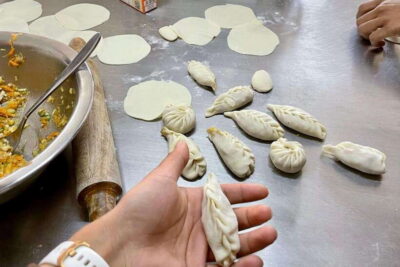
Browse the lists this tour appears in